Invisible Hearing Aids: Are They Right for You?

Invisible hearing aids are tiny hearing devices that sit deep inside your ear, making them almost impossible for anyone to see. They help you hear clearly while staying completely hidden, which is why many people prefer them for comfort and confidence.

Real Stats (Easy to Understand)

  • Nearly 40% of hearing aid users prefer invisible models because of the “no one can see them” benefit.
  • 1 in 5 people feel embarrassed wearing visible hearing aids, which makes invisible models more popular (Source: Hearing Journal).
  • Invisible hearing aids work best for people with mild to moderate hearing loss, covering almost 60% of all cases worldwide.

What Are Invisible Hearing Aids?

Invisible hearing aids are very small devices that fit inside your ear canal. They are custom-made to match your ear shape, so they fit comfortably. Most people cannot see them at all when you wear them.

Types of Invisible Hearing Aids

1. IIC (Invisible-in-Canal) Hearing Aids

These are the smallest hearing aids available. They go very deep inside your ear canal.

Features

  • Almost 100% invisible
  • Natural sound quality
  • Good for mild–moderate hearing loss

2. CIC (Completely-in-Canal) Hearing Aids

These are slightly bigger than IIC but still very small and hidden.

Features

  • Nearly invisible
  • Easy to insert and remove
  • Better for people who want more features

Who Should Use Invisible Hearing Aids?

  • People with mild to moderate hearing loss
  • People who want a natural-looking option
  • Children and adults who feel shy wearing visible devices
  • People with narrow or small ear canals (for custom fit)

Benefits of Invisible Hearing Aids

  • No one can notice them
  • Clear and natural hearing
  • Comfortable in daily activities
  • No wires or behind-the-ear parts
  • Great for teens or working professionals

Limitations to Know

  • Not suitable for severe hearing loss
  • Battery life may be shorter
  • Small size means fewer features than big models
  • Needs proper cleaning since it sits deeper in the ear

Invisible Hearing Aids: IIC vs CIC Comparison

FeatureIIC (Invisible-in-Canal)CIC (Completely-in-Canal)
VisibilityAlmost 100% invisibleNearly invisible
SizeSmallest availableSlightly larger than IIC
PlacementVery deep in ear canalInside ear canal
Hearing Loss SuitabilityMild to moderateMild to moderate
Sound QualityNatural, less wind noiseNatural, clear
Ease of HandlingCan be tricky to insert/removeEasier to handle
Battery LifeShorter (smaller battery)Slightly longer
Features AvailableBasic features onlyMore features possible
Custom FittingRequiredRequired
Best ForMaximum invisibility seekersBalance of invisibility & features
Price RangeHigher costModerate to high cost
MaintenanceRequires careful cleaningEasier to clean

Invisible vs Visible Hearing Aids Comparison

AspectInvisible Hearing AidsTraditional Visible Hearing Aids
AppearanceHidden inside ear canalVisible behind or in ear
Hearing Loss RangeMild to moderate onlyMild to severe/profound
Battery TypeTiny disposable (Size 10)Larger disposable or rechargeable
Battery Life3-5 days5-14 days or rechargeable
FeaturesLimited (no Bluetooth in most)Full features (streaming, apps)
PriceHigherVaries (budget to premium)
ComfortVery comfortable once fittedMay feel bulky initially
Ear Canal SizeNeeds adequate canal sizeWorks for all ear sizes
Daily RemovalRecommendedSome can wear overnight
Ideal UserTeens, professionals, active usersAnyone needing hearing support

Quick Decision Guide

Your PriorityRecommended Type
Complete invisibilityIIC
Easy handling + invisibleCIC
Severe hearing lossTraditional BTE/RIC
Bluetooth & streamingVisible rechargeable models
Long battery lifeTraditional hearing aids
Natural sound qualityIIC or CIC

Important Note: Invisible hearing aids require professional fitting and may not suit everyone. Consult an audiologist to check if your ear canal size and hearing loss level are appropriate for invisible models.

Bottom Line

Invisible hearing aids are a great choice if you want powerful hearing support without anyone noticing your device. They are comfortable, tiny, and perfect for everyday use. If you want to try invisible hearing aids in Lucknow, SoundX is one of the best places to get proper testing, fitting, and expert guidance.

FAQs : 

1. Are invisible hearing aids truly invisible?

Yes, invisible hearing aids sit deep inside your ear canal, so people usually cannot see them. Even from the side, they remain hidden. Only an audiologist can notice them inside your ear.

2. Do invisible hearing aids work for children?

Yes, but only if the child has mild or moderate hearing loss. They must be made carefully to fit the ear. For young kids, larger models are easier to handle and safer.

3. Do invisible hearing aids hurt inside the ear?

No, they are custom-made for your ear shape, so they feel comfortable. At first, you may feel a little strange, but within a few days, they feel normal.

4. How long do the batteries last?

Because invisible hearing aids are small, their batteries are also small. Most batteries last 3–6 days. Rechargeable invisible options are also available now.

5. Can invisible hearing aids connect to Bluetooth?

Some models can, but many cannot because of their tiny size. If Bluetooth is important for you, you may need a slightly larger CIC model.

6. Are invisible hearing aids good for severe hearing loss?

No, they are not powerful enough for severe or profound hearing loss. Larger behind-the-ear devices are better for strong amplification.

7. How much do invisible hearing aids cost?

The price depends on brand, features, and technology. Invisible hearing aids are usually more expensive because they are custom-made. Your audiologist can tell you the exact price after testing.

8. How do I clean invisible hearing aids?

You need a small brush and a dry cloth. Clean the tip gently every day. Never use water or liquids. Regular cleaning helps the device last longer and work better

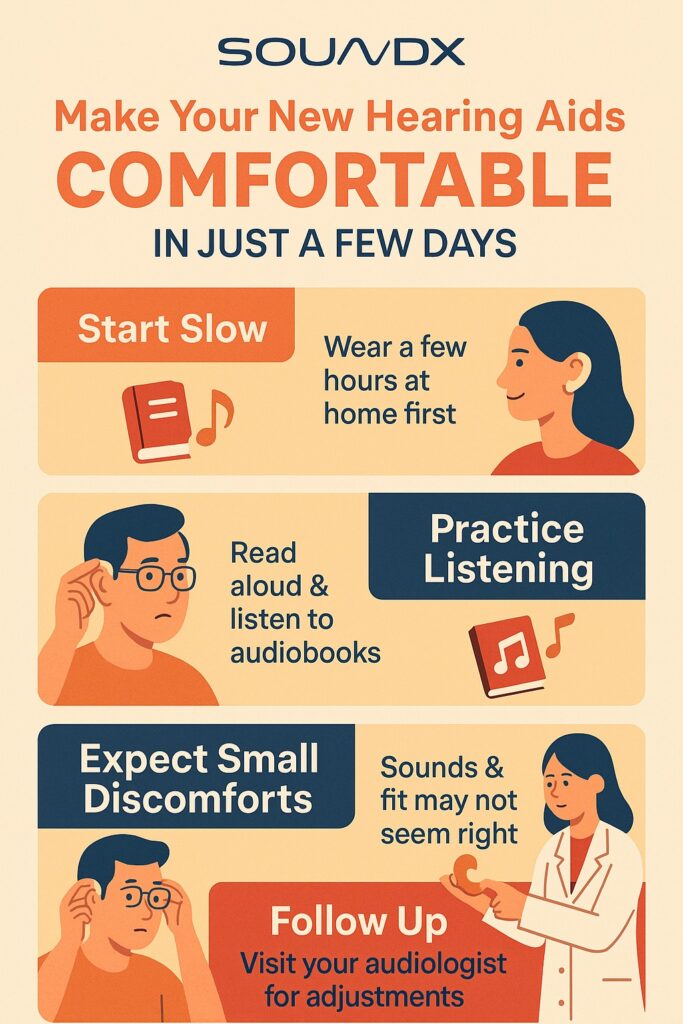
Make Your New Hearing Aids Comfortable in Just a Few Days

Written by- Dr. S.M. Tarique Najeeb

The fastest way to get used to new hearing aids is to wear them consistently every day, practice listening in different environments, and gradually increase usage while learning the device’s key functions like volume control, noise filtering, and Bluetooth connectivity. It’s also important to give your brain time to adjust to the new sounds and the physical sensation of wearing the device.

Over 430 million people worldwide live with hearing loss, and studies show that consistent hearing aid use can improve communication and quality of life by up to 30%. For those with long-term hearing loss, the brain may need extra time to relearn how to process sound, so starting with short, regular listening sessions and gradually increasing them helps. Following these steps allows users to enjoy clearer sounds, better speech understanding, and a more active lifestyle.

SoundX visited an old age home to bring the gift of hearing to seniors, helping them reconnect with their loved ones and the world around them.”

Practice these techniques to make your hearing aids feel natural quickly:

1. Wear Them a Little at First
If this is your first hearing aid, don’t wear it all day right away. Start with a few hours at a time—around 8 hours or less—and slowly increase the time each day. The more you wear it, the better your brain becomes at understanding different sounds. But go slow and give yourself time to adjust.

2. Start in a Quiet Place
For the first few weeks, use your hearing aid in calm, quiet places. This helps your brain recognize sounds better. Once your brain gets used to hearing in quiet places, it will be easier to handle noisy places like restaurants or shopping malls.

3. Practice Listening Exercises
Spend some time each day listening to small sounds around you. Sit in a quiet room and notice things like a bird chirping, a clock ticking, or your own voice. Try reading out loud so your brain can connect words with the sounds you hear. You can also practice figuring out where sounds are coming from.

4. Check In with Your Audiologist
Visit your hearing doctor one or two weeks after getting your hearing aid. They can adjust the device to make sounds clearer, improve the fit, or answer any questions you have. Regular check-ins help you get the best results.

5. Join Hearing Aid Classes
If you can, join online or in-person classes for new hearing aid users. These classes teach useful tips, answer questions, and let you learn from other people who wear hearing aids.

6. Watch TV with Subtitles
If you’ve had hearing loss for a long time, your brain may need practice connecting sounds with words. Turn on subtitles when watching TV or movies. Reading the words while listening helps your brain understand speech more easily.

Achieving Success with Your Hearing Aid

Using a hearing aid successfully takes time, patience, and practice. Here are some important tips to help you get the most out of your device.

1. Be Patient and Stay Positive
It’s normal if your new hearing aid feels strange at first. Don’t get frustrated if you can’t adjust in the first few days. Be patient and keep a positive attitude. The more you focus on improving your hearing, the easier it will become to adapt. If you stick with it through the first few weeks, you’ll see much better long-term results.

2. Have Realistic Expectations
Hearing aids improve your hearing, but they don’t make it perfect. Don’t expect to hear everything clearly right away. Instead, focus on small improvements every day. Celebrate the progress you make, even if it’s just noticing sounds you hadn’t heard before.

3. Learn About Your Hearing
Understanding your hearing loss helps you use your hearing aid better. Read about your condition, learn how hearing aids work, and know what features might help you most. Being informed will make it easier to manage your hearing loss successfully.

4. Practice Every Day
Wear your hearing aid regularly and practice listening exercises daily. Start in quiet places, then move to slightly noisier environments. Over time, your brain will get used to different sounds, and listening will feel automatic. Try to wear your hearing aid during most of your waking hours as you get more comfortable.

Complete Guide to Adjusting to New Hearing Aids

Adjustment MethodTime FrameStarting PointDaily DurationKey ActionsBenefitsSuccess TipsExpected ResultsDifficulty LevelProfessional Support
Gradual Wearing ScheduleFirst 2-4 weeksAny comfortable settingStart 8 hours or less, increase dailyWear device consistently but not all day initially, slowly extend wearing time each dayBrain adapts without overwhelm, builds tolerance naturallyDon’t rush – increase by 1-2 hours every few days, listen to your bodyBetter long-term comfort and sound recognitionEasyMinimal – audiologist guidance helpful
Quiet Environment PracticeFirst 2-3 weeksCalm quiet places like home or libraryMultiple hours daily in peaceful settingsUse device only in quiet spaces before introducing noiseBrain learns to recognize individual sounds clearly firstStay in quiet rooms, avoid restaurants and malls initiallyEasier transition to complex noisy environments laterEasyNone required
Daily Listening ExercisesThroughout adjustment (ongoing)Quiet room at home15-30 minutes per dayFocus on small sounds – birds chirping, clock ticking, your own voiceImproves sound identification and spatial awarenessPractice locating where sounds come from, notice quiet detailsEnhanced ability to identify and locate sound sourcesModerateOptional – classes can help
Read Aloud PracticeFirst 4 weeks dailyAny quiet space10-20 minutes per sessionRead books, articles, or news out loud while wearing deviceConnects words with sounds heard through hearing aidChoose interesting material, speak at normal volumeBetter word-sound association and speech clarityEasyNone required
TV Subtitle TrainingFirst 4-6 weeks (critical for long-term hearing loss)Home entertainment areaDuring all TV and movie viewingAlways turn on subtitles while watching any contentBrain reconnects sounds with visual words, faster comprehensionWatch familiar shows first, read and listen simultaneouslyDramatically improved speech understandingEasyNone required
Audiologist Follow-upsWeek 1-2, then regularly as neededAudiology clinic or office30-60 minutes per appointmentProfessional device adjustments, fit optimization, ask questionsCustomized settings for optimal clarity and comfortBring written list of concerns, be specific about issuesPerfect device tuning and troubleshootingEasyEssential – required
Support Groups and ClassesOngoing throughout processOnline platforms or in-person venues1-2 hours weekly or monthlyJoin hearing aid user communities, attend workshopsLearn from experienced users, get practical tips and emotional supportAsk questions freely, share your experiences with othersFaster problem-solving and reduced frustrationEasyOptional but recommended
Patient Positive MindsetEntire adjustment period (3+ months)Daily mental practiceOngoing every dayStay positive, don’t get frustrated, focus on small improvementsReduces stress, prevents device abandonmentRemind yourself adjustment is normal and takes timeHigher success rate and continued device useModerateOptional counseling if struggling
Realistic Expectations SettingBefore and during adjustmentInitial consultationDaily mindset checkUnderstand hearing aids improve but don’t perfect hearingPrevents disappointment, maintains motivationCelebrate small wins like hearing new soundsSustained long-term satisfaction with deviceEasyAudiologist sets expectations
Educational LearningFirst 2-4 weeks intensivelySelf-study at home2-3 hours initially, ongoingRead about hearing loss, learn device features and functionsEmpowered self-management, better troubleshootingFocus on key features first – volume, programs, cleaningConfident independent device useModerateOptional resources provided
Progressive Environment ExposureWeeks 1-8 gradual progressionQuiet home → moderate → noisy publicIncrease complexity weeklyWeek 1-2 quiet, Week 3-4 moderate noise, Week 5+ restaurants/mallsBuilds real-world confidence in all situationsRetreat to quiet if overwhelmed, use noise filtersComfortable hearing in challenging environmentsModerate to DifficultAudiologist adjustments help
Consistent Daily PracticeMinimum 8-12 weeks for full adjustmentMorning routine integrationGradually increase from 8 to 14-16 hours dailyWear device during all waking hours as comfort increasesCreates automatic listening habits, maximum benefitSet phone reminders, make it part of morning routineDevice becomes second nature, worn without thinkingModerateMinimal after initial setup

Critical Success Factors: Wear consistently every day | Start in quiet environments | Increase time gradually | Practice listening exercises | Schedule audiologist follow-ups within 1-2 weeks | Use subtitles for speech training | Join support communities | Stay patient and positive | Set realistic expectations | Learn device features thoroughly

Timeline Summary: Days 1-7 (device feels strange, 4-8 hours daily) → Weeks 2-3 (getting comfortable, 8-10 hours daily) → Week 4 (feels natural, 10-12 hours daily) → Weeks 5-8 (well-adjusted, 12-16 hours daily) → Month 3+ (fully adapted, automatic use all day)

Remember: Adjusting to a hearing aid takes time, patience, and practice. Don’t hesitate to ask your  hearing care professional for help if you face any issues. Once you get used to your device, it can make a big difference in your daily life, helping you communicate better and enjoy sounds around you.

Final Note:
Getting used to your new hearing aid takes time, but it’s worth it. Be patient, practice every day, and follow your audiologist’s advice. Soon, hearing will feel natural again, and you’ll enjoy every sound around you.

If you need help choosing or adjusting your hearing aid, visit SoundX. They make hearing easy and comfortable with modern hearing aids and caring support.

FAQ

1. How long does it take to get used to hearing aids?
Most people start feeling comfortable with their hearing aids in about 3 to 8 weeks. The more you wear them, the faster your brain adjusts to new sounds.

2. Should I wear my hearing aids all day right away?
No. Start by wearing them for a few hours each day, then slowly increase the time. This helps your ears and brain get used to hearing again.

3. Why should I begin in quiet places?
Quiet places help your brain learn to recognize sounds clearly without too much noise. Once you’re comfortable, you can start using them in louder places.

4. What are listening exercises?
Listening exercises mean practicing small things like hearing birds chirp, a clock tick, or reading out loud. These help your brain understand and locate sounds better.

5. Why should I visit my audiologist after getting hearing aids?
Your audiologist can check if your hearing aids fit well and adjust the settings so you hear more clearly. They can also answer any questions you have.

6. How do subtitles help with hearing?
Watching TV or movies with subtitles helps your brain connect words with sounds again. It makes it easier to understand people when they talk.

7. What if my hearing aids feel uncomfortable?
It’s normal for new hearing aids to feel strange at first. If they hurt or feel too tight, tell your audiologist so they can fix the fit.

8. What’s the most important thing to remember when using hearing aids?
Be patient and positive! Getting used to hearing aids takes time, but if you wear them every day and practice listening, they’ll soon feel natural.

Dr S.M. Tarique Audiologist says:

Hearing loss is easier to fix when you catch it early. Most people wait too long and make it harder to recover clarity.

Visit Profile- Dr. S.M. Tarique Najeeb

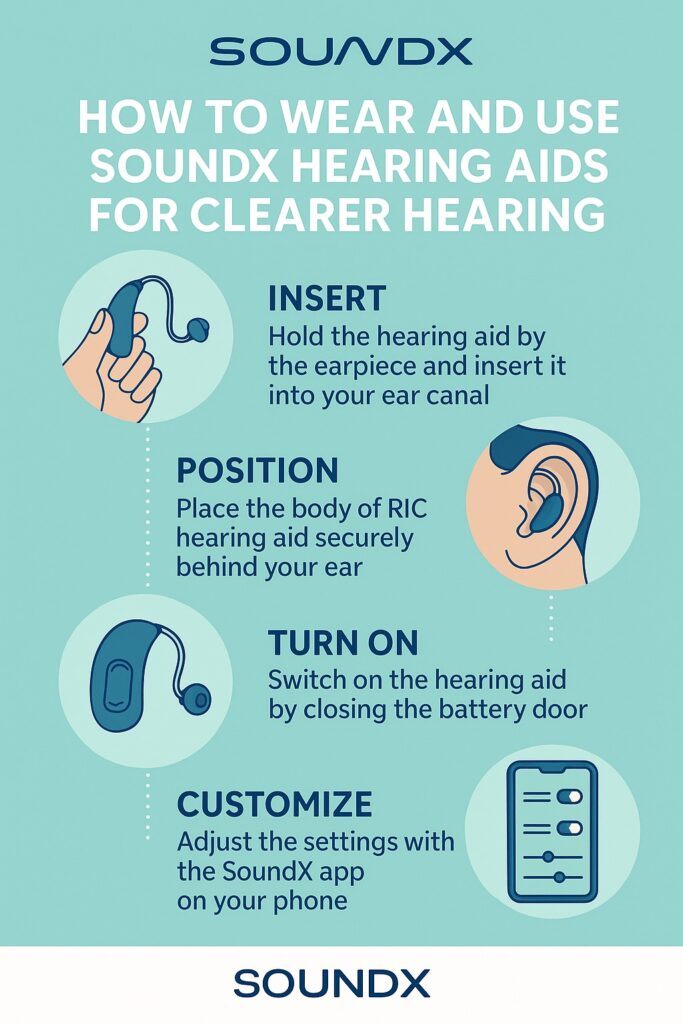
How to Wear and Use SoundX Hearing Aids for Clearer Hearing

Written by- Mr Shivam Singh

This guide will help you learn how to set up, use, and take care of your SoundX hearing aids. It will show you easy steps so you can hear better and keep your hearing aids working well every day.

“SoundX proudly participates in ISHACON 2025, Patna, Bihar — one of India’s largest and most respected audiology conferences!”

What Are the Main Parts of SoundX Hearing Aids and How They Work?

  1. Microphone: The microphone on your hearing aids captures sound from your environment, allowing you to hear conversations, music, and other sounds with clarity.
  2. Multi-function Button 1: This button serves multiple purposes. You can adjust the volume of your hearing aids using Button 1. Additionally, pressing and holding Button 1 for a few seconds turns the hearing aids on or off.
  3. Multi-function Button 2: Button 2 also offers versatility. It allows you to decrease the volume of your hearing aids and switch between different hearing programs. Press and hold Button 2 to activate these functions.
  4. Ear Tube: The ear tube is a crucial component that connects the eartip to the main body of the hearing aid. It ensures a secure and comfortable fit within your ear canal.
  5. Stabilization Bar: To prevent the eartip from moving out of place, the stabilization bar provides stability and comfort throughout the day.
  6. Eartip: Made of soft silicone, the eartip holds the hearing aid securely in your ear canal. It’s essential for comfort and proper functionality. It is available in multiple sizes and can be replaced depending on the size of your ear canal. It is also available in perforated and closed styles, which can be used as per the recommendation of your SoundX audiologist.
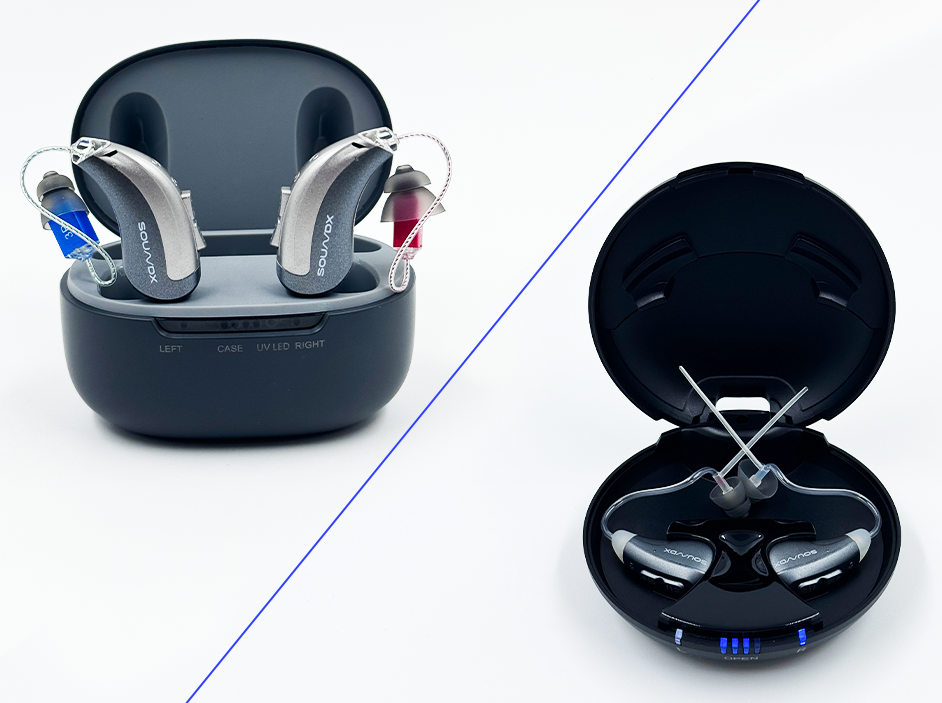
  7. Charging Contact: These contacts allow for easy charging of your hearing aids. Simply place them in the charging case, and they’ll begin charging automatically.
  8. Charging Case: A portable charging case included for convenient recharge-ability of your hearing aids on the go. One full charge will provide up to 18 hours of enhanced hearing.

Charging Case

Your charging case is an essential accessory for storing and charging your hearing aids:

  1. Charging Slots: The charging case features dedicated slots for each hearing aid, ensuring they receive the power they need to function optimally.
  2. Indicator Lights: LED lights on the charging case provide visual feedback on the charging status of your hearing aids and the case itself. This allows you to monitor the charging progress conveniently.
  3. Charging Port: Connect the charging case to a power source using the included USB cable. This ensures that your hearing aids are always ready for use whenever you need them.

Accessories

The product comes with the below listed accessories.

ItemsDescription
Eartip × 10To hold the hearing aid comfortably and securely in the ear canal
USB Cable x 1Used to charge the charging case
Cleaning Tool × 1Used to clean hearing aids and charging case
Manual x 1Used for users to read and understand how to use hearing aids and other objects

Using Your SoundX Hearing Aids: Simple Steps to Get Started

Fitting Eartips

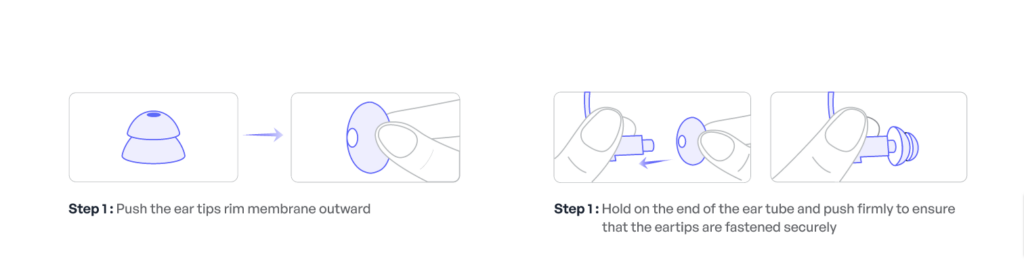
  1. Selecting Eartips: Choose the eartip size that provides the most comfortable and secure fit for your ears. It’s essential to experiment with different sizes to find the perfect fit.
  2. Attaching Eartips: Once you’ve selected the appropriate eartip size, attach it securely to the ear tube. Ensure that the eartip is pushed firmly onto the ear tube to prevent it from coming loose.

Ear Tube Replacement

  1. Removing Ear Tubes: To replace the ear tubes, gently rotate them and pull them out of the hearing aids. Take care not to apply too much force to avoid damaging the devices.
  2. Inserting New Ear Tubes: When inserting new ear tubes, align them with the corresponding slots on the hearing aids and gently push them into place until they’re securely seated.

Power On/Off

  • Turning On: To power on your hearing aids, press and hold Button 1 for approximately three seconds. You’ll hear a notification sound indicating that the devices are now powered on and ready to use.
  • Turning Off: Similarly, to power off your hearing aids, press and hold Button 2 for about three seconds. You’ll hear a notification sound confirming that the devices have been powered off.

Wearing/Removing Hearing Aids

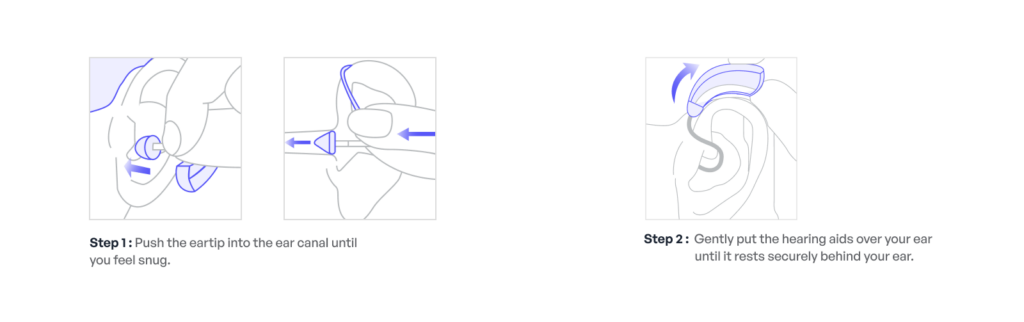
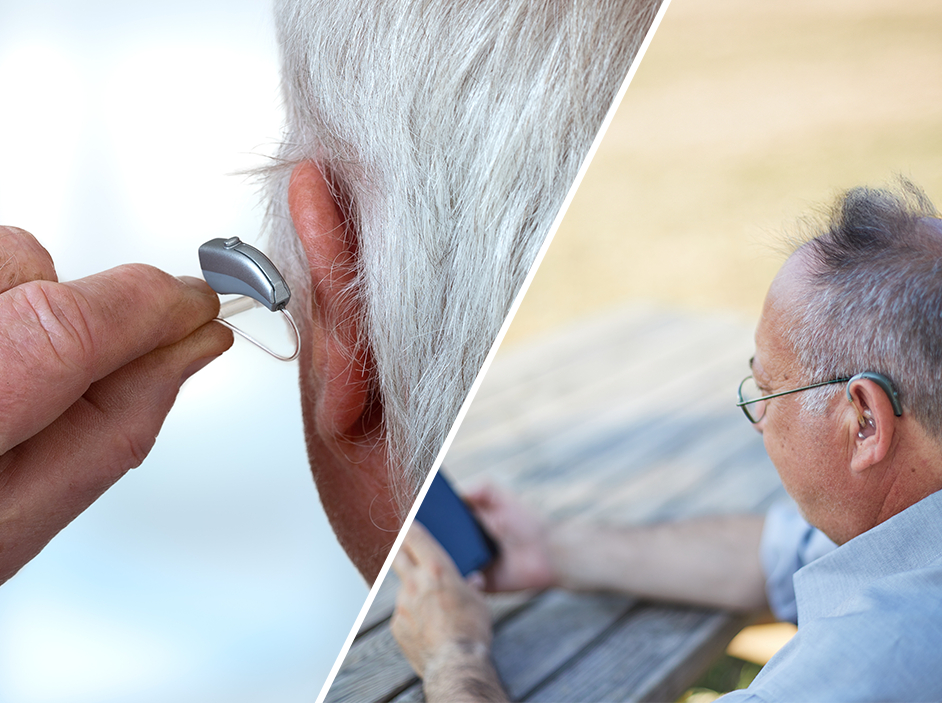
  • Wearing Hearing Aids: Insert the hearing aids gently into your ear canal, ensuring that the eartips are securely seated. Once in place, the devices should feel comfortable and snug.
  • Removing Hearing Aids: To remove the hearing aids, gently pull them out of your ear canal while holding onto the stabilization bar. Take care not to apply excessive force to avoid discomfort.

Volume Control

  • Adjust the volume of your hearing aids using the multi-function buttons. Each press of Button 1 or Button 2 will increase or decrease the volume, respectively.
  • You’ll hear a “Beep” sound each time you adjust the volume, allowing you to gauge the changes in volume levels.

Programs Switching

  • Your hearing aids come with multiple preset programs designed to enhance your listening experience in different environments.
  • If you want to understand your hearing profile better before programming your hearing aids, you can take a hearing test and learn how to read an audiogram.

Specific programs are associated with different prompt tones as mentioned in the table below:

Hearing ProgramPrompt Tone
1Program 1beep
2Program 2beep beep
3Program 3beep beep beep
4Program 4beep beep beep beep

Bluetooth Connectivity

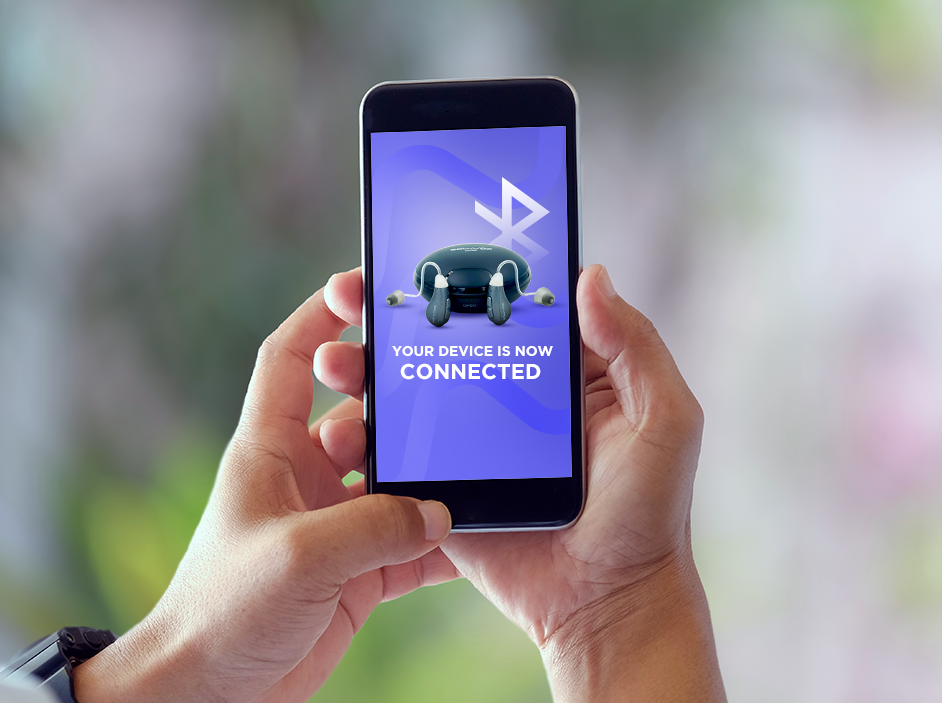
  • Bluetooth technology allows you to connect your hearing aids to compatible devices such as smartphones, tablets, and computers.
  • To initiate a Bluetooth connection, ensure that Bluetooth is enabled on your device and follow the pairing instructions provided in your device’s user manual.

SoundX App

  • The SoundX app provides additional functionality and customization options for your hearing aids. Download the app to your smartphone and follow the on-screen instructions to set up your devices.
  • With the SoundX app, you can:
    • Adjust volume levels
    • Switch between hearing programs to suit your environment
    • Explore our best hearing aids to choose one that fits your lifestyle
    • Learn about hearing loss via blogs and educational videos
    • Contact SoundX expert audiologists
    • Take a hearing test and program your hearing aids according to your hearing loss profile

Charging Your Devices

Charging Hearing Aids

  1. Placing in Charging Case: When it’s time to charge your hearing aids, simply place them in the designated slots within the charging case. Ensure that they’re properly aligned to facilitate charging.
  2. Monitoring Charging Status: LED indicator lights on the charging case will illuminate to indicate that the devices are charging. A blue light indicates that charging is in progress, while a white light indicates that the devices are fully charged.

Charging the Charging Case

  1. Connecting USB Cable: Use the included USB cable to connect the charging port of the case to a power source, such as a computer or wall adapter.
  2. Monitoring Battery Capacity: LED lights on the charging case will provide real-time feedback on the remaining battery capacity, allowing you to plan your charging schedule accordingly.

Device Care Tips

  • Handle your hearing aids with care to avoid drops or impacts that could damage the devices.
  • Refrain from using sharp objects to clean earwax, as this could cause damage to the eartips and ear tubes.
  • Store your hearing aids in a cool, dry place away from moisture and extreme temperatures to prevent damage.
  • Remove your hearing aids before swimming, showering, or engaging in activities that expose them to water.
  • Regularly inspect and clean your devices to remove debris and maintain optimal performance.
  • Replace eartips every few months to ensure a secure and comfortable fit, and consider replacing ear tubes if they show signs of wear or damage.

This comprehensive user manual provides detailed instructions on using and caring for your SoundX hearing aids. If you have any questions or encounter any issues, don’t hesitate to consult this guide for assistance.

FAQ

1. How do I turn my SoundX hearing aids on and off?
To turn them on, press and hold Button 1 for about 3 seconds until you hear a sound. To turn them off, press and hold Button 2 for 3 seconds.

2. How long do my SoundX hearing aids last after a full charge?
When fully charged, your hearing aids can work for up to 18 hours. Always charge them overnight or when the battery gets low.

3. How do I charge my SoundX hearing aids?
Place them in the charging case. The blue light means they’re charging, and the white light means they’re fully charged.

4. Can I connect my SoundX hearing aids to my phone?
Yes! Your hearing aids have Bluetooth. Just turn on Bluetooth on your phone and follow the pairing steps shown on your phone’s screen.

5. What is the SoundX app for?
The SoundX app helps you control your hearing aids easily. You can adjust the volume, switch programs, take hearing tests, and even talk to an audiologist through the app.

6. How do I clean my hearing aids?
Use the cleaning tool that comes in the box. Gently remove dirt or earwax. Don’t use sharp objects or water to clean them.

7. How do I know which eartip size is right for me?
Try a few sizes to see which one feels most comfortable and fits securely. Your SoundX audiologist can also help you choose the right size.

8. What should I do if my hearing aids stop working?
First, check if they are charged and turned on. If they still don’t work, make sure there’s no dirt blocking the eartip. If the problem continues, contact SoundX support for help.

Mr Shivam Singh Audiologist says:

Not all hearing loss needs surgery . In fact most cases can be managed with modern hearing aids. But in some structural or medical cases, surgery can help.

Hearing Aids vs PSAPs: Key Differences You Need to Know

Written by- Dr. S.M. Tarique Najeeb

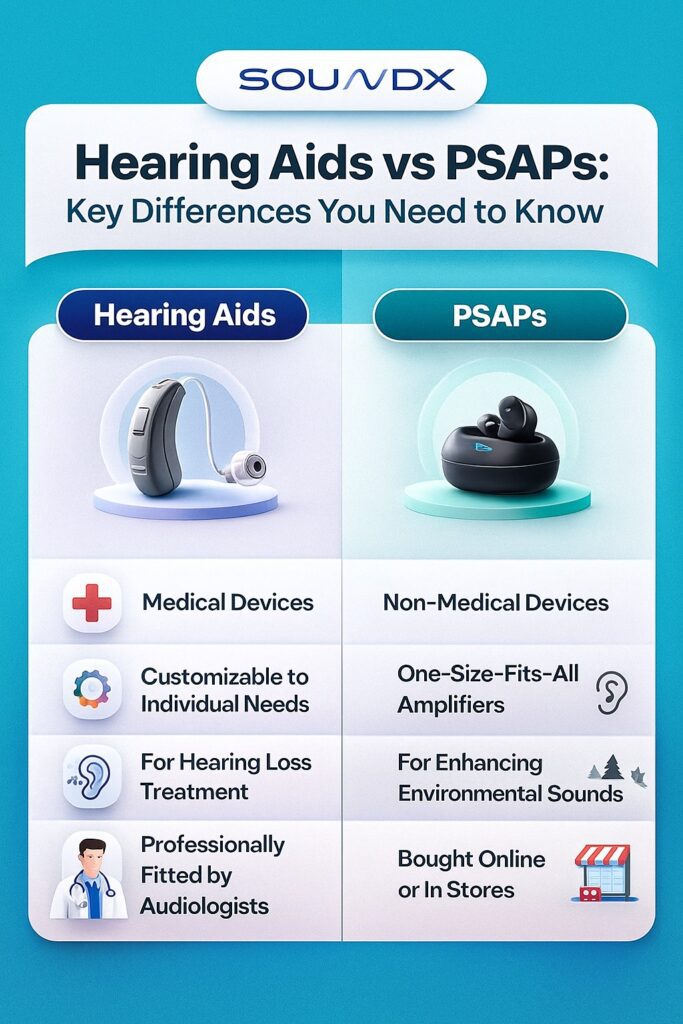
Both PSAPs (personal sound amplifiers) and hearing aids help people hear better, but they are not the same. Many people don’t know the main differences between them.PSAPs can be bought from a store without seeing a doctor, but using them without knowing how they work can sometimes cause problems.

Studies show that hearing aids help people understand speech about 30–40% better than PSAPs, especially in noisy places. The FDA checks hearing aids to make sure they are safe and work properly, which is why doctors usually prescribe them.

Experts say that hearing aids work much better than PSAPs for understanding speech, especially in noisy places. The FDA checks hearing aids to make sure they are safe and effective, which is why doctors usually prescribe them.

Let’s learn the basics of how hearing aids and PSAPs work so it’s easy to understand!

How do Hearing Aids Work?

A hearing aid is a special device that is approved and checked by the FDA. Usually, a doctor or audiologist gives it to someone who has trouble hearing. Since 2020, some hearing aids can also be bought over the counter because the rules changed.

A hearing aid has three main parts that help it work properly:

  1. Microphone: The sound enters the hearing aid through this component, which is then converted into electrical signals and sent to the amplifier.
  2. Amplifier: The amplifier enhances the magnitude of the sound received through the microphone.
  3. Speaker: The amplified sound is received/heard by the user through the speaker. 

Hearing aids are highly customized as per the patient’s needs and are well-fitted to an individual’s ear shape. Some of the hearing aids have advanced features, such as tinnitus control and Bluetooth connectivity. They also enable a person to selectively enhance certain sounds, as well as lessen any background or unwanted noise.

What is a PSAP hearing device?

PSAPs (personal sound amplifiers) are also called sound amplifiers or hearing aid amplifiers, but they are not approved by the FDA as medical devices. People usually use PSAPs for fun or recreational purposes, not because they have trouble hearing. PSAPs come in different shapes and designs, and some of them look a lot like hearing aids. Unlike hearing aids, PSAPs don’t focus on specific sounds — they make all sounds around you louder.

Now, let’s look at the main differences between a hearing aid and a PSAP:

FDA Regulation: 

A hearing aid is a special medical device that is approved and controlled by the FDA. You need a doctor’s prescription to get one. 

PSAPs, on the other hand, are not regulated by the FDA. You can buy them from a store without a doctor, and you don’t need any medical supervision to use them.

Cost: 

Hearing aids are expensive, costing between $2,000 and $4,000.  

PSAPs are much cheaper, usually between $50 and $400, which is why many people buy them. But using a PSAP without a doctor’s advice might harm your hearing instead of helping it.

Selective Sound Enhancement: 

PSAPs make all sounds louder, even the ones you don’t want to hear. 

Hearing aids are smarter. They filter out unwanted sounds and make the important sounds, like someone talking to you, louder. For example, in a noisy café, a hearing aid will help you hear your friend, while a PSAP will just make the noise louder and harder to listen.

Design: 

Most PSAPs have just a microphone, amplifier, and speaker. They are one size fits all and not customized. 

Hearing aids are custom-made by a doctor or audiologist to fit your ear and your hearing needs. They are comfortable, secure, and come with cool features like:

  • Rechargeable batteries
  • Directional microphones
  • Bluetooth connection
  • Tinnitus control

Some modern hearing aids can even be programmed remotely by a doctor, so you don’t have to go to the clinic every time changes are needed.

Why Using PSAPs Can Be Risky for Your Hearing

You might have come across cases wherein people have reported hearing damage after using PSAPs / hearing amplifiers. However, they are not at all dangerous if used after a proper hearing evaluation. Hearing damage usually happens when people try to substitute these devices for hearing aids, which can cause more harm than good. If used without medical supervision, PSAPs can cause temporary or permanent hearing loss in individuals.

Make sure that if you are facing any kind of hearing difficulties, you are getting it diagnosed immediately by a certified healthcare professional. The hearing loss can be assessed easily using an audiogram. Trying to find a solution through the use of a PSAP, not only keeps you from identifying the underlying cause of the issue but might completely damage your hearing abilities in the long run.

Risk of Using PSAPs

Hearing Aids vs PSAPs Comparison Table

FeatureHearing AidsPSAPs (Personal Sound Amplifiers)
FDA RegulationFDA-approved medical devices; require prescription (though some OTC options available since 2020)Not FDA-regulated; no prescription required
Primary PurposeMedical treatment for diagnosed hearing lossRecreational use for enhancing environmental sounds
Cost Range$2,000 – $4,000$50 – $400
Sound EnhancementSelective sound enhancement; filters unwanted noise and amplifies important sounds (e.g., speech)Amplifies all sounds equally, including background noise
CustomizationCustom-fitted to individual ear shape; programmed for specific hearing needsOne-size-fits-all; not personalized
ComponentsMicrophone, amplifier, speaker + advanced technologyBasic microphone, amplifier, and speaker only
Advanced FeaturesRechargeable batteries Directional microphones Bluetooth connectivity Tinnitus control Remote programming capabilityMinimal to no advanced features
Professional InvolvementFitted and programmed by audiologist or doctorSelf-purchased and used without medical supervision
Design & ComfortProfessionally fitted for comfort and securityGeneric fit; may not be comfortable for all users
Risk LevelSafe when properly prescribed and fittedCan cause temporary or permanent hearing damage if used without proper hearing evaluation
Best Used ForDiagnosed hearing loss requiring medical interventionTemporary sound enhancement in recreational settings (e.g., bird watching, theater)
Diagnosis RequirementRequires audiogram and professional hearing assessmentNo diagnosis or assessment needed (but recommended)

How to Choose between a PSAP and a Hearing Aid

Although the fundamental technologies being used in hearing aids and PSAPs are largely similar, these devices are used in completely different scenarios and serve a special hearing purpose. If you are interested in purchasing a PSAP or a hearing aid, you must choose the device carefully based on your specific requirements. If the primary objective is a recreational activity, such as birdwatching or performing on stage, you would want to look for a suitable good-quality PSAP. In addition, a PSAP must be also bought after undergoing a hearing evaluation. On the other hand, to resolve any hearing-related issues, you need to visit an audiologist or an ENT doctor, who can prescribe you a custom-tailored hearing aid. In addition to being customized as per a patient’s requirements, hearing aids are also equipped with additional features that make them highly user-friendly.

Final Note:


Hearing aids and PSAPs may look similar, but they are very different. Hearing aids are medical devices made to treat hearing loss safely, while PSAPs are just sound boosters for fun or short use. Using a PSAP instead of a hearing aid can sometimes make your hearing worse.If you have trouble hearing, always visit a hearing care professional. SoundX can help you get a proper hearing test and choose the right hearing aid made just for you — safe, comfortable, and clear.


FAQ

1. What is the main difference between a hearing aid and a PSAP?
A hearing aid is a medical device for people with hearing loss and is usually prescribed by a doctor. A PSAP is mostly used for fun or temporary sound amplification and is not regulated by the FDA.

2. Can I buy a hearing aid without a doctor’s prescription?
Some hearing aids are now available over the counter, but most still require a doctor or audiologist to prescribe them. PSAPs, however, can be bought anywhere without a prescription.

3. Why are hearing aids more expensive than PSAPs?
Hearing aids cost between $2,000 and $4,000 because they are custom-made and come with advanced features. PSAPs are cheaper, usually $50 to $400, but they don’t offer medical benefits or customization.

4. Do PSAPs filter out unwanted background noise?
No. PSAPs make all sounds louder, including background noise. Hearing aids can filter out unwanted sounds and amplify only the important sounds, like someone talking.

5. Can PSAPs damage my hearing?
Yes, using a PSAP without a hearing evaluation or medical supervision can cause temporary or permanent hearing loss. Hearing aids are safe when prescribed and fitted by a professional.

6. What are the main parts of a hearing aid?
A hearing aid has three main parts: a microphone (to pick up sound), an amplifier (to make sound louder), and a speaker (to send the sound into your ear).

7. Can hearing aids be customized?
Yes! Hearing aids are custom-fitted to your ear and hearing needs. They can also have advanced features like rechargeable batteries, Bluetooth, tinnitus control, and remote programming.

8. How do I decide between a PSAP and a hearing aid?
If you need help with hearing loss, visit a doctor for a custom hearing aid. If you want temporary or recreational sound amplification, you can consider a PSAP, but it’s best to get a hearing check first.

Dr S.M. Tarique Audiologist says:

Don’t fall for the myths! Stay tuned to learn everything about ear care and protect your hearing health.

Visit Profile- Dr. S.M. Tarique Najeeb

Audiologist or ENT Specialist? How They Differ and When to See Each

Written by- Dr. S.M. Tarique Najeeb

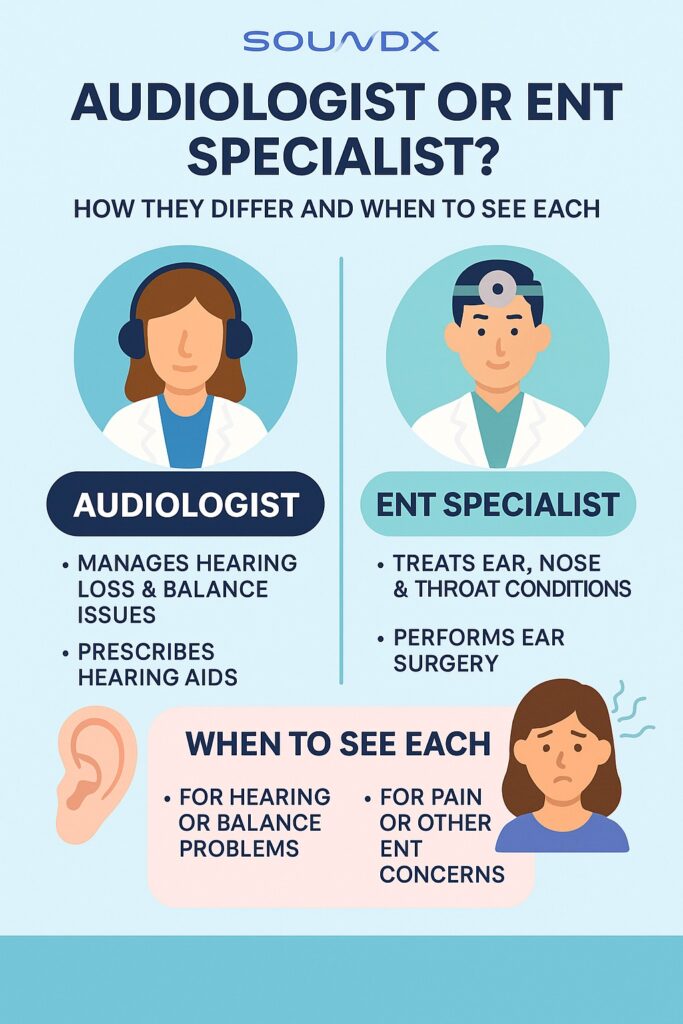
If you have trouble hearing, an audiologist is a healthcare professional who tests your hearing, fits hearing aids, and helps with issues like tinnitus, while an ENT specialist is a medical doctor who treats ear, nose, and throat problems and can perform surgery. Experts say starting with an audiologist is often best, as they can identify the problem and refer you to an ENT if needed. In the U.S., there are about 13,000 audiologists and 15,000 ENT specialists, and studies show professional hearing care can improve understanding of speech by 30–40% compared to using generic sound amplifiers.

“SoundX proudly participates in ISHACON 2025, Patna, Bihar — one of India’s largest and most respected audiology conferences!”

Capabilities of an Audiologist You Should Know

Audiologists are usually the first point of contact for any hearing-related concerns. They are mainly responsible for diagnosing and monitoring any type of hearing disorder, primarily issues pertinent to one’s auditory and vestibular systems. In other words, they should be consulted on matters of hearing damage or complete hearing loss. They can also help patients deal with auditory issues, including tinnitus and balance. In addition to offering support to their patients through the provision of medical hearing aids, they also assist them in improving their quality of life via counseling or communication training. In other words, audiologists mostly support patients with their hearing problems in non-intrusive ways.

If you’re curious about how professionals evaluate your hearing, learn about the hearing test process for a better understanding of what to expect during an appointment. In addition to offering support to their patients through the provision of medical hearing aids, they also assist them in improving their quality of life via counseling or communication training. Before getting fitted for a device, it’s important to understand all hearing aid tests that determine your specific hearing needs.

Capabilities of an ENT Specialist You Should Know

An ENT specialist (or otolaryngologist) is a doctor who treats problems with your ears, nose, and throat. They help patients with conditions like ear infections, sinusitis, sleep apnea, tonsillitis, and even certain cancers. Unlike audiologists, who mainly test hearing and provide hearing aids, ENT specialists can perform surgeries to fix hearing problems caused by infections, tumors, or other medical issues. Audiologists and ENT doctors often work together: an audiologist may refer you to an ENT for treatment, and an ENT may ask you to visit an audiologist to check your hearing progress.

Capabilities of an ENT Specialist

Signs You Should See an Audiologist Immediately

If you are suffering from any type of hearing disorder, an audiologist is the first go-to medical practitioner for your needs. An audiologist plays a role in the diagnosis of a hearing condition, however, he/she seldom can prescribe any medication or administer therapeutics to patients. If the hearing loss is caused by any serious medical condition and is not a result of aging or exposure to loud noise, they usually suggest you consult an ENT specialist. So, when should you consult an audiologist? 

Consult an Audiologist in the following scenarios:

  • Excessive Buildup of Earwax: Although they can’t perform a surgical procedure, an audiologist can help you remove excess earwax that gets built up in the ears over time. 
  • Diagnosis of Hearing Problems: If you are experiencing any kind of hearing difficulties, reach out to an audiologist, who will help you diagnose the condition, the severity of the condition as well as the underlying factors that might have contributed to the hearing problem. 
  • Tinnitus: Some individuals experience a constant ringing/buzzing in their ears, which can be high-pitched at times, and therefore, cause significant discomfort. Such hearing issues, if not severe, are usually treated by an audiologist.
  • Age-induced Hearing Loss: When age-related hearing loss is induced by age, it is usually corrected using a hearing aid. Generally, in such cases, no therapies are prescribed to the patients, or any surgical procedure is required. Therefore, an audiologist is perfectly capable of handling these cases. You can also check the difference between hearing aids and PSAPs to understand which device suits your level of hearing difficulty.

Although both ENT doctors and audiologists work together in most cases, they offer different levels of expertise when it comes to treating hearing-related conditions. An audiologist is often touted as a high-level hearing expert, whereas an ENT deals with much more complex hearing issues induced by underlying medical conditions. Further, an audiologist often follows a non-intrusive approach to treating hearing loss (through hearing aids), while an ENT specialist can prescribe medications, as well as perform surgeries if required. Now, the next time you face any hearing problem, make sure you contact the right medical professional to help you efficiently deal with it.

Bottom Lines:
Audiologists and ENT doctors both help with hearing problems but in different ways. An audiologist checks how well you hear and helps you with hearing aids, while an ENT doctor treats ear, nose, and throat problems and can do surgery if needed.

If you’re not sure who to visit, start with an audiologist. SoundX can help you get your hearing tested and connect you with the right care — so you can enjoy clear, comfortable hearing again.

Signs You Should See an ENT Specialist Immediately

If an audiologist thinks you need extra help, they may send you to an ENT doctor. The ENT can do more detailed tests to find out why your hearing isn’t working properly. If the problem is caused by something serious, like an ear infection or a small tumor, the ENT can treat it with medicine or surgery to help you hear better.

Consult an ENT Specialist in the following scenarios:

  • Otosclerosis: This condition is also termed as fused bones, and results in hardening of bones inside the ear. This is usually a consequence of bone growth within the ear. Surgery by an ENT doctor is the most favorable treatment option for this condition.
  • Sensorineural Hearing Loss: People who experience sudden sensorineural hearing loss are usually not suitable candidates for conventional medical therapies or hearing devices. They need a thorough examination by an ENT doctor to check for the possibility of a severe infection or the presence of benign tumors.
  • Ear Injuries/Head Trauma: If the hearing damage is induced by a head injury, an ENT specialist should be consulted for suitable diagnosis and treatment. 
  • Ototoxicity: Certain medications used for the treatment of cancer or serious heart ailments, can also cause loss of hearing. Such type of hearing loss is also overseen by an ENT specialist. 
  • Balance: Balance-related issues, which are usually caused due to erratic movement of the base of the skull are evaluated by an ENT doctor. 
  • Hearing Problems in Pediatric Population: As hearing loss in children is likely to be a consequence of a genetic disorder, an infection, or allergies, they need sophisticated and thorough evaluation by an ENT specialist before treatment.

Although both ENT doctors and audiologists work together in most cases, they offer different levels of expertise when it comes to treating hearing-related conditions. An audiologist is often touted as a high-level hearing expert, whereas, an ENT deals with much more complex hearing issues induced by underlying medical conditions. Further, an audiologist often follows a non-intrusive approach to treating hearing loss (through hearing aids), while an ENT specialist can prescribe medications, as well as perform surgeries if required. Now, the next time you face any hearing problem, make sure you contact the right medical professional to help you efficiently deal with it.

Audiologist vs ENT Specialist: A Comprehensive Comparison Guide

Understanding the Key Differences Between Hearing Healthcare Professionals

FeatureAudiologistENT Specialist (Otolaryngologist)
Professional TitleHealthcare professional specializing in hearingMedical doctor specializing in ear, nose, and throat
Number in U.S.Approximately 13,000Approximately 15,000
Primary FocusDiagnosing and monitoring hearing disorders; auditory and vestibular systemsTreating medical conditions of ears, nose, and throat; can address underlying causes
Treatment ApproachNon-intrusive methods (hearing aids, counseling, communication training)Can prescribe medications and perform surgical procedures
First Point of ContactOften the first professional to see for hearing concernsUsually consulted after audiologist referral or for complex medical issues
Diagnostic CapabilitiesHearing tests and assessments Audiograms Tinnitus evaluation Balance disorder testingComprehensive medical examinations Advanced diagnostic testing Identification of underlying medical causes
Prescribing AuthorityCannot prescribe medicationsCan prescribe medications
Surgical CapabilitiesCannot perform surgeryCan perform surgical procedures
Common Conditions TreatedAge-induced hearing loss Tinnitus (non-severe) Excessive earwax buildup General hearing difficulties Balance issues (assessment)Otosclerosis (fused bones) Sensorineural hearing loss (sudden) Ear infections Sinusitis Sleep apnea Tonsillitis Tumors (benign/cancerous) Ear injuries/head trauma Ototoxicity (medication-induced hearing loss) Pediatric hearing problems Balance disorders (skull base issues)
Services ProvidedHearing aid fitting and programming Hearing assessments Earwax removal (non-surgical) Tinnitus management Communication training CounselingMedical treatment Surgical interventions Medication prescriptions Treatment of infections Tumor removal Complex diagnostic procedures
Referral PatternRefers patients to ENT when medical/surgical intervention neededMay refer patients to audiologist for hearing testing and hearing aid management
Level of ExpertiseHigh-level hearing expertHandles complex hearing issues with underlying medical conditions
Improvement RateProfessional hearing care can improve speech understanding by 30-40% compared to generic amplifiersTreats medical causes that may restore or improve hearing through intervention
When to See ThemRoutine hearing problems Need for hearing aids Noise or age-related hearing loss Non-severe tinnitus Earwax removalSuspected serious medical conditions Sudden hearing loss Head/ear injuries Medication-related hearing loss Pediatric hearing issues Need for surgery Infections or tumors
Collaborative RoleWorks with ENT specialists; provides ongoing hearing care and monitoringWorks with audiologists; treats medical causes and performs necessary procedures

Conclusion

Audiologists and ENT specialists both play important roles in keeping your hearing healthy, but they focus on different aspects. An audiologist is usually the first professional to consult for hearing tests, hearing aids, and non-invasive treatments, while an ENT specialist handles medical conditions, infections, and surgeries related to the ears, nose, and throat. Working together, these professionals ensure you get the right care at the right time, improving your hearing and overall quality of life. If you notice any hearing issues, consulting the appropriate expert promptly can make a big difference in treatment and recovery.

FAQ

1. What does an audiologist do?
An audiologist tests your hearing, helps fit hearing aids, and treats issues like tinnitus or balance problems. They mainly use non-invasive methods to improve your hearing.

2. What does an ENT specialist do?
An ENT doctor treats ear, nose, and throat problems, including infections, tumors, and sinus issues. They can prescribe medicine and perform surgeries if needed.

3. When should I see an audiologist?
See an audiologist for routine hearing problems, age-related hearing loss, tinnitus, or earwax buildup. They can test your hearing and suggest hearing aids if needed.

4. When should I see an ENT specialist?
Visit an ENT if you have ear infections, sudden hearing loss, head or ear injuries, medication-related hearing problems, or need surgery for hearing issues.

5. Can an audiologist perform surgery?
No, audiologists cannot perform surgery or prescribe medications. They focus on hearing tests, hearing aids, and non-surgical treatment.

6. Can an ENT specialist fit hearing aids?
ENT specialists usually do not fit hearing aids, but they may refer you to an audiologist to help with hearing devices and ongoing hearing care.

7. Do audiologists and ENT doctors work together?
Yes, they often collaborate. Audiologists may refer patients to ENTs for medical treatment, and ENTs may send patients to audiologists for hearing assessments and device fitting.

8. Can professional hearing care improve hearing?
Yes, studies show professional hearing care can improve speech understanding by 30–40% compared to generic sound amplifiers, ensuring better hearing and quality of life.

Dr S.M. Tarique Audiologist says:

Not all hearing loss needs surgery . In fact most cases can be managed with modern hearing aids. But in some structural or medical cases, surgery can help.

Visit Profile- Dr. S.M. Tarique Najeeb