Written by- Dr. S.M. Tarique Najeeb
Plan Stress-Free Trips and Travel Confidently With Hearing Loss
Did you know that over 466 million people worldwide live with hearing loss, and millions of them travel successfully every year? In fact, research shows that travelers who use hearing aids or assistive devices report 40% higher satisfaction on their trips. While it’s natural to worry about missing flight announcements, struggling to communicate abroad, or feeling unsafe in new places, the truth is simple—with the right preparation, hearing loss doesn’t have to limit your adventures at all. With some smart tips and planning, anyone can explore the world confidently and enjoy every moment.
“At our recent hospital event, SoundX took hearing health awareness to new heights — empowering more people to listen, care, and act for better hearing.”
Why Does Planning Ahead Make Such a Huge Difference?
To understand how to travel successfully with hearing loss, you first need to know that preparation really is your greatest travel companion. And when I say preparation, I mean getting specific about what you need.
Hotel Booking Tips for People With Hearing Loss
When picking a hotel, don’t just book the first one you see. Ask about special features for people with hearing loss, because many hotels now offer helpful kits for guests.
These kits often include:
- Phones that are louder than normal
- Alarm clocks that vibrate
- Fire alarms with flashing lights
- Doorbells that flash when someone rings
Here’s an important tip: Hotels must provide accessible rooms under the law (Americans with Disabilities Act). So don’t be shy—ask for these special features when you book. It’s your right!
How Can Airlines Actually Help You Travel Better?
For air travel, you should familiarize yourself with the Air Carrier Access Act (ACAA) because it requires carriers to provide accessible information and services.
Most major airlines now offer:
- Text telephone services
- Visual boarding announcements
- Individual safety briefings upon request
Pro tip: Contact airlines at least 48 hours before travel to inform them of your needs and request assistance. This simple step can prevent so many headaches later.
Also, research your destination’s accessibility features ahead of time. Many airports now have hearing loop systems that can connect directly to hearing aids with telecoil programs, and tourist attractions increasingly offer assistive listening devices.
Cool Technology Tricks to Make Traveling Easier for People With Hearing Loss
Modern technology offers some pretty powerful tools to improve your travel experience. And honestly, some of these advances are game-changers for people with hearing loss.
Hearing Aid Apps – Many hearing aids connect to smartphones. You can adjust volume, change settings, or get alerts directly on your phone.
Captioning Apps – Some apps show live captions for conversations or announcements, so you can read what’s being said in real-time.
Alert Devices – Smart watches or phone alerts can vibrate or flash when there’s a loud sound like a train whistle, alarm, or announcement.
Translation & Travel Apps – Apps can translate signs or announcements into text, helping you understand travel instructions without missing anything.
GPS & Navigation Tools – Smart maps with notifications can guide you through airports, stations, or streets, so you don’t miss your way.
Noise-Cancelling Headphones – These help focus on important sounds and reduce background noise, making it easier to hear alerts or people speaking.
Do You Know How Amazing Modern Hearing Aids Are for Travel?
Here’s something cool: most modern hearing aids don’t require special “airplane mode” settings during flights. Bluetooth connectivity remains active even when your phone is in airplane mode, which means you can stream audio directly to your hearing aids.
Some hearing aids do offer flight mode options to disable wireless features if you prefer, but it’s usually not necessary.
Best Apps to Make Traveling With Hearing Loss Easy
Mobile apps can honestly be complete game-changers for travelers with hearing loss. Here are the ones that consistently get rave reviews:
For Communication:
- AVA – provides real-time transcription of group conversations (perfect for tour groups)
- Google Translate – offers real-time translation with visual text display
- Live Transcribe – converts speech to text instantly
For Phone Calls:
- CaptionCall Mobile – provides real-time phone call captions
For Environment Planning:
- SoundPrint – measures noise levels in restaurants and venues, helping you choose quieter locations
Consider bringing assistive listening devices too like portable FM systems or personal amplifiers. These can be particularly helpful in noisy restaurants, tour buses, or conference settings.
Clear Communication Tips for Travelers With Hearing Loss
Clear communication strategies don’t just reduce stress – they actually improve your entire travel experience.
Use Visual Cues – Look for signs, symbols, or gestures to understand instructions in airports, trains, or hotels.
Text & Chat Apps – Use messaging apps to communicate with travel staff, guides, or friends instead of relying only on talking.
Write It Down – Carry a small notebook or use your phone to write questions or instructions when speaking is hard.
Speak Clearly & Ask for Repeats – Politely ask people to speak slowly, face you, or repeat if you don’t understand.
Use Translation Tools – If traveling abroad, apps can convert spoken words into text so you can read them instantly.
Share Your Needs – Let staff or travel companions know you have hearing loss so they can help you communicate better.
Should You Tell People About Your Hearing Loss?
Yes! Most people want to help, but they need to know the best way to communicate with you.
A smart tip: carry a small card that explains your hearing loss and how you like to communicate. This is especially helpful when traveling to other countries where language can be a barrier.
Where Should You Position Yourself for Better Communication?
In restaurants: Choose well-lit booths away from kitchens and speakers. The lighting helps with lip reading, and being away from noise sources makes a huge difference.
During tours: Stand where you can see the guide’s face clearly. Don’t be shy about moving to get a better position.
In meetings or conferences: Sit where you can see all speakers. Corner seats often work best because you can survey the whole room.
How Do Visual Cues Actually Help?
Use visual cues to enhance communication, and don’t feel awkward about it:
- Look at people’s faces and make eye contact
- Use hand gestures to show or explain things
- Ask people to repeat if you didn’t hear clearly
- Use translation apps that show text on screen when traveling
Air Travel Tips for People With Hearing Loss
Flying can be tricky if you have hearing loss, but airlines are getting better at helping passengers. Knowing a few tips can make your trip smoother and less stressful.
When Should You Inform Airline Staff?
Tell airline staff about your hearing loss:
- When checking in
- When boarding
- Anytime you need help
Also, ask for written updates for gate changes, delays, or boarding announcements. Many airlines can send text alerts directly to your phone, which makes traveling much easier.
How Should You Handle Security Checkpoints?
At security checkpoints, follow these steps:
- Inform TSA agents about your hearing aids beforehand
- Never remove hearing aids or place them in bins (this can cause static damage)
- Remember that hearing aids are exempt from electronic device restrictions
Pro tip: Request priority boarding if available because this gives you time to settle in and communicate with flight attendants about your needs. Ask for an aisle seat to facilitate communication with cabin crew too.
Many airports now display closed captions on all televisions and have visual flight information displays throughout terminals. Take advantage of airline apps for real-time updates as well.
How Can You Stay Safe While Driving to Your Destination?
If you’re driving, modern technology can help you stay safe, even with hearing loss. Many cars now have visual alerts, warning lights, and navigation prompts to keep you aware while on the road.
Best GPS Features to Make Your Journeys Smooth and Easy
Check out these helpful GPS features that make traveling easier for people with hearing loss:
Visual GPS Signals
- GPS apps use clear visuals instead of sounds for people with hearing loss.
TomTom AmiGO App
- Shows big arrows and speed warnings on-screen for easy navigation.
Smartwatch Alerts
- Apps can send vibrations to watches like Apple Watch for turn-by-turn guidance.
Travel Benefits
- Helps people with hearing loss travel safely and confidently.
How Should You Prepare for Emergencies?
Emergency preparedness is crucial:
- Store emergency contact information in your phone with text-capable numbers
- Consider carrying a visual warning light or beacon to alert first responders
- Keep identification that mentions your hearing loss easily accessible
Interesting fact: Research shows that innovative systems are being developed to convert emergency vehicle sirens into visual dashboard alerts for hearing-impaired drivers, with some achieving 95% accuracy in sound recognition.
Travel Tools for Hearing Loss: A Quick Comparison
| Travel Aspect | Without Preparation | With Smart Planning |
| Hotel Stay | Standard room with basic features | Accessible room with vibrating alarms, visual fire alerts, amplified phones |
| Air Travel | Miss announcements, gate changes, delays | Text alerts, visual boarding info, priority boarding assistance |
| Communication | Struggle in noisy places, miss information | Real-time transcription apps (AVA, Live Transcribe), visual cues, written scripts |
| Group Tours | Difficulty hearing guide, miss details | Bluetooth hearing loop systems, written itineraries, designated “hearing buddy” |
| Restaurant Experience | Noisy environments, hard to hear conversations | SoundPrint app to find quiet venues, well-lit booths away from kitchen noise |
| Driving Safety | Miss audio GPS directions, emergency sirens | Visual GPS alerts (TomTom AmiGO), smartwatch vibrations, dashboard visual warnings |
| Emergency Situations | Difficulty alerting first responders | Medical ID cards, text-capable emergency contacts, visual warning beacons |
| Overall Satisfaction | Lower travel satisfaction, more stress | 40% higher satisfaction with proper preparation and assistive devices |
What Makes Group Travel and Tours Work Better?
Group tours can actually be particularly rewarding when you plan appropriately, and many tour companies are getting much better at accommodations.
What Should You Ask Tour Companies Before Booking?
Ask about accessibility accommodations before booking because many now offer:
- Written scripts of tours
- Captioning for videos
- Guides equipped with microphone systems that work with hearing loops
- Some companies even specialize in accessible tours and can provide sign language interpreters when needed
How Do Modern Tour Guide Systems Help?
Tour guide systems have evolved significantly. Many now offer Bluetooth connectivity or hearing loop compatibility that streams audio directly to hearing aids. These systems provide clear, amplified sound while reducing background noise.
Smart positioning strategies:
- Stay close to the guide when possible
- Don’t hesitate to ask questions if you miss information
- Consider designating a “hearing buddy” who can help relay important information
- Request written itineraries in advance so you can follow along even if you miss verbal announcements
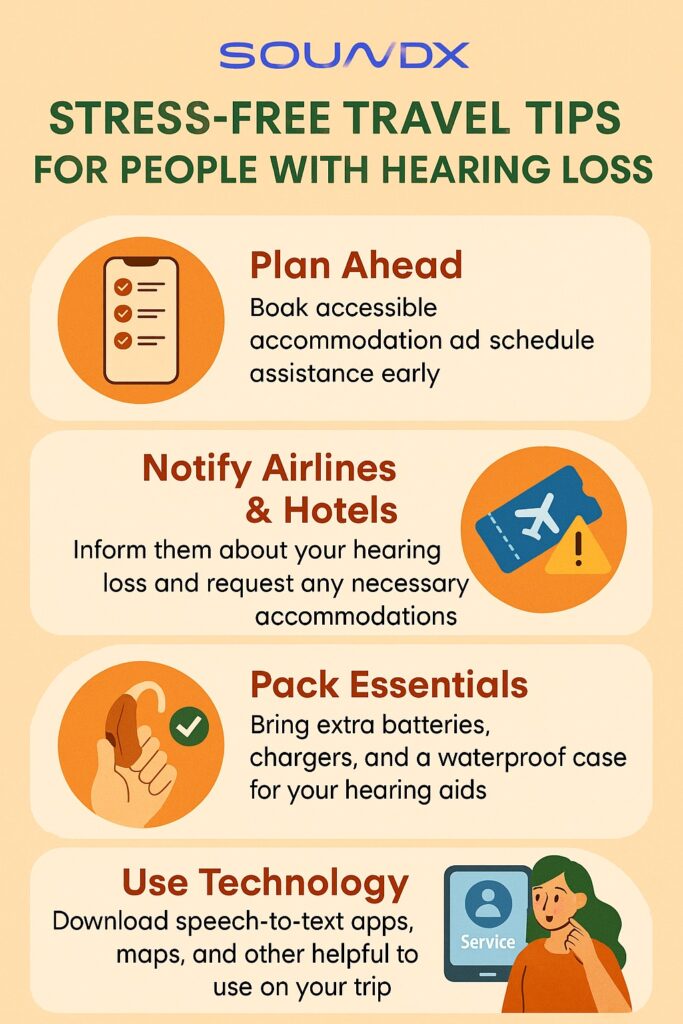
What Should You Pack for Successful Travel?
A well-planned packing list ensures you’re prepared for any situation that comes up.
What Hearing Aid Essentials Should You Never Forget?
Pack these hearing aid essentials:
- Extra batteries (pack twice what you think you’ll need – seriously)
- Chargers for rechargeable hearing aids
- International adapters if traveling abroad
- Waterproof case and dehumidifier (especially for humid destinations)
- Cleaning supplies: soft cloths, wax picks, and brushes
This helps travelers stay prepared and manage costs effectively.
Important: Carry a backup set of hearing aids if available, and store all hearing-related items in your carry-on luggage to avoid loss.
What Assistive Devices Should You Bring?
When you travel, it’s a good idea to bring your own assistive devices, such as:
- Vibrating alarm clocks to wake you up
- Phone amplifiers to hear calls better
- Portable hearing loops for clearer sound
Many hotels don’t have these, so bringing your own helps you stay comfortable and independent.
Extra Tip: Pack a medical information card with your hearing loss details, other health info, and emergency contacts who can receive texts.
How Can You Actually Enjoy the Experience More?
Here’s something important to remember: hearing loss doesn’t define your travel experience – preparation and confidence do.
Research indicates that travelers with hearing loss who plan well often report higher satisfaction than those who don’t prepare. But beyond preparation, there’s something else that makes a huge difference.
Why People With Hearing Loss Might Have Travel Advantages
Embrace the visual aspects of travel because many travelers with hearing loss find they’re more attuned to:
- Visual details others miss
- Architectural features
- Cultural nuances that hearing travelers overlook
Use this as an advantage to create rich, memorable experiences that are uniquely yours.
How Can You Connect with Local Communities?
Connect with local communities through visual means because art, food, and cultural activities often transcend language barriers completely.
Many destinations now offer:
- Visual tours
- Interactive exhibits
- Hands-on cultural experiences specifically designed for accessibility
Pro tip: Document your journey through photography and journaling. These visual memories can be just as meaningful as auditory ones, and sharing your travel experiences can inspire other people with hearing loss to explore the world confidently.
The Bottom Line: Your Next Adventure Awaits
Traveling with hearing loss is possible and can be fun and rewarding when you plan ahead. Using best hearing aids, helpful apps, and assistive devices makes trips easier and safer.
Millions of people with hearing loss travel successfully every year. The key is preparation, confidence, and self-advocacy.
Enjoy Your Travel With Expert Support
Before your next trip, consider scheduling hearing tests to ensure your devices are functioning optimally., check in with MySoundX. They can ensure your hearing aids are travel-ready, suggest useful devices, and give personalized tips.
This is also a good opportunity to schedule 🟢 hearing tests to make sure everything is working perfectly.
With the right support, you’re ready to explore the world and make lasting memories!
FAQ
1. Can people with hearing loss travel safely?
Yes! With hearing aids, apps, and smart planning, people with hearing loss can travel safely and enjoyably.
2. How can hotels help travelers with hearing loss?
Many hotels provide flashing alarms, loud phones, and vibrating clocks. Always ask for these when booking.
3. What should I tell airlines before flying?
Inform them about your hearing loss, request text updates for gates or delays, and ask for any needed help during the flight.
4. Are there apps that help with hearing while traveling?
Yes! Apps like AVA, Live Transcribe, and CaptionCall show speech as text, translate languages, or caption phone calls.
5. How can I hear better in noisy places?
Use assistive devices, sit near speakers, pick quiet spots in restaurants, and look at people’s faces for lip reading.
6. Do hearing aids work well on airplanes?
Yes! Most modern hearing aids work fine on planes, and some can even connect to phones or Bluetooth devices.
7. Can hearing loss give any travel advantages?
Yes! People with hearing loss often notice visual details, cultural cues, and experiences others might miss.
8. What should I pack for traveling with hearing loss?
Extra batteries, chargers, waterproof cases, cleaning tools, backup hearing aids, and a medical info card.
Dr. S.M. Tarique Najeeb Audiologist says:
Hearing loss is easier to fix when you catch it early. Most people wait too long and make it harder to recover clarity.
Visit Profile- Dr. S.M. Tarique Najeeb