From Mild to Moderate: Which Hearing Loss Levels Need a Hearing Aid?
- 18 Nov 2025 2 min read

- Top Hearing Aid Brands in India: Which One Is Right for You? - February 3, 2026
- Ear Machine for Deaf People: Types, Benefits, and Price Guide - February 3, 2026
- Choosing the Right Hearing Aid in Gurgaon Without Overpaying: Prices, Types & Fitting Guide - January 13, 2026
You usually need a hearing aid when your hearing loss is moderate or worse — that means you find it hard to hear normal speech or everyday sounds even when people talk clearly.
Doctors measure hearing loss in decibels (dB):
- Mild: 26–40 dB loss – you miss soft sounds.
- Moderate: 41–55 dB loss – speech sounds unclear.
- Moderately Severe: 56–70 dB loss – you struggle in group talks.
- Severe: 71–90 dB loss – only loud voices are heard.
- Profound: 91 dB+ – you may hear nothing without help.
👉 When hearing loss reaches moderate (around 40 dB), most people benefit from wearing a hearing aid.
Real Stats
According to the World Health Organization (WHO), about 1 in 5 adults has some degree of hearing loss, and over 60% of them can hear much better with properly fitted hearing aids.
Studies also show that people who start using hearing aids early maintain better memory and focus than those who delay treatment.
Understanding Hearing Loss Levels
Mild Hearing Loss
You can hear, but soft sounds fade away.
People talking quietly or from a distance may sound unclear.
Hearing aids may help in noisy places but aren’t always needed.
Moderate Hearing Loss
You often ask people to repeat things.
TV or phone volume feels too low.
➡️ This is when hearing aids are strongly recommended.
Severe or Profound Hearing Loss
Even loud speech sounds unclear.
You rely on lip reading or gestures.
➡️ You definitely need hearing aids or cochlear implants for daily hearing.
Expert Advice — Dr. S. M. Tarique, Audiologist
“Many people wait too long before getting hearing help,” says Dr. S. M. Tarique, our audiologist.
“Once you notice that normal conversations or TV sounds seem unclear, it’s time to get your hearing checked. Starting hearing aids early keeps your brain active and improves your quality of life.”
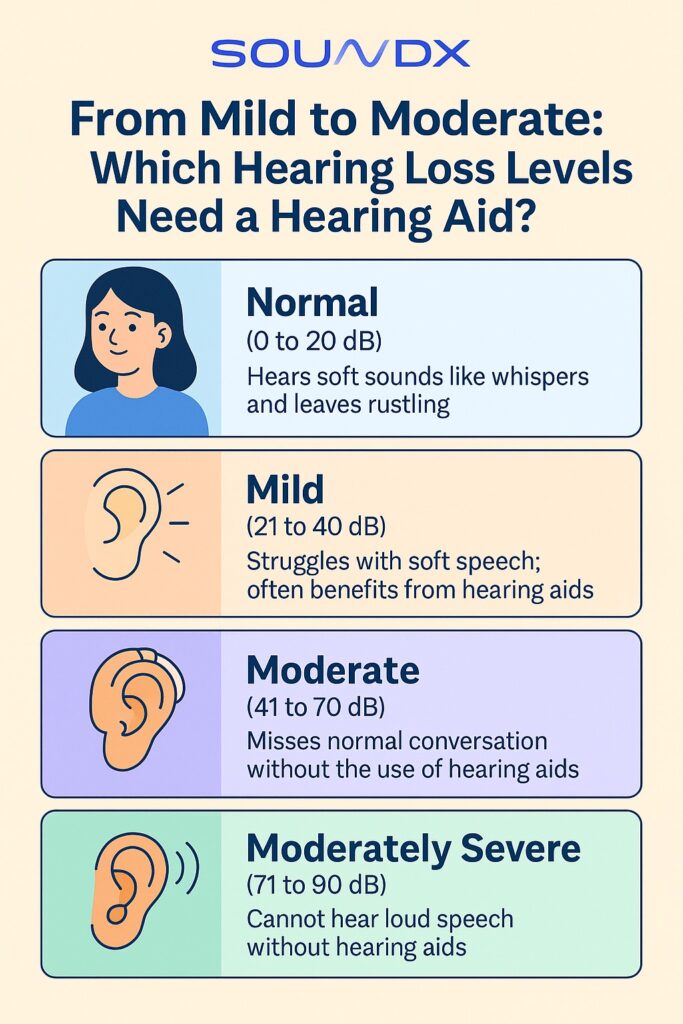
Hearing Loss Levels: When Do You Need a Hearing Aid?
| Level | Decibel Loss (dB) | What You Experience | Hearing Aid Needed? |
| Mild | 26–40 dB | • Miss soft sounds• Quiet conversations unclear• Sounds fade from a distance | Optional Helpful in noisy places |
| Moderate | 41–55 dB | • Speech sounds unclear• Often ask people to repeat• TV/phone volume too low | ✓ Strongly Recommended Most people benefit at this level |
| Moderately Severe | 56–70 dB | • Struggle in group conversations• Need higher volumes• Miss most normal speech | ✓ Definitely Needed Essential for daily communication |
| Severe | 71–90 dB | • Only loud voices heard• Rely on lip reading• Significant communication barriers | ✓ Essential Required for hearing |
| Profound | 91+ dB | • Hear nothing without help• Complete dependence on visual cues• Total communication difficulty | ✓ Critical Hearing aids or cochlear implants necessary |
This combines elements of both conductive and sensorineural hearing loss. You have problems in both your outer/middle ear AND your inner ear or auditory nerve.
Key Takeaway
Moderate hearing loss (around 40 dB) is the critical point where hearing aids become strongly recommended. Starting early helps maintain better memory, focus, and quality of life.
Early detection and treatment prevent further decline and keep your brain active.
How a Hearing Aid Helps
- Makes speech clearer in all situations
- Boosts confidence and communication
- Reduces listening effort and tiredness
- Prevents further hearing damage by keeping the ear active
When to Get Your Hearing Tested
You should take a test if you:
- Struggle to hear people in noisy places
- Turn up TV or phone volume too high
- Feel ringing or buzzing in your ears
- I often ask “What did you say?”
A simple online hearing test can tell if you need a full check-up at a hearing center.
Bottom Line
If your hearing loss is moderate or above, a hearing aid can make daily life easier and more enjoyable. Don’t wait — get your hearing checked early and keep your ears healthy.
To get your hearing checked, visit Soundx – your trusted hearing aid center in Lucknow for a free professional hearing test and personalized care.
FAQ
Q1. What hearing level means I need a hearing aid?
Once hearing loss reaches around 40 dB (moderate), hearing aids help you hear clearly again.
Q2. Can mild hearing loss improve without a hearing aid?
Sometimes yes, if caused by earwax or infection — but always get it checked by an audiologist.
Q3. How do doctors measure hearing loss?
They use a hearing test called an audiogram, which shows how well you hear sounds at different pitches.
Q4. Can hearing aids restore normal hearing?
No, but they make sounds clearer and stronger, helping your brain process them better.
Q5. What happens if I don’t use a hearing aid when needed?
Your brain can forget how to process sounds properly, and communication becomes harder.
Q6. Are hearing aids comfortable to wear?
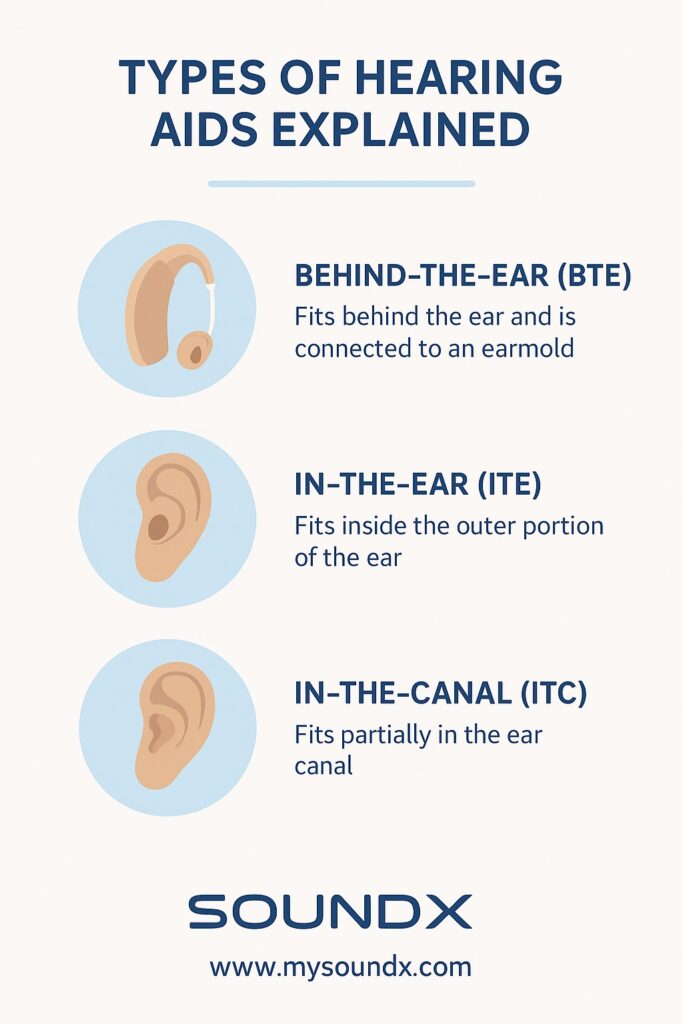
Yes! Modern hearing aids are tiny, light, and fit naturally behind or inside your ear.
Q7. How often should I test my hearing?
Once every year, or sooner if you notice any hearing change.
Q8. Who should I visit for hearing aid advice?
Visit an audiologist like Dr. S. M. Tarique, who can test your hearing and recommend the right solution.