
Hearing Aid Batteries: Everything You Must Know Before Buying

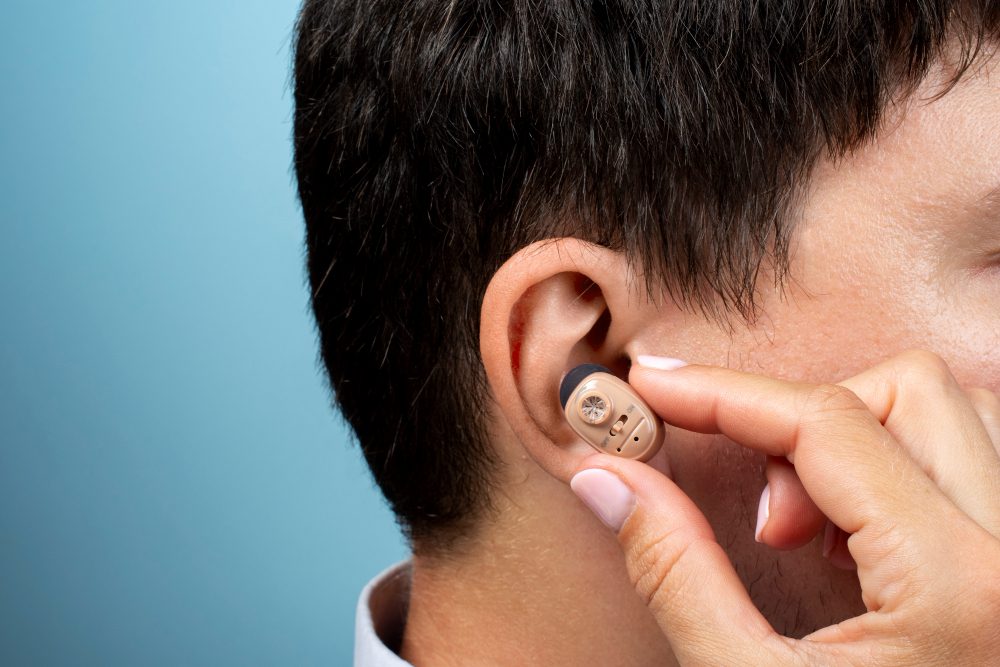
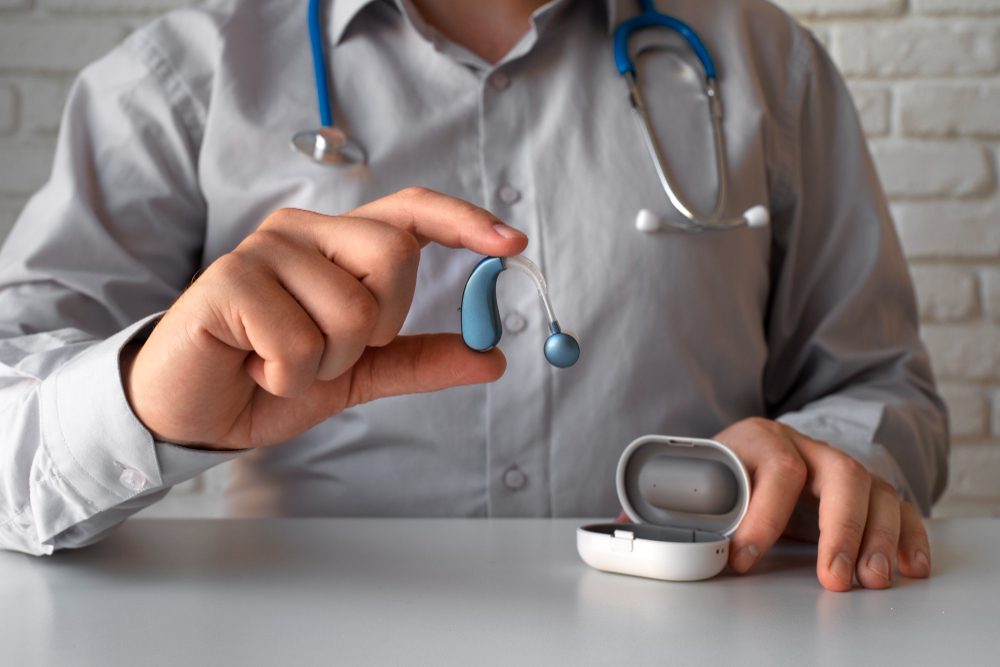
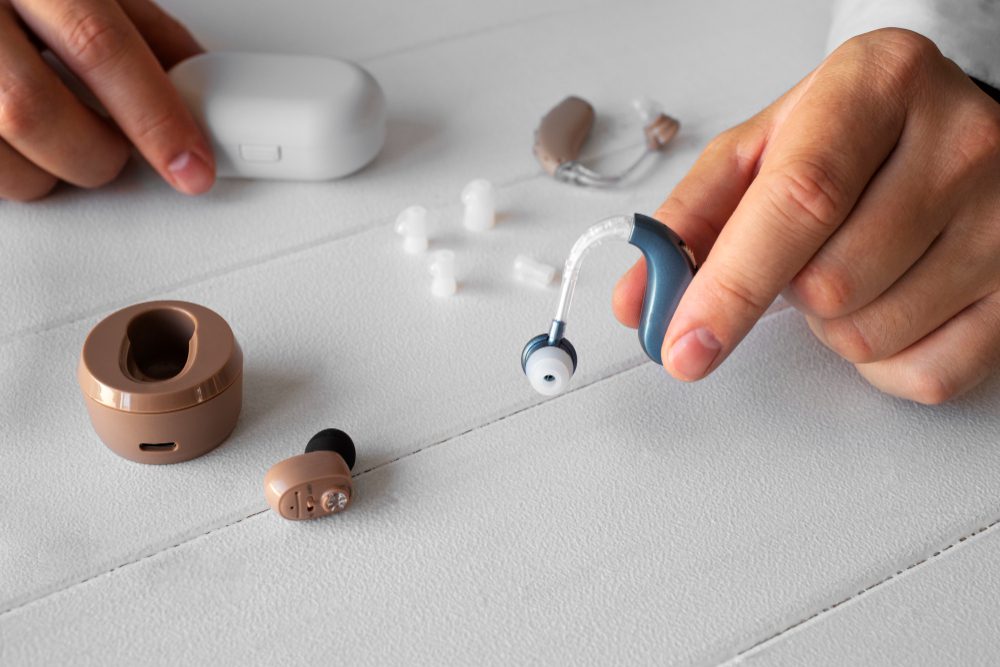
Hearing aid batteries are small power cells that make your hearing aids work. Without the right battery, your hearing aid will stop working or may not give clear sound. That’s why choosing the correct battery size and type is important for good hearing every day.

Real Stats (Easy to Understand)

  • Around 72% of hearing aid users say battery life affects how happy they are with their device (Source: Hearing Review).
  • 1 out of 3 users forget to carry spare batteries, which often leads to sudden hearing aid shutdowns.
  • Rechargeable hearing aids are becoming popular — almost 60% of new hearing aid users choose rechargeable options (Source: MarketScope).

What Are Hearing Aid Batteries?

Hearing aid batteries are small, button-like batteries that give power to your hearing aids. They come in different sizes like 10, 312, 13, and 675. Each size fits a different type of hearing aid.

Types of Hearing Aid Batteries

1. Zinc-Air Disposable Batteries

These are the most common hearing aid batteries. They start working when you remove the sticker and let air enter.

Key Features

  • Affordable
  • Easy to replace
  • Used in most hearing aids

2. Rechargeable Hearing Aid Batteries

These batteries can be charged instead of replaced. Most modern hearing aids come with built-in rechargeable batteries.

Key Features

  • Long-lasting
  • Good for seniors
  • No need to buy batteries again and again

How Long Do Hearing Aid Batteries Last?

Disposable Battery Life

  • Size 10 → 3–5 days
  • Size 312 → 5–7 days
  • Size 13 → 7–10 days
  • Size 675 → 10–14 days

Rechargeable Battery Life

  • One charge lasts 18–24 hours
  • Battery life: 2–3 years

Signs Your Battery Needs Replacement

  • Sound becomes low or unclear
  • You hear beeping inside your hearing aid
  • Hearing aid switches off suddenly
  • Your hearing aid feels slow to respond

Tips to Make Batteries Last Longer

  • Turn off the hearing aid when not using it
  • Store batteries in a cool, dry place
  • Remove the sticker only when ready to use
  • Keep spare batteries with you always

Hearing Aid Battery Comparison: Disposable vs Rechargeable

FeatureZinc-Air Disposable BatteriesRechargeable Batteries
Initial CostLow (per pack)Higher (built into device)
Long-term CostOngoing purchases neededNo repeat purchases
Battery Life Per Use3-14 days (varies by size)18-24 hours per charge
Total LifespanSingle use only2-3 years
ConvenienceNeed to carry sparesCharge overnight
Replacement FrequencyEvery few daysEvery few years
Best ForBudget-conscious usersSeniors, daily users
Environmental ImpactCreates wasteMore eco-friendly
AvailabilityWidely available in storesBuilt into specific models
Ease of UseRequires manual replacementSimple charging routine

Battery Size Comparison (Disposable Types)

SizeBattery LifeCommon Hearing Aid TypeColor Code
103-5 daysSmallest/Invisible aidsYellow
3125-7 daysMini BTE, In-CanalBrown
137-10 daysBTE, In-the-EarOrange
67510-14 daysPower BTE aidsBlue

Note: Battery life depends on hearing aid usage hours, streaming features, and hearing loss severity.

Bottom Line

Hearing aid batteries are a small part, but they play a big role in making your hearing aids work properly. Choosing the right battery and maintaining it well helps you hear clearly every day. If you want help selecting hearing aid batteries or hearing aids in Lucknow, SoundX is a great place to get reliable guidance and support.

FAQ

1. Which hearing aid battery size is best for me?

The best battery size depends on your hearing aid model. Small devices use small batteries, and bigger behind-the-ear models need larger ones. Your audiologist or battery chart can help you choose the correct size easily.

2. How long does a hearing aid battery last?

Most disposable batteries last between 3 to 14 days depending on the size. If you use Bluetooth or listen at high volume, they may drain faster. Rechargeable batteries last the whole day after one full charge.

3. How do I know my battery is dying?

Your hearing aid will sound weak or may start beeping. Sometimes it shuts off suddenly. This is a sign you need to replace or recharge your battery soon.

4. Are rechargeable hearing aids better than disposable batteries?

Rechargeable hearing aids are easier to use because you don’t need to change batteries. They are great for kids and seniors. Disposable batteries, however, are good for people who don’t want to charge daily.

5. Can I store extra batteries at home?

Yes, you can store them easily. Keep them in a cool and dry place—not in the fridge. Also make sure they stay inside their sealed pack until you are ready to use them.

6. Why does my battery drain so fast?

Battery drains faster due to long phone calls, loud volume, or moisture inside the hearing aid. Even cold weather reduces battery life. A quick check by an audiologist can help if the problem continues.

7. Is it safe to buy hearing aid batteries online?

Yes, it is safe if you buy from trusted sellers. Always check the expiry date and brand before ordering. Good-quality batteries help your hearing aid work better.

8. How do I make my hearing aid battery last longer?

Turn off your hearing aid when not using it, keep the battery door open at night, and avoid moisture. Also, wait 1 minute after removing the sticker to activate zinc-air batteries properly.

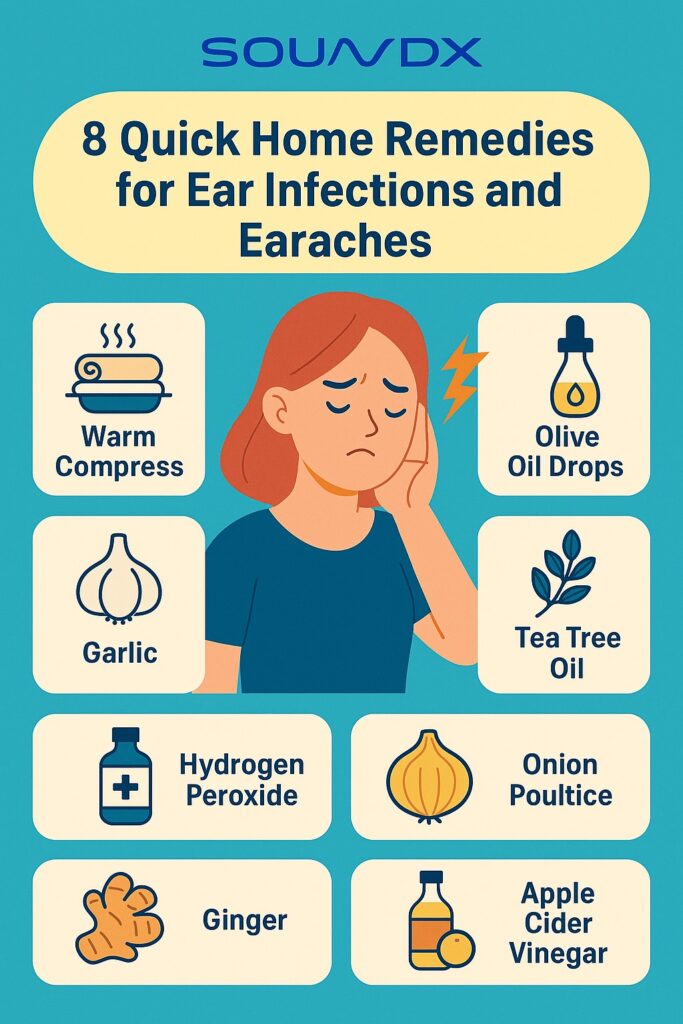
8 Quick Home Remedies for Ear Infections and Earaches

Ear infections and earaches are common — especially when you catch a cold or have water stuck in your ear. The good news is, many mild ear pains can be soothed at home using simple remedies like warm compresses, olive oil drops, and steam inhalation.

Real Facts You Should Know

According to the World Health Organization (WHO), around 5% of the world’s population suffers from ear pain or hearing issues.
Children get ear infections two times more often than adults because their ear tubes are smaller and get blocked easily.
Most mild ear infections improve naturally within 2–3 days, especially when home care is started early.

1. Warm Compress — The Easiest Remedy

A warm cloth or heating pad placed gently over the ear can help reduce pain and swelling.

  • Use it for 10–15 minutes at a time.
  • Make sure it’s warm, not hot!

2. Olive Oil Drops

Olive oil can calm irritated ear tissue and soften any wax buildup.

  • Warm a few drops slightly (not hot!) and place 2–3 drops into the ear.
  • Always check with a doctor if you suspect infection before using any drops.

3. Steam Inhalation

Breathing warm steam helps open the blocked Eustachian tube that connects your ear to your nose.

  • Boil water, cover your head with a towel, and breathe the steam for 5–10 minutes.
  • Add a few drops of eucalyptus oil for extra relief.

4. Garlic Oil

Garlic has natural antibacterial power that can fight infection.

  • Crush a few garlic cloves, mix with olive oil, and warm gently.
  • Let it cool, strain, and use 1–2 drops in the painful ear.

5. Warm Salt Compress

Salt helps draw out fluid and reduce swelling.

  • Heat salt in a pan, wrap it in a cloth, and press gently against the ear.
  • It works well for both kids and adults.

6. Head Elevation

Keeping your head raised helps your ear drain faster and reduces pressure.

  • Use an extra pillow while sleeping.
  • Avoid lying flat for long periods.

7. Hydrogen Peroxide (Mild Cleaning)

Hydrogen peroxide can help remove dirt or wax from the ear canal.

  • Use a 3% solution and place a few drops for 1 minute, then drain.
  • Do not use it if there’s discharge or severe pain.

8. Herbal Tea & Rest

Chamomile or ginger tea helps reduce inflammation and relax your body.

  • Drink warm tea 2–3 times a day.
  • Proper rest allows your immune system to heal faster.

Home Remedies for Ear Infections & Earaches – Comparison Table

RemedyHow It WorksApplication MethodDurationBest ForPrecautions
Warm CompressReduces pain and swelling through gentle heatPlace warm cloth or heating pad over ear10–15 minutes at a timeQuick pain relief for mild earachesEnsure it’s warm, not hot
Olive Oil DropsCalms irritated tissue and softens wax buildupWarm slightly and place 2–3 drops in earAs neededEar irritation and wax-related discomfortCheck with doctor if infection suspected
Steam InhalationOpens blocked Eustachian tube connecting ear to noseBreathe steam with head covered by towel5–10 minutesCongestion-related ear pressureCan add eucalyptus oil for extra relief
Garlic OilNatural antibacterial properties fight infectionCrush garlic, mix with olive oil, warm, strain, use 1–2 dropsAs neededBacterial ear infectionsLet cool before applying
Warm Salt CompressDraws out fluid and reduces swellingHeat salt in pan, wrap in cloth, press against earAs neededFluid drainage and swellingWorks well for both kids and adults
Head ElevationHelps ear drain faster and reduces pressureSleep with extra pillow, avoid lying flatThroughout rest periodNighttime relief and drainageUse consistently while sleeping
Hydrogen PeroxideRemoves dirt and wax from ear canalUse 3% solution, place few drops for 1 minute, drainOnce as neededCleaning and mild wax removalDo not use if discharge or severe pain present
Herbal Tea & RestReduces inflammation and boosts immune healingDrink chamomile or ginger tea warm2–3 times dailyOverall healing supportCombine with adequate rest

Key Takeaway

Most mild earaches improve within 2–3 days with home care. However, see a specialist if pain persists beyond 2 days, or if you experience fever, discharge, or hearing loss.

Bottom Line

Mild earaches can often be managed at home using natural methods. However, if pain lasts more than two days, or there’s discharge or hearing loss — see a hearing specialist immediately.

At SoundX, experienced audiologists and ear care experts can check your ear health, remove wax safely, and guide you on proper treatment. Your hearing comfort always matters — don’t ignore the signs!

FAQ

1. Can I treat an ear infection at home?
Yes, mild ear pain can be treated at home with warm compresses or olive oil, but see a doctor if it doesn’t improve in 2 days.

2. Is it safe to put oil in the ear?
Yes, if your eardrum isn’t ruptured. Always use slightly warm oil and avoid it if there’s fluid discharge.

3. How do I know if my earache is serious?
If you have fever, discharge, or hearing loss, it may be a bacterial infection — see an ear specialist soon.

4. Can steam really help with ear pain?
Yes, steam opens blocked tubes and reduces ear pressure caused by cold or sinus congestion.

5. Why do kids get more ear infections?
Children’s ear tubes are shorter and narrower, so fluid gets trapped more easily.

6. Can I swim if I have an ear infection?
No. Avoid swimming or getting your ears wet until the infection clears fully.

7. How long does an ear infection take to heal?
Most mild infections heal in 2–5 days, but severe cases may need antibiotics.

8. Where can I get my ear checked in Lucknow?
You can visit SoundX, a professional hearing aid and ear care center in Lucknow, for ear cleaning, hearing tests, and expert care.

Can Hearing Loss Cause Memory Problems? Doctors Explain

Bluetooth hearing aids make life easier because they connect to phones, TVs, and tablets without wires. Traditional hearing aids do not connect to devices but give clear sound and are often more affordable. Choosing the right one depends on your comfort, needs, and budget.

Doctors and audiologists across India now prefer Bluetooth hearing aids for everyday use because they offer smart features and better sound control. Research also shows that Bluetooth hearing aids help users understand speech better in noisy places because the sound goes straight to the ear without background noise.

Real Stats & Expert Proof:

  • In a clinical study, older adults using Bluetooth-coupled hearing aids had significantly better speech recognition compared to conventional hearing aids, especially when speech was fast.
  • According to Future Market Insights, the global Bluetooth hearing aids market was valued at about US$ 2.2 billion in 2023, and it’s projected to grow to US$ 5.1 billion by 2033, with a CAGR of ~ 8.8%.
  • Bluetooth capability is now widespread: in 2020–2021, about 80% of available hearing aids included some form of Bluetooth coupling.
  • According to the MarkeTrak 2022 survey, hearing aid adoption has risen — from 22.9% in 1989 to 38.4% in 2022 among people who could benefit from them.

Bluetooth vs Traditional Hearing Aids – A Simple Guide

What Are Traditional Hearing Aids?

Traditional hearing aids are the basic, older-style devices used for many years. They work by making all sounds louder, so you can hear better. They do not connect to phones or TVs.

Traditional hearing aids are helpful for:

  • People who want simple devices
  • Those who don’t use smartphones much
  • Children and elderly people who need basic amplification
  • Anyone who wants a more affordable option

These hearing aids focus mainly on improving loudness, not advanced features.

Simple Features Explained

  • Make surrounding sounds louder:
    They pick up sounds around you and amplify them.
  • Easy to use:
    No app or phone needed; just buttons.
  • Mostly budget-friendly:
    They are cheaper than Bluetooth hearing aids.
  • Work for all age groups:
    Children, adults, and seniors can use them easily.

What Are Bluetooth Hearing Aids?

Bluetooth hearing aids are smart, modern hearing devices. They connect wirelessly to your phone, TV, laptop, and tablet.

These devices help you hear clearly by sending sound directly into your ears, without extra noise.

Bluetooth hearing aids are great for:

  • Students who need clear hearing in class
  • Working people who take phone calls often
  • Anyone who watches TV, movies, or videos
  • People who want high sound clarity

Smart Features Explained

  • Connect directly to phone calls:
    You can hear calls like wearing tiny wireless earphones.
  • Stream music or videos:
    Listen to YouTube, music, or movies directly in your ears.
  • Adjust settings from your phone:
    You can increase volume, change modes, or reduce noise using an app.
  • Better clarity in noisy places:
    The sound goes straight into your ear, avoiding background noise

Main Differences: Bluetooth vs Traditional Hearing Aids

1. Sound Quality

Bluetooth Hearing Aids:
They give very clear sound because the audio is transferred directly from the device (phone/TV) to your hearing aid.

Traditional Hearing Aids:
They amplify all sounds around you. This includes traffic noise, people talking, and other background sounds, which may sometimes make it harder to understand speech.

2. Comfort and Daily Use

Bluetooth:
Very easy for people who watch videos, take calls, or use a smartphone daily. You don’t need to hold a phone to your ear.

Traditional:
Better for those who want something simple, without pairing or apps. Just put it on and use it.

3. Price

Bluetooth:
More expensive because of advanced technology.

Traditional:
More affordable and suitable for low budgets.

4. Control and Settings

Bluetooth:
You can change settings using an app, making it easy to adjust volume and noise levels anytime

Traditional:
Has manual buttons only. You need to press a button on the device to change volume or modes.

Comparison Table

FeatureBluetooth Hearing AidsTraditional Hearing Aids
Sound QualityVery clear & directGood but with background noise
ConnectivityConnect to phone, TV, appsNo connectivity
Ease of UseSmart, app-basedSimple & manual
PriceHigherLower
Best ForTech-friendly usersAnyone wanting basic hearing help

Why Experts Prefer Bluetooth Hearing Aids

Audiologists say Bluetooth devices help users understand speech better in crowded areas because the sound source connects directly. Studies also show users feel more confident when they can hear phone calls clearly without holding the phone close.

Studies also show:

  • People using Bluetooth hearing aids understand speech better
  • They feel more confident in social situations
  • Phone calls sound 2x clearer
  • Kids learn better when sound goes directly to the ear

These benefits make Bluetooth hearing aids a popular choice among experts today.

Bottom Line

Both Bluetooth and traditional hearing aids are useful. If you want clear sound, easy phone calls, and modern features, Bluetooth hearing aids are the better choice. If you want a simple and affordable option, traditional hearing aids also work well.

If you want guidance, SoundX is a reliable center where you can test different hearing aids and choose the one that fits your needs perfectly.

FAQs

1. Which hearing aid gives better sound quality?

Bluetooth hearing aids give much clearer sound because they connect straight to your phone or TV. This removes extra background noise and helps you hear speech more clearly. Traditional hearing aids make all sounds louder, which can sometimes make noisy places confusing.

2. Are Bluetooth hearing aids hard to use?

No, they are very simple to use. You can control everything—volume, modes, and noise settings—from a mobile app. If you can use YouTube or WhatsApp, you can easily use Bluetooth hearing aids!

3. Do traditional hearing aids still work well?

Yes, traditional hearing aids work very well for people who only need basic sound improvement.
They are easy to wear, simple to control, and suitable for all age groups. People who don’t want smart features find them very comfortable.

4. Are Bluetooth hearing aids more expensive?

Yes, they usually cost more because they come with features like streaming, app control, and high clarity. Their advanced technology makes daily hearing much easier and more natural.
Many users feel the extra price is worth the comfort and sound quality.

5. Can kids use Bluetooth hearing aids?

Yes, kids can use Bluetooth hearing aids safely and comfortably. Direct sound helps them hear their teachers clearly and improves speech learning. Many schools and audiologists recommend Bluetooth models for better classroom understanding.

6. Do Bluetooth hearing aids work with all phones?

Bluetooth hearing aids work with most Android phones and iPhones that support Bluetooth.
You just pair them like you pair earphones. Once connected, you can take calls, listen to videos, and adjust settings easily.

7. Which hearing aid is better for noisy places?

Bluetooth hearing aids are better for noisy places because the sound reaches your ears directly.
This helps remove background noise and makes speech clearer. People often feel more confident talking in markets, schools, and offices with Bluetooth models.

8. Where can I buy good hearing aids?

You can visit SoundX, where trained hearing experts help you choose the best hearing aid for your needs. They test your hearing, explain device options, and let you try them comfortably.
SoundX also provides after-care and support so you feel confident using your device.

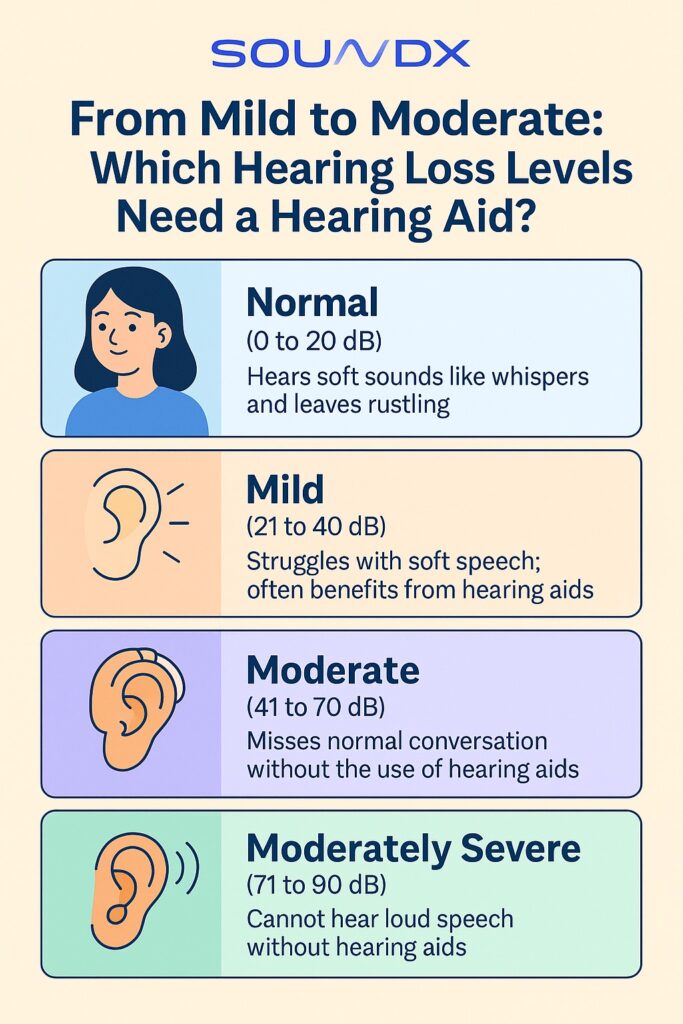
From Mild to Moderate: Which Hearing Loss Levels Need a Hearing Aid?

You usually need a hearing aid when your hearing loss is moderate or worse — that means you find it hard to hear normal speech or everyday sounds even when people talk clearly.

Doctors measure hearing loss in decibels (dB):

  • Mild: 26–40 dB loss – you miss soft sounds.
  • Moderate: 41–55 dB loss – speech sounds unclear.
  • Moderately Severe: 56–70 dB loss – you struggle in group talks.
  • Severe: 71–90 dB loss – only loud voices are heard.
  • Profound: 91 dB+ – you may hear nothing without help.

👉 When hearing loss reaches moderate (around 40 dB), most people benefit from wearing a hearing aid.

Real Stats

According to the World Health Organization (WHO), about 1 in 5 adults has some degree of hearing loss, and over 60% of them can hear much better with properly fitted hearing aids.
Studies also show that people who start using hearing aids early maintain better memory and focus than those who delay treatment.

Understanding Hearing Loss Levels

Mild Hearing Loss

You can hear, but soft sounds fade away.
People talking quietly or from a distance may sound unclear.
Hearing aids may help in noisy places but aren’t always needed.

Moderate Hearing Loss

You often ask people to repeat things.
TV or phone volume feels too low.
➡️ This is when hearing aids are strongly recommended.

Severe or Profound Hearing Loss

Even loud speech sounds unclear.
You rely on lip reading or gestures.
➡️ You definitely need hearing aids or cochlear implants for daily hearing.

Expert Advice — Dr. S. M. Tarique, Audiologist

“Many people wait too long before getting hearing help,” says Dr. S. M. Tarique, our audiologist.
“Once you notice that normal conversations or TV sounds seem unclear, it’s time to get your hearing checked. Starting hearing aids early keeps your brain active and improves your quality of life.”

Hearing Loss Levels: When Do You Need a Hearing Aid?

LevelDecibel Loss (dB)What You ExperienceHearing Aid Needed?
Mild26–40 dB• Miss soft sounds• Quiet conversations unclear• Sounds fade from a distanceOptional Helpful in noisy places
Moderate41–55 dB• Speech sounds unclear• Often ask people to repeat• TV/phone volume too low✓ Strongly Recommended Most people benefit at this level
Moderately Severe56–70 dB• Struggle in group conversations• Need higher volumes• Miss most normal speech✓ Definitely Needed Essential for daily communication
Severe71–90 dB• Only loud voices heard• Rely on lip reading• Significant communication barriers✓ Essential Required for hearing
Profound91+ dB• Hear nothing without help• Complete dependence on visual cues• Total communication difficulty✓ Critical Hearing aids or cochlear implants necessary

This combines elements of both conductive and sensorineural hearing loss. You have problems in both your outer/middle ear AND your inner ear or auditory nerve.

Key Takeaway

Moderate hearing loss (around 40 dB) is the critical point where hearing aids become strongly recommended. Starting early helps maintain better memory, focus, and quality of life.

Early detection and treatment prevent further decline and keep your brain active.

How a Hearing Aid Helps

  • Makes speech clearer in all situations
  • Boosts confidence and communication
  • Reduces listening effort and tiredness
  • Prevents further hearing damage by keeping the ear active

When to Get Your Hearing Tested

You should take a test if you:

  • Struggle to hear people in noisy places
  • Turn up TV or phone volume too high
  • Feel ringing or buzzing in your ears
  • I often ask “What did you say?”

A simple online hearing test can tell if you need a full check-up at a hearing center.

Bottom Line

If your hearing loss is moderate or above, a hearing aid can make daily life easier and more enjoyable. Don’t wait — get your hearing checked early and keep your ears healthy. 

To get your hearing checked, visit Soundx – your trusted hearing aid center in Lucknow for a free professional hearing test and personalized care.

FAQ

Q1. What hearing level means I need a hearing aid?
Once hearing loss reaches around 40 dB (moderate), hearing aids help you hear clearly again.

Q2. Can mild hearing loss improve without a hearing aid?
Sometimes yes, if caused by earwax or infection — but always get it checked by an audiologist.

Q3. How do doctors measure hearing loss?
They use a hearing test called an audiogram, which shows how well you hear sounds at different pitches.

Q4. Can hearing aids restore normal hearing?
No, but they make sounds clearer and stronger, helping your brain process them better.

Q5. What happens if I don’t use a hearing aid when needed?
Your brain can forget how to process sounds properly, and communication becomes harder.

Q6. Are hearing aids comfortable to wear?
Yes! Modern hearing aids are tiny, light, and fit naturally behind or inside your ear.

Q7. How often should I test my hearing?
Once every year, or sooner if you notice any hearing change.

Q8. Who should I visit for hearing aid advice?
Visit an audiologist like Dr. S. M. Tarique, who can test your hearing and recommend the right solution.

How Often Should You Get a Hearing Test? (And Why It Matters for Everyone)

Most people only think about hearing tests when they already notice a problem — but waiting too long can make things worse.
According to the World Health Organization, over 1.5 billion people worldwide experience some degree of hearing loss, and many don’t even know it.
Regular hearing tests help you catch early signs and protect your ears from further damage.

How Often Should You Get a Hearing Test?

For most healthy adults, every 3 to 5 years is a good routine.
However, if you are above 50 or work in a noisy place (like factories or traffic-heavy areas), you should test your hearing once a year.
Children should get tested at least once during school years, as early detection helps with learning and communication.

When You Should Get Tested Sooner

You don’t need to wait for a calendar reminder.
If you notice any of the signs below, it’s time to get tested right away:

  • You often ask people to repeat themselves.
  • You feel like others are mumbling.
  • You turn up the TV or phone volume more than others prefer.
  • You have ringing in your ears (tinnitus).
  • You feel tired after long conversations.

What Happens During a Hearing Test

A hearing test is simple and painless. You’ll sit in a quiet room, wear headphones, and respond to a series of sounds or words. The audiologist measures how well you can hear tones at different pitches and volumes — this creates your audiogram, a map of your hearing ability.

What the Results Mean

he test results show the degree of hearing loss (if any):

  • Normal hearing: 0–25 dB
  • Mild hearing loss: 26–40 dB
  • Moderate: 41–55 dB
  • Moderately severe: 56–70 dB
  • Severe: 71–90 dB
  • Profound: 91+ dB

If your results show moderate or worse hearing loss, a hearing aid might be recommended to improve clarity and communication.

Expert’s Advice – Dr. S. M. Tarique, Audiologist

“Our ears are as important as our eyes. Just as you visit an eye doctor regularly, your hearing should be checked too. Many patients who come late for a hearing test regret ignoring the early signs. Early testing helps you keep your natural hearing strong.”

Hearing Test Frequency Guidelines

Recommended testing schedules based on age and risk factors

Age Group / CategoryRecommended FrequencyWhy It MattersAdditional Notes
Healthy Adults (Under 50)Every 3-5 yearsEstablish baseline hearing levels and catch early changesMore frequently if symptoms appear
Adults Over 50AnnuallyAge-related hearing loss accelerates after 50Critical for maintaining quality of life
Children (School Age)At least once during school yearsEarly detection supports learning and communication developmentTeachers may notice signs first
Workers in Noisy EnvironmentsAnnuallyExposure to 85+ dB can cause permanent damage over timeIncludes factory workers, construction, traffic-heavy areas
Musicians & Audio ProfessionalsAnnuallyRegular exposure to loud music increases riskHearing protection essential
People with TinnitusImmediately, then as advisedTinnitus may signal underlying hearing damageCan be early warning sign
If Noticing SymptomsImmediatelyEarly intervention prevents further deteriorationDon’t wait for scheduled test
Existing Hearing Aid UsersAnnually or as advisedMonitor progression and adjust treatmentDevice settings may need updating

Bottom Line

You should get your hearing tested every few years, and sooner if you notice any difficulty.
It’s a small step that protects one of your most important senses — your ability to connect, listen, and communicate clearly.

If you haven’t had your hearing checked recently, visit Soundx – your trusted hearing aid center in Lucknow for a free hearing test and expert guidance.

FAQs

1. How long does a hearing test take?
A standard hearing test usually takes 15–30 minutes and is completely painless.

2. Is a hearing test only for older people?
No, anyone — even children — can get a hearing test. Hearing loss can happen at any age.

3. Will the test show if I need a hearing aid?
Yes, your audiogram results will show the level of your hearing loss and whether a hearing aid can help.

4. How do I prepare for a hearing test?
You don’t need special preparation. Just make sure your ears are clean and free from wax buildup.

5. Can I take an online hearing test?
Yes, online hearing tests can give you a quick idea, but they don’t replace a full test with an audiologist.

6. How much does a hearing test cost?
Many hearing centers offer free or low-cost hearing tests, depending on your location.

7. Can hearing loss improve by itself?
In some temporary cases (like earwax blockage or infection), it can improve — but most permanent hearing loss needs professional care.

8. Where should I go for a hearing test?
Visit a licensed hearing aid center or audiologist like Dr. S. M. Tarique at your nearest hearing care clinic.

Why Am I Losing My Hearing? Medical Reasons You Should Know

Written by- Dr. S.M. Tarique Najeeb

Hearing loss happens when tiny hair cells in your ear, which send sound signals to your brain, get damaged. This can occur due to loud music, aging, infections, medications, head injuries, or genetics, and these cells cannot grow back. Over 1.5 billion people worldwide are affected, with many young people at risk from loud sounds, but about half of cases are preventable. At SoundX, we provide advanced hearing solutions across India, offering personalized care and the latest technology to restore and protect hearing health.

How Does Your Hearing Actually Work? (It’s More Amazing Than You Think)

Your Ear is Like a Three-Stage Sound Processing Machine

Think of your ear as the most sophisticated audio system ever created. Because that’s essentially what it is – a biological marvel that transforms invisible sound waves into meaningful information your brain can understand.

Stage 1: Your Outer Ear Acts Like a Sound Funnel

Your journey into hearing starts with your outer ear, which includes:

  • The pinna (that visible part everyone sees)
  • Your ear canal

Here’s something cool: that curved shape of your ear isn’t just for looks. It actually helps you figure out where sounds are coming from and funnels them efficiently toward your eardrum.

Stage 2: Your Middle Ear Works as Nature’s Amplifier

When sound waves hit your eardrum, something incredible happens. Your eardrum starts vibrating at exactly the same frequency as the incoming sound.

But here’s where things get really interesting – your middle ear contains three tiny bones with awesome names:

  • The malleus (hammer)
  • The incus (anvil)
  • The stapes (stirrup)

These little bones work together like a mechanical amplifier, boosting sound vibrations by about 20 times before sending them deeper into your ear.

Stage 3: Your Inner Ear is Where the Real Magic Happens

Your inner ear houses something called the cochlea – a snail-shaped structure that’s absolutely mind-blowing. It’s filled with fluid and lined with thousands of tiny hair cells.

When vibrations from your middle ear reach the cochlea, they create waves in the fluid. These waves cause the hair cells to move, and as they bend, they open tiny channels that create electrical signals.

These signals then travel along your auditory nerve to your brain, which interprets them as all the sounds you recognize – your favorite song, your friend’s laugh, or that annoying car alarm outside.

So What Actually Causes Hearing Loss? (The Science Gets Fascinating Here)

Now that you understand how this intricate system works, let’s explore what happens when things start to break down. Because hearing loss occurs when any part of this complex pathway gets damaged or stops functioning properly.

Have You Noticed Older Family Members Asking “What?” More Often?

That’s likely due to something called presbycusis – and it’s actually the most common type of hearing loss out there.

The numbers are pretty striking:

  • 1 out of 3 people have it by age 65
  • 1 out of 2 people have it by age 75

But why does this happen? Well, aging affects several structures in your ear:

Your hair cells gradually deteriorate – especially those responsible for detecting high-frequency sounds. Think of it like having fewer and fewer “sensors” available to pick up sounds.

Your ear’s maintenance system breaks down – there’s something called the stria vascularis that maintains the proper chemical environment in your inner ear, and it degenerates over time.

Your nerve connections weaken – the auditory nerve fibers and spiral ganglion neurons can be lost with age.

The result? Sounds become muffled, you need to crank up the TV volume, and understanding speech becomes harder – especially women’s and children’s voices.

Comparison Table: Different Types of Hearing Loss

CriteriaConductive Hearing LossSensorineural Hearing LossMixed Hearing LossAuditory Neuropathy Spectrum Disorder
DefinitionOccurs when sound waves cannot reach the inner ear due to blockage or damage in outer or middle earResults from damage to inner ear (cochlea) or auditory nerve pathways to the brainCombination of both conductive and sensorineural hearing lossInner ear creates sound but transmission to brain is impaired
Affected AreaOuter ear, ear canal, eardrum, or middle ear bones (ossicles)Inner ear (cochlea), hair cells, or auditory nerveBoth outer/middle ear AND inner ear/nerveInner ear hair cells function but nerve signals are disrupted
Primary CausesEar infections, fluid buildup, perforated eardrum, earwax blockage, otosclerosis, malformed ear structuresAging, noise exposure, genetics, ototoxic medications, Meniere’s disease, acoustic neuroma, viral infectionsCombination of conductive and sensorineural causes, head trauma, chronic ear infectionsGenetic factors, premature birth, low birth weight, lack of oxygen, jaundice, infections
OnsetUsually sudden or gradual, often temporaryGradual (age-related) or sudden (trauma, infection)Variable depending on causesUsually present at birth or early childhood
Severity RangeMild to moderate (typically 25-65 dB loss)Mild to profound (can exceed 90 dB loss)Mild to profound depending on combinationMild to profound, highly variable
Sound QualitySounds are softer but clear when loud enoughSounds are distorted, muffled, or unclear even when amplifiedBoth reduced volume and distortionPoor speech clarity despite normal hearing thresholds in some cases
ReversibilityOften reversible with medical or surgical treatmentUsually permanent; not reversibleConductive component may be reversible; sensorineural component is permanentGenerally permanent but varies
Treatment OptionsMedication, ear cleaning, surgery (tympanoplasty, stapedectomy), hearing aidsHearing aids, cochlear implants, assistive listening devicesCombination: medical treatment for conductive part, amplification for sensorineural partCochlear implants, hearing aids (limited success), FM systems, visual cues
PrognosisGood with proper treatment; hearing often restoredPermanent but manageable with amplificationVariable; depends on extent of each componentVariable; some improve, others remain stable
Speech UnderstandingGood when sound is loud enoughPoor, especially in noisy environmentsModerate to poor depending on severityVery poor despite amplification; difficulty understanding speech
Common SymptomsMuffled hearing, ear pain, feeling of fullness, drainage from earDifficulty hearing high-pitched sounds, tinnitus, dizzinessCombination of both types of symptomsNormal hearing tests but can’t understand speech, especially in noise
Age Group Most AffectedAll ages, common in childrenAdults, increases with age; also noise-induced in younger adultsAdults, elderlyInfants and young children primarily
PrevalenceLess common in adults, more common in childrenMost common type (about 90% of hearing loss cases)About 5-10% of hearing loss casesRare (less than 10% of hearing loss in children)
Diagnostic TestsOtoscopy, tympanometry, audiometry showing air-bone gapAudiometry, speech testing, OAE, ABR showing sensorineural patternCombination of tests showing both patternsOAE (normal), ABR (abnormal), specialized auditory testing
Impact on Daily LifeModerate; can often be correctedSignificant; permanent lifestyle adjustments neededSignificant; requires comprehensive managementSevere; major communication challenges despite normal hearing in some frequencies

Can Loud Sounds Really Destroy Your Hearing? (Unfortunately, Yes)

Here’s something that might shock you: exposure to loud sounds can literally destroy your hearing, and it’s completely preventable.

When you’re exposed to intense noise, two main things happen to your cochlea:

First, direct mechanical damage occurs – the noise physically destroys delicate hair cell structures called stereocilia. It’s like taking a hammer to a delicate watch.

Second, harmful biochemical processes kick in – this triggers a cascade of damage that ultimately leads to hair cell death.

Here’s what’s particularly concerning: the outer hair cells (which give your ear its incredible sensitivity and ability to distinguish between different sounds) are especially vulnerable to noise damage.

And once these cells are damaged or destroyed? They can’t regenerate in humans. This is why noise-induced hearing loss is permanent.

Even more worrying: noise exposures that seem to cause only temporary hearing loss can result in permanent damage to the connections between hair cells and auditory nerve fibers. This “hidden hearing loss” might not show up on standard hearing tests, but it can mess with your ability to understand speech in noisy places.

Why Do Ear Infections Affect Your Hearing?

Middle ear infections (otitis media) are super common, especially in kids, and they can temporarily mess with your hearing.

Here’s what happens: when bacteria or viruses cause inflammation in your middle ear, fluid builds up in the normally air-filled space behind your eardrum. This fluid prevents your eardrum and those tiny bones from vibrating properly, creating what we call conductive hearing loss.

The good news? Most hearing loss from ear infections is temporary and clears up once the infection is gone and the fluid drains.

The not-so-good news? Chronic or repeated infections can sometimes cause permanent damage to your eardrum or those tiny bones, leading to lasting hearing problems.

Does Hearing Loss Actually Run in Families?

You might be surprised to learn that genetics play a huge role in hearing loss – accounting for about 50% to 60% of hearing loss in babies.

More than 400 different genetic syndromes can include hearing loss as a symptom. But most genetic hearing loss is what we call “non-syndromic,” meaning it only affects hearing without causing other health problems.

The most common genetic cause involves mutations in genes that produce proteins called connexins (particularly connexin 26 and connexin 30). These proteins are crucial for maintaining the proper electrical environment in your inner ear.

Here’s something interesting: some genetic factors don’t cause hearing loss directly, but they make you way more susceptible to it. For example, people with certain mitochondrial DNA mutations are at much higher risk of developing hearing loss from certain antibiotics.

Can Your Medications Actually Hurt Your Hearing?

Unfortunately, yes. Some medications can damage your hearing as a side effect – we call them “ototoxic” drugs.

The biggest culprits include:

  • Aminoglycoside antibiotics (like gentamicin, streptomycin, and neomycin)
  • Certain chemotherapy drugs
  • High doses of aspirin
  • Loop diuretics (water pills)
  • Even some over-the-counter pain medications when used regularly

The risk typically goes up with higher doses, longer treatment times, and if you have kidney problems that prevent the drugs from being cleared from your body efficiently.

How Do Head Injuries Affect Your Hearing?

Head injuries can cause hearing loss through several different ways:

  • Direct trauma can damage the delicate structures of your middle or inner ear
  • They can rupture your eardrum
  • They can dislocate those tiny bones in your middle ear
  • More subtle injuries can affect the neural pathways that carry hearing information to your brain

Even mild traumatic brain injuries or concussions can result in hearing problems. Studies show that 34% to 50% of people who experience mild traumatic brain injuries develop some form of hearing loss, tinnitus, or balance problems.

What Other Health Conditions Can Affect Your Hearing?

Several medical conditions can increase your risk of hearing loss:

Diabetes affects hearing in multiple ways – high blood sugar levels can damage the small blood vessels that supply your inner ear, and diabetic neuropathy can affect the auditory nerve. People with diabetes are twice as likely to have hearing loss compared to those without it.

High blood pressure can also contribute to hearing loss by affecting blood flow to your inner ear.  In fact, recent studies show that hearing loss can even affect memory and brain function, linking your ears directly with your cognitive health.

What Are the Different Types of Hearing Loss? (And Why Does It Matter)

Understanding the type of hearing loss is crucial because each type requires different treatment approaches.

Conductive Hearing Loss: When Sound Can’t Get Through

This happens when sound waves can’t reach your inner ear properly due to problems in your outer or middle ear.

Common causes include:

  • Earwax buildup
  • Ear infections with fluid
  • Perforated eardrums
  • Damage to those tiny bones (ossicles)

People with conductive hearing loss often say sounds are muffled or quieter than normal, but speech remains clear if you turn up the volume.

The good news? Conductive hearing loss is often treatable or even reversible through medical or surgical interventions.

Sensorineural Hearing Loss: When the Problem is Deeper

This results from damage to your inner ear (cochlea) or auditory nerve. It’s the most common type of permanent hearing loss and typically affects your ability to hear high-frequency sounds first.

People with this type often report that sounds aren’t just quieter but also less clear. They might hear that someone is speaking but struggle to understand the words, especially in noisy places.

Mixed Hearing Loss: When You Have Both Problems

This combines elements of both conductive and sensorineural hearing loss. You have problems in both your outer/middle ear AND your inner ear or auditory nerve.

Why Is Some Hearing Loss Permanent While Other Types Can Be Fixed?

To understand this, you need to know about the regenerative capabilities of different parts of your ear.

Why Hair Cell Damage is Usually Forever

Here’s the harsh reality: once hair cells in your cochlea are damaged or destroyed, they cannot regenerate. Unlike many other animals (fish, birds, amphibians), mammals have genetically lost the ability to replace damaged hair cells.

When hair cells die, they trigger a complex process that can damage nearby cells and activate cell death pathways. The outer hair cells are particularly vulnerable and are usually the first to go.

Even when hair cells survive initial damage, the connections between them and auditory nerve fibers can be permanently lost. This contributes to difficulties hearing in background noise, even when standard hearing tests appear normal.

Why Blockages and Infections Can Often Be Treated

In contrast to sensorineural hearing loss, conductive hearing loss often responds well to treatment because it typically involves mechanical problems rather than cell death.

When earwax is removed, infections are treated, or fluid drains from the middle ear, the mechanical pathway for sound transmission gets restored.

How Can You Protect Your Hearing? (Prevention is Everything)

Because much hearing loss is irreversible, prevention becomes absolutely crucial.

Noise Protection: Your Most Important Defense

The golden rule: sounds above 85 decibels can cause hearing damage, especially with prolonged exposure. If you need to shout to be heard by someone three feet away, the noise is too loud.

What you can do:

  • Use appropriate hearing protection in noisy environments
  • Foam earplugs are inexpensive and effective
  • Custom-fitted earplugs provide better protection and comfort
  • When you can’t avoid loud sounds, limit your exposure time and take regular breaks

Healthy Lifestyle Choices Make a Difference

Stay active – regular exercise keeps blood flowing to all parts of your body, including the delicate structures of your inner ear.

Manage your health conditions – controlling diabetes and high blood pressure is crucial, as both can contribute to hearing loss.

Be cautious with medications – be aware of ototoxic drugs, and always discuss risks and benefits with your healthcare provider. But never stop prescribed medications without medical guidance.

Early Detection Can Change Everything

Early detection provides the best opportunities for effective intervention. Regular hearing tests can identify problems before they become severe enough for you to notice.  If you’ve never had your ears checked, it’s worth learning how a hearing test actually works to understand what audiologists look for during diagnosis.

When to get tested:

  • The American Speech-Language-Hearing Association recommends annual hearing tests for adults beginning at age 60
  • Don’t wait if you notice warning signs like ringing in your ears
  • Difficulty understanding conversations in noisy environments
  • Frequently asking people to repeat themselves

These could be early indicators of hearing damage.

The Bottom Line: Your Hearing Health is in Your Hands

Understanding the science behind hearing loss reveals both how remarkable your auditory system is and how important it is to protect it.  The good news is that modern hearing aid technology has transformed treatment options, offering advanced digital aids that adapt to your environment and restore natural sound clarity.

Here’s what you need to remember: once hearing is lost, particularly from damage to hair cells or auditory nerves, it often cannot be restored. But armed with knowledge about how your ears work and what threatens them, you can take meaningful steps to preserve your hearing for years to come.

Early detection and intervention can significantly improve outcomes, whether through hearing aids, cochlear implants, or treatment of underlying medical conditions. If you’ve noticed any changes in your hearing, don’t wait – the sooner you seek help, the more options you’ll have.

Your hearing connects you to the world around you. It enables communication, safety awareness, and the enjoyment of music and nature’s sounds. If you’ve noticed changes in your hearing, don’t wait — you can easily book a hearing test online or visit your nearest SoundX center to get started today.

Ready to take action? Visit SoundX for a complete hearing check. Our trained audiologists provide personalized care and use the latest technology to help you hear your best. We make it easy with flexible appointment times and can even come to your home if needed. Taking care of your hearing health has never been simpler!

FAQ

Q1: How do our ears actually work?
Think of your ear like a super cool sound machine. The part you see (outer ear) catches sound and funnels it to your eardrum. The eardrum vibrates, tiny bones in the middle ear make the sound stronger, and the inner ear changes it into signals your brain can understand. Pretty amazing, right?

Q2: What’s the most common reason people lose their hearing as they get older?
It’s just aging! Tiny hair cells in your inner ear slowly wear out over time. That’s why older people might ask you to repeat things or turn up the TV.

Q3: Can loud music really hurt my ears?
Yes! Super loud sounds, like concerts or blasting headphones, can break the tiny hair cells in your ear. And here’s the scary part—they can’t grow back, so the damage is forever.

Q4: If I get an ear infection, will I go deaf?
Don’t worry! Most ear infections only block sound temporarily because of fluid buildup. Once it clears, your hearing usually goes back to normal.

Q5: Is hearing loss something you can inherit from your parents?
Sometimes, yes. Hearing loss can run in families. Some kids are born with it, and some adults are more likely to lose hearing because of their genes.

Q6: Can medicine cause hearing problems?
Unfortunately, some strong medicines can hurt your ears. Doctors only use them when really needed to treat serious illnesses. 

Dr. S.M. Tarique Najeeb Audiologist says:

You do not suddenly lose hearing, It happens in tiny steps that most people ignore.

Visit Profile- Dr. S.M. Tarique Najeeb

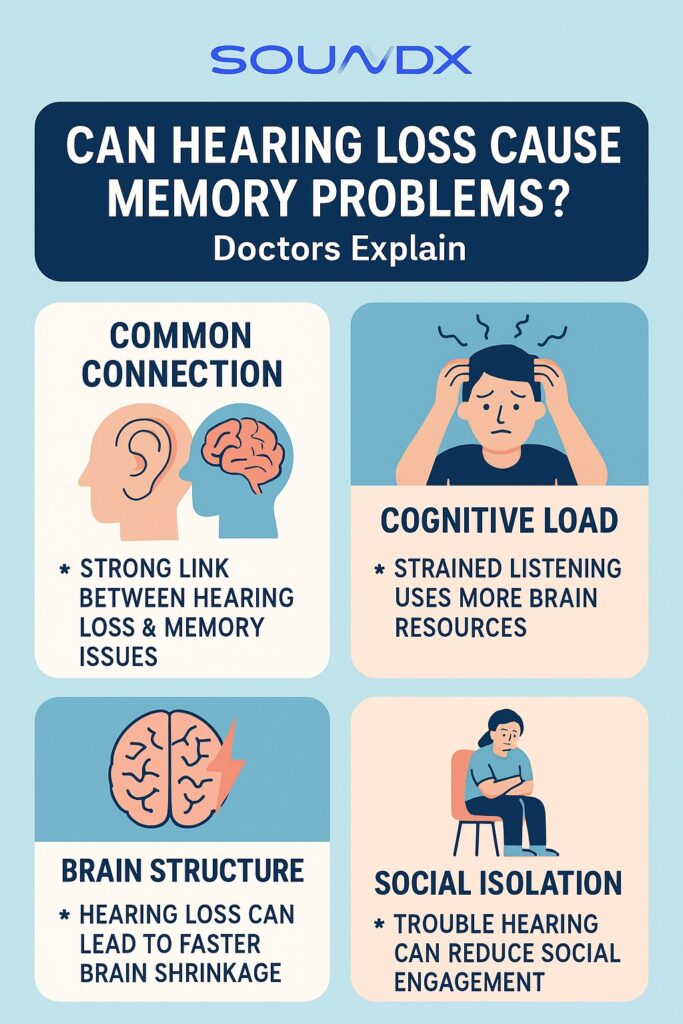
Can Hearing Loss Cause Memory Problems? Doctors Explain

Written by- Dr. S.M. Tarique Najeeb

Untreated hearing loss can raise your risk of dementia—mild loss doubles the risk, moderate loss triples it, and severe loss increases it fivefold. Even a small 10-decibel drop in hearing raises dementia risk by 16%. Studies show nearly 1 in 3 adults over 65 have some hearing loss, yet only 1 in 5 use hearing aids. The good news: using hearing aids can lower dementia risk, improve memory, and help you stay socially connected. Protecting your hearing isn’t just about listening—it’s about keeping your brain healthy.

Your hearing can reveal what’s happening inside your body. Your ears hear more than sound; they reflect your body’s overall health.

How Your Ears and Brain Work Together to Shape Your Hearing

To understand how hearing loss affects your memory, you first need to know how closely your ears and brain work together.

Hearing is not just about your ears picking up sounds. Your brain also plays a big role. When you hear something, your ears send signals to your brain. Then, different parts of your brain work like a team to understand the sound, remember it, and make sense of it.

So, when your hearing doesn’t work well, your brain has to work harder, and that can sometimes make your memory weaker.

The Amazing Journey of Sound: From Your Ears to Your Brain Explained

When sound enters your ears, it doesn’t just stop there. It travels through special sound pathways and reaches a part of your brain called the auditory cortex (that’s in your temporal lobe). This is the place where your brain first starts to make sense of the sounds.

But the journey doesn’t end there. The sound signals then move to other brain areas that handle things like:

  • Memory (to help you remember what you heard)
  • Attention (to help you focus on the sound)
  • Thinking and decision-making (to help you respond the right way)

All these parts of the brain work together so you can understand speech, follow conversations, and reply properly.

Here’s the cool part: the same brain areas that process sound also help with memory and thinking skills. That’s why, if someone has hearing problems, it can also affect their memory and other mental abilities at the same time.

So How Exactly Does Hearing Loss Impact Your Memory?

Scientists have identified several key ways that hearing loss directly impacts memory and cognitive function. And honestly, some of this research is pretty eye-opening.

Ever Feel Mentally Exhausted After Trying to Follow a Conversation?

There’s something called the Cognitive Load Theory, and it provides perhaps the most compelling explanation for the hearing-memory connection.

When you have hearing loss, your brain has to work significantly harder to process unclear or distorted sounds. Think of it like this: instead of your brain running smoothly in normal mode, it’s constantly working in overdrive just to figure out what people are saying.

This increased effort diverts precious mental resources away from other essential functions – like encoding memories and recalling information.

Here’s some fascinating research: Dr. Jonathan Peale used functional MRI scans and found that people with mild to moderate hearing loss show reduced activation in their primary auditory cortex but increased activity in their prefrontal cortex. These are areas that typically aren’t needed for sound processing.

Essentially, your brain is borrowing cognitive resources from memory and executive function areas to help process sound. This leaves fewer resources available for actually remembering information.

The Hearing Loss-Memory Connection: A Complete Overview

AspectDetails
How Ears & Brain Work TogetherSound travels through auditory pathways to the temporal lobe, then distributed to areas responsible for working memory, attention, and executive function
Cognitive Load TheoryBrain works overtime to process unclear sounds, diverting cognitive resources from memory encoding and recall tasks
Brain Activity ChangesReduced activation in auditory cortex, increased activity in prefrontal cortex (borrowing resources from memory areas to understand sound)
Social ImpactCommunication becomes exhausting, leading to social isolation, depression, and accelerated cognitive decline
Brain Structure ChangesAccelerated shrinkage in temporal gyrus areas responsible for sound processing, speech comprehension, and memory functions due to lack of auditory stimulation
Short-Term Memory EffectsForgetting conversations immediately after they happen, missing important details, losing track of instructions, struggling to follow discussions in noisy environments
Long-Term Memory EffectsIncreased risk of Mild Cognitive Impairment (MCI), higher dementia rates, and accelerated cognitive aging over time
Dementia Risk (Mild Hearing Loss)2x higher risk of developing dementia compared to people with normal hearing
Dementia Risk (Moderate Hearing Loss)3x higher risk of developing dementia compared to people with normal hearing
Dementia Risk (Severe Hearing Loss)5x higher risk of developing dementia compared to people with normal hearing
Hearing Aids ImpactUsing hearing aids leads to 19% decrease in cognitive decline risk, 14% improvement in working memory performance, and 20% improvement in attention and focus
Protection StrategiesRegular hearing checkups after age 50, early hearing aid adoption when needed, engaging in cognitive activities (reading, puzzles), maintaining healthy lifestyle including exercise and social connections (can reduce dementia risk by 37%)

Why Do People with Hearing Loss Often Become More Isolated?

Social withdrawal is another critical pathway linking hearing loss to memory problems. And this one creates a really vicious cycle.

When communication becomes effortful and exhausting, many people with hearing loss begin avoiding social situations. This leads to isolation and depression, which research shows accelerates cognitive decline.

The numbers are concerning: studies demonstrate a strong relationship between depression and hearing loss among U.S. adults of all ages. Adults with untreated hearing loss are significantly less likely to participate in organized social activities.

Social isolation has been directly linked to faster cognitive decline and increased dementia risk. So you end up with this cycle where hearing loss leads to isolation, which further accelerates memory problems.

Can Hearing Loss Actually Change Your Brain Structure?

This might be the most alarming finding of all: there’s evidence showing that hearing loss physically changes your brain structure.

Research from Johns Hopkins Medicine found that individuals with untreated hearing loss experience accelerated brain shrinkage – particularly in areas crucial for memory and cognitive function.

Here are the specifics: people with hearing loss had faster rates of brain shrinkage in the superior, middle, and inferior temporal gyrus structures. These areas process sound and speech but are also heavily involved in memory and sensory integration.

This shrinkage occurs because these brain regions receive less stimulation due to impaired hearing. It’s basically the “use it or lose it” principle at work in your brain.

What Does the Research Actually Show? (The Numbers Are Pretty Striking)

The scientific evidence connecting hearing loss to memory problems is honestly overwhelming.

Dr. Frank Lin’s Landmark Study

Dr. Frank Lin followed 639 adults for nearly 12 years, and here’s what he found:

  • Mild untreated hearing loss: doubled dementia risk
  • Moderate loss: tripled the risk
  • Severe hearing loss: made people five times more likely to develop dementia

Recent Large-Scale Research Confirms These Findings

A comprehensive 2024 study in Denmark involving 573,088 participants confirmed these findings. The study showed that hearing loss was associated with increased dementia risk, with severe hearing loss carrying a 20% higher risk.

But here’s the really important part: the study also revealed crucial evidence about treatment:

  • People with hearing loss who didn’t use hearing aids had a 20% higher dementia risk
  • Those using hearing aids had only a 6% increased risk

That’s a huge difference that shows treatment really matters.

The Molecular Level Evidence

Recent research published in Nature Aging even identified specific molecular mechanisms. The study showed how hearing loss reduces levels of something called GDF1 protein, leading to greater amyloid-β plaque deposits – which is a signature pathology of Alzheimer’s disease.

What Are the Immediate Memory Problems You Might Notice?

When someone has hearing loss, memory problems often show up early. Many people don’t realize these issues are connected to their hearing.

Some common signs are:

  • Forgetting what someone just said
  • Missing important details in a conversation
  • Getting confused when following step-by-step instructions
  • Having trouble keeping up in group talks, especially if it’s noisy
  • Only remembering part of what was said in social situations

Why does this happen? Because when your ears don’t hear clearly, your brain has to work extra hard just to understand the words. Since your brain is so busy trying to “decode” the sounds, it doesn’t have enough energy left to store those words in memory.

That’s why sometimes you hear someone speak but can’t remember it a few minutes later.

What Happens to Your Memory in the Long Term?

If hearing loss is not treated, it can cause bigger problems for your memory over time.

Research shows that untreated hearing loss can increase the risk of:

  • Mild memory problems (called Mild Cognitive Impairment or MCI)
  • Different types of dementia (when the brain has trouble thinking and remembering)
  • Faster aging of the brain (your memory and thinking skills can get weaker sooner than normal)

So, hearing problems don’t just make it hard to hear today—they can affect your brain and memory years down the road.

A Concerning Study from China

A comprehensive study of older adults in China found that participants with hearing loss plus unhealthy lifestyle factors had approximately a twofold increased risk of cognitive impairment.

Even more concerning: the brain structural changes associated with hearing loss are comparable to those seen in people developing mild cognitive impairment.

The Timeline Matters

Here’s something critical to understand: hearing loss doesn’t just increase immediate memory problems. It sets in motion a cascade of brain changes that accelerate cognitive aging and increase dementia risk over years or decades.

That’s why early intervention is so important – the sooner you address hearing loss, the more you can potentially prevent or slow down these long-term changes.

Can Hearing Aids Actually Improve Your Memory? (The Answer Might Surprise You)

Here’s the really encouraging news: treating hearing loss can significantly improve memory and cognitive function. And the research backing this up is pretty impressive.

The Numbers Show Real Improvement

A groundbreaking analysis of 31 studies involving 137,484 participants found that hearing aid use was associated with:

  • A 19% decrease in long-term cognitive decline risk
  • A 3% improvement in short-term cognitive test scores

Dr. Jamie Desjardins’ Remarkable Research

Dr. Desjardins showed some pretty amazing improvements in hearing aid users after just six months:

  • Working memory improved by 14%
  • Selective attention improved by 20%
  • Processing speed increased significantly

Another study found that after 18 months of hearing aid use, participants showed significant improvement in executive function and had no cognitive decline.

Why Do Hearing Aids Help Memory?

The mechanism is actually pretty clear: by restoring auditory input, hearing aids reduce the cognitive load on your brain. This allows your brain to redirect resources back to memory and other cognitive functions.

This explains why early intervention is so crucial – the sooner hearing loss is treated, the more cognitive resources can be preserved.

How Can You Protect Both Your Hearing and Your Memory?

Protecting your hearing health is honestly one of the most effective ways to preserve memory and cognitive function as you age.

Regular Checkups Are Your First Line of Defense

Regular hearing checkups should be part of your routine health maintenance, especially after age 50. Early detection allows for prompt intervention before significant cognitive impacts occur.

Remember: the earlier hearing loss is found, the sooner you can get the services and treatment you need to support your overall brain health.

Don’t Wait to Get Hearing Aids

Early hearing aid adoption is crucial. Research shows the protective effects are strongest when treatment begins early.

Don’t wait until hearing loss severely impacts your daily life – even mild hearing loss can benefit from intervention. The Denmark study we mentioned earlier proves this point perfectly.

Keep Your Brain Active and Engaged

Mental exercises and cognitive training can provide additional protection beyond hearing aids:

Try these brain-boosting activities:

  • Auditory training exercises
  • Brain games and puzzles
  • Staying socially engaged
  • Listening to music
  • Engaging in complex conversations
  • Learning new skills

All of these provide valuable brain stimulation and help maintain cognitive resilience.

Healthy Lifestyle Habits Make a Big Difference

When combined with hearing care, healthy lifestyle habits significantly reduce your risk:

Focus on these areas:

  • Follow a Mediterranean diet rich in antioxidants
  • Get regular physical activity
  • Don’t smoke
  • Limit alcohol consumption

Research shows that sticking to healthy lifestyle factors can reduce cognitive impairment risk by 37% – even in people who already have hearing loss.

The Bottom Line: Healthy Ears Keep Your Brain Healthy

Taking care of your hearing is also taking care of your brain and memory. Hearing loss isn’t just about missing sounds—it can also make it harder to think clearly, remember things, and stay independent as you get older.

The good news is that this works both ways. Just like hearing problems can make memory worse, treating hearing loss can help your brain work better and lower the risk of dementia.

The most important thing is to find and treat hearing problems early before they cause permanent changes in your brain.

Don’t Wait Until It’s Too Late

Don’t wait for your hearing to get worse or for memory problems to become noticeable. Schedule a full hearing checkup at MySoundX today.

Getting your hearing checked could be one of the most important steps to protect your memory, thinking skills, and overall brain health for years to come.

Remember: when you take care of your hearing, you’re also taking care of your brain. That’s a strong reason to act now!

FAQs – Hearing Loss and Memory

  1. Can hearing loss affect my memory?
    Yes! When your ears don’t hear clearly, your brain works harder, leaving less energy to remember things.
  2. Why do I forget conversations if I have hearing problems?
    Your brain spends most of its energy trying to understand sounds, so it doesn’t store the information in memory properly.
  3. Does hearing loss cause long-term brain problems?
    Untreated hearing loss can increase the risk of memory problems, mild cognitive issues, and even dementia over time.
  4. Can hearing aids help my memory?
    Yes! Using hearing aids reduces the brain’s workload and helps improve memory, attention, and thinking skills.
  5. Why do people with hearing loss feel isolated?
    Hearing problems make conversations tiring, so some people avoid social situations, which can hurt memory and mental health.
  6. Does hearing loss change the brain?
    Yes, untreated hearing loss can shrink parts of the brain involved in hearing, memory, and thinking.
  7. When should I get my hearing checked?
    It’s best to get a hearing check regularly, especially after age 50, or as soon as you notice hearing problems.
  8. How can I protect my brain and hearing?
    Use hearing aids if needed, stay socially active, do brain exercises, eat healthy, exercise, and avoid smoking or too much alcohol.

Dr. S.M. Tarique Najeeb Audiologist says:

“SoundX proudly participates in ISHACON 2025, Patna, Bihar — one of India’s largest and most respected audiology conferences!”

Visit Profile- Dr. S.M. Tarique Najeeb

What are the best hearing aids in Lucknow?

Written by- Founder Vinod Kumar

Welcome to your place for best hearing aids in Lucknow. We understand how important good hearing is for daily life. In India, around 63 million people have some level of hearing loss — that’s about 6.3% of the population. Among them, 7.6% of adults and 2% of children are affected, making the need for the right hearing aid more important than ever.

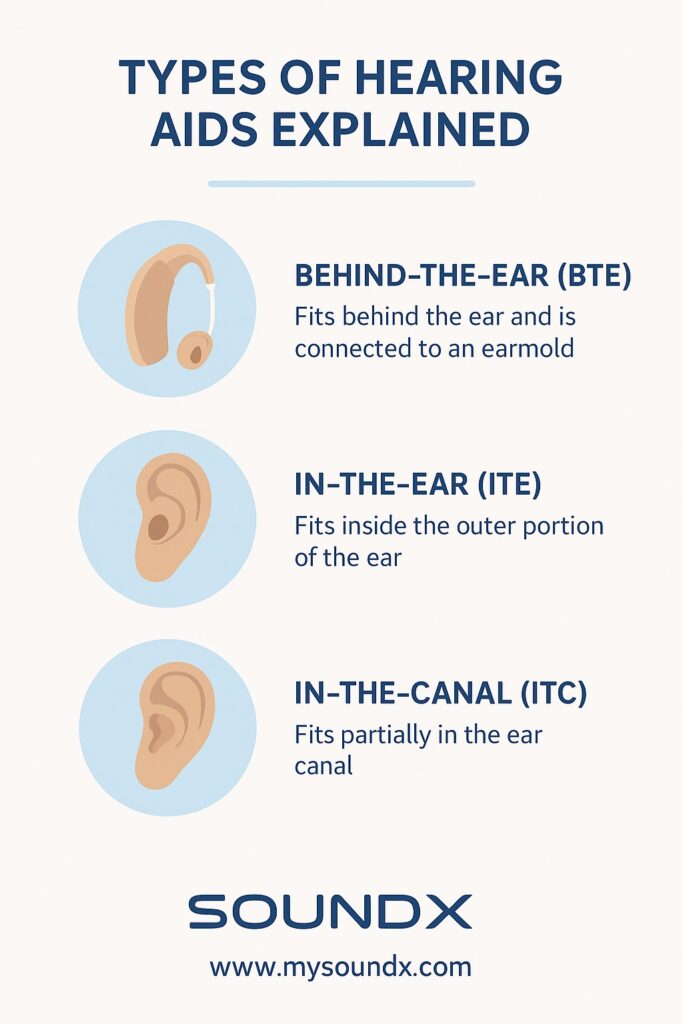
At SoundX, we offer high-quality hearing aids designed with modern technology to provide clear and natural sound. Whether your hearing loss is mild, moderate, or severe, we have the perfect device for you. Our comfortable styles, like behind-the-ear (BTE) and receiver-in-canal (RIC) models, are made for all-day comfort and better clarity. Whether you’re getting a hearing aid for the first time or planning to upgrade, SoundX helps you find the perfect fit and reconnect with the beautiful world of sound.

SoundX visited an old age home to bring the gift of hearing to seniors, helping them reconnect with their loved ones and the world around them.”

Schedule a consultation to pair your new device with a proper hearing test for best results.

Please find our products here.

Why SoundX Hearing Solutions Are Trusted by Families Across Lucknow

SoundX hearing aids are made to be comfortable, work really well, and fit your unique needs. Our hearing aids are small and stylish – much smaller than the big, bulky hearing devices you might have seen before. Think of them as tiny helpers that sit discreetly behind your ear, so most people won’t even notice you’re wearing them.

We offer three amazing options to match different hearing needs. SoundX Flow and SoundX Wave feature a compact design that fits behind your ear (called RIC design) and are perfect for people with severe hearing loss (when it’s very hard to hear). These models are comfortable to wear all day and blend in naturally. If you have moderate hearing loss (when it’s somewhat hard to hear), then SoundX Pulse is your best choice. This super tiny behind-the-ear device is specially designed for everyday conversations with friends and family.

Features That Make Life Easier

All SoundX hearing aids make hearing effortless. They reduce background noise so you can focus on what matters — from classroom lessons to friendly chats. With Bluetooth connectivity, you can listen to music, take calls hands-free, and watch videos with clear sound.

The battery lasts up to 18 hours on a single charge, and the SoundX app automatically adjusts settings to your hearing needs. Our devices are waterproof, dustproof, and built for everyday use. Plus, you get expert support, a 15-day money-back guarantee, and a 2-year replacement warranty — so you can hear the world with confidence.

Changes made:

  • Reduced to just 2 main subheadings
  • Combined information into flowing paragraphs
  • Kept the simple, kid-friendly language
  • Maintained explanations of technical terms
  • Made it conversational and easy to read

Compare SoundX Hearing Aids and Choose the Model That Suits You Best

  FeatureSoundX FlowSoundX WaveSoundX Pulse
Design TypeReceiver-in-Canal (RIC)Receiver-in-Canal (RIC)Mini Behind-the-Ear (BTE)
Best ForSevere hearing lossSevere hearing lossModerate hearing loss
SizeCompact and discreetCompact and discreetSuper tiny and miniaturized
Ideal UseAll-day comfort for severe hearing issuesAll-day comfort for severe hearing issuesEveryday conversations
Noise Cancellation✓ Advanced✓ Advanced✓ Advanced
Bluetooth Streaming✓ Yes (Calls, Music, Videos)✓ Yes (Calls, Music, Videos)✓ Yes (Calls, Music, Videos)
Battery LifeUp to 18 hoursUp to 18 hoursUp to 18 hours
Rechargeable✓ Yes✓ Yes✓ Yes
SoundX App Control✓ AI-powered personalization✓ AI-powered personalization✓ AI-powered personalization
Waterproof✓ Yes✓ Yes✓ Yes
Dustproof✓ Yes✓ Yes✓ Yes
Warranty2 years with replacement2 years with replacement2 years with replacement
Money-Back Guarantee15 days15 days15 days
Professional Support✓ Included✓ Included✓ Included

Get the Best Hearing Aid Machine at Low Prices Today

Looking for a hearing aid that works well but doesn’t cost too much? SoundX makes it easy! We offer affordable hearing aids that help you hear clearly without spending too much. Our prices are some of the best in India.

At SoundX, we don’t just sell hearing aids—we help you choose the right one. Our experts guide you step by step so you can find the hearing aid that fits you perfectly.

Come to SoundX and hear the difference! Clear hearing can make life more enjoyable. Contact us today for a free consultation and find the hearing aid that’s right for you.

FAQ

  • How long will my SoundX hearing aids last?
    SoundX hearing aids usually last five to seven years, depending on how you use and care for them, and regular check-ups help keep them working well.
  • Can I wear my hearing aids while sleeping?
    It’s better to take them out while sleeping to keep your ears comfortable and give them a rest.
  • How do I clean and take care of my hearing aids?
    You should gently wipe your hearing aids with a soft, dry cloth and make sure the microphone and small parts are free of dust, and you can check your user guide for more details.
  • What should I do if my hearing aids aren’t working properly?
    If you hear distorted sound or no sound, first check the battery and make sure the device is clean, and if it still doesn’t work, you can contact SoundX support at support@mysoundx.com.
  • Can I use my hearing aids while exercising?
    SoundX hearing aids are strong, but it’s best to remove them during intense sports or high-impact activities to avoid damage.
  • Do SoundX hearing aids come with a remote control?
    Yes, you can use the SoundX app on your smartphone to adjust settings and control your hearing aids easily.
  • How do I know if my hearing aids need repair?
    You might need a repair if the sound is lower than usual, cuts in and out, or stops completely, but make sure your device is clean and the battery works before seeking repair.
  • Can I buy replacement parts for my hearing aids?
    Yes, you can buy batteries, ear molds, and filters from the SoundX website or by contacting customer support.

Founder Vinod Kumar Audiologist says:

Step away from the cotton buds! Most ear-cleaning mistakes do more harm than good.

How Does a Hearing Test Work? Expert Audiologist Explains the Process

Written by- Dr. S.M. Tarique Najeeb

A hearing test checks if your ears are working properly and doesn’t always mean something is wrong. Experts say adults should test their hearing every 10 years until age 50 and every 3 years after that. Around 15% of adults worldwide have some degree of hearing loss, and many of them don’t even know it. Early detection can help prevent further hearing problems and improve your quality of life. Regular tests also help doctors recommend the right treatment or hearing aid if needed.

What Happens During a Hearing Test?

A hearing test is done by a doctor called an audiologist. This test checks how well you can hear different sounds and pitches. It can also show if hearing aids could help you hear better.

It can also show if hearing aids could help you hear better. Once your device is optimized, using travel-ready hearing aids can make trips safer and more enjoyable.

There are different types of hearing tests, such as:

  • Pure-tone audiometry – tests your ability to hear simple tones.
  • Speech audiometry – checks how well you can hear and understand speech.
  • Bone conduction testing – finds out if your inner ear works properly.
  • Acoustic reflex testing – checks how your ears react to loud sounds.
  • Tympanometry – measures how your eardrum moves.

The audiologist will choose the test depending on your age and other factors.

Hearing loss can happen slowly, so sometimes you don’t notice it. Adults with untreated hearing loss may start avoiding social events because it’s hard to hear conversations. That’s why it’s important to get tested when your doctor suggests it.

A hearing test helps find out:

  • If you have hearing loss.
  • How mild or severe it is.
  • What type of hearing loss it is—conductive, sensorineural, or mixed.
  • Whether you need treatment, hearing aids, bone-anchored hearing systems, or cochlear implants.

Hearing tests are painless and usually take about 30 minutes. They are done in a quiet room that blocks outside noises. You’ll wear earphones, one ear at a time, and listen to short tones played at different volumes and pitches. A machine called an audiometer checks if you can hear each sound clearly and whether one ear hears better than the other.

Hearing test RESULTS

You do not pass or fail this exam. However, the results determine whether you have a hearing loss in one or both ears and the percentage of hearing loss.

You can measure sound in two ways- decibels (dB) and hertz (Hz). It measures volume or level in decibels (dB), whereas it measures pitch or frequency in hertz (Hz).

You are most likely to hear these terms from your audiologist when they explain your test results to you. 

Here’s the breakdown 

Mild hearing loss26 to 40 decibels
Moderate hearing loss41 to 55 decibels
Moderate-to-severe hearing loss56 to 70 decibels
Severe hearing loss71 to 90 decibels
Profound hearing loss91 to 120 decibels

Understanding your results

Your audiologist will hand you a graph called an audiogram demonstrating the intensity of sounds you can hear at different pitches or frequencies. The vertical axis denotes the volume of the sounds, whereas the horizontal axis depicts the frequency or pitch of the sound.

What is an Audiogram?

The audiogram outlines your hearing thresholds across various volumes and pitches in a silent room. You will hear a few soft tones that you can detect half of the time. However, it’s absolutely fine if you missed some. More importantly, an audiogram uses a numerical system to measure hearing ability; therefore, it is quantitative, not qualitative. It will not describe the quality of your hearing ability and may not detect if you have hidden hearing loss. 

How does an audiogram look?

The graph here represents a blank audiogram with the degrees of hearing loss. Frequency is the top part of the graph, ranging from 125 Hz on the left to 3000 Hz (sometimes till 8000 Hz) on the right. Sound hearing level is outlined on the left side of the graph ranging from -10 dB at the top to 120 dB at the bottom.

How to read and understand audiograms?

Understanding an Audiogram

Reading an audiogram is easier than it sounds. The Y-axis shows how loud a sound is in decibels (dB), from -10 to 120. The X-axis shows the pitch of the sound in hertz (Hz), from 125 to 8,000.

Even though the Y-axis starts at -10 dB, it doesn’t mean there is no sound. It just shows the softest sound a person with normal hearing can hear at each pitch.

Think of the X-axis like a piano keyboard—the sounds get higher as you move from left to right. Vowel sounds are low-pitched, while consonant sounds like S, F, SH, CH, H, TH, T, and K are high-pitched.

Online Hearing Tests

There are hearing tests you can do online, like quiz-based tests or noise-based tests. A quiz-based test tells you if you might need a proper in-person hearing test. A noise-based test lets you listen to different sounds to see which ones you can hear.

Online tests can give you an idea of your hearing, but they cannot replace a real hearing test done by an audiologist. To get a reliable test, visiting a trusted hearing center like SoundX is the best choice.

Why You Should Test Your Hearing

Even if you don’t notice hearing loss, it’s a good idea to check your hearing from time to time. While hearing loss can’t always be fixed, there are ways to protect the hearing you still have and make listening easier.So, take a hearing test today and get your audiogram from your audiologist—it’s the first step to keeping your ears healthy.

FAQ

1. What is a hearing test?
A hearing test checks how well your ears can hear different sounds and pitches to see if you have any hearing loss. It also helps the audiologist decide if you need hearing aids or other treatments.

2. Who performs a hearing test?
An audiologist, a doctor who specializes in hearing, performs the hearing test. They are trained to understand all types of hearing problems and guide you properly.

3. Does a hearing test hurt?
No, a hearing test is painless and usually takes about 30 minutes in a quiet room. You just wear earphones and listen to sounds while the audiologist records what you hear.

4. How often should I get my hearing tested?
Adults should test their hearing every 10 years until age 50 and every 3 years after that. Testing regularly helps catch problems early before they get worse.

5. What does an audiogram show?
An audiogram is a graph that shows the softest sounds you can hear at different pitches or frequencies. It helps the audiologist understand which sounds are hard for you to hear.

6. What do decibels and hertz mean in a hearing test?
Decibels measure how loud a sound is, and hertz measures the pitch or frequency of the sound. These numbers help the audiologist know exactly how well your ears work.

7. Can online hearing tests replace real tests?
No, online tests only give an idea of your hearing, but a proper test by an audiologist is needed for accurate results. Online tests can’t detect all types of hearing problems.

8. Why is it important to test your hearing?
Testing your hearing helps detect problems early, protect the hearing you still have, and get the right treatment if needed. It also makes listening to conversations, music, and everyday sounds easier and more enjoyable.

Dr S.M. Tarique Audiologist says:

Not all hearing loss needs surgery . In fact most cases can be managed with modern hearing aids. But in some structural or medical cases, surgery can help.

Visit Profile- Dr. S.M. Tarique Najeeb