Invisible Hearing Aids: Are They Right for You?

Invisible hearing aids are tiny hearing devices that sit deep inside your ear, making them almost impossible for anyone to see. They help you hear clearly while staying completely hidden, which is why many people prefer them for comfort and confidence.

Real Stats (Easy to Understand)

  • Nearly 40% of hearing aid users prefer invisible models because of the “no one can see them” benefit.
  • 1 in 5 people feel embarrassed wearing visible hearing aids, which makes invisible models more popular (Source: Hearing Journal).
  • Invisible hearing aids work best for people with mild to moderate hearing loss, covering almost 60% of all cases worldwide.

What Are Invisible Hearing Aids?

Invisible hearing aids are very small devices that fit inside your ear canal. They are custom-made to match your ear shape, so they fit comfortably. Most people cannot see them at all when you wear them.

Types of Invisible Hearing Aids

1. IIC (Invisible-in-Canal) Hearing Aids

These are the smallest hearing aids available. They go very deep inside your ear canal.

Features

  • Almost 100% invisible
  • Natural sound quality
  • Good for mild–moderate hearing loss

2. CIC (Completely-in-Canal) Hearing Aids

These are slightly bigger than IIC but still very small and hidden.

Features

  • Nearly invisible
  • Easy to insert and remove
  • Better for people who want more features

Who Should Use Invisible Hearing Aids?

  • People with mild to moderate hearing loss
  • People who want a natural-looking option
  • Children and adults who feel shy wearing visible devices
  • People with narrow or small ear canals (for custom fit)

Benefits of Invisible Hearing Aids

  • No one can notice them
  • Clear and natural hearing
  • Comfortable in daily activities
  • No wires or behind-the-ear parts
  • Great for teens or working professionals

Limitations to Know

  • Not suitable for severe hearing loss
  • Battery life may be shorter
  • Small size means fewer features than big models
  • Needs proper cleaning since it sits deeper in the ear

Invisible Hearing Aids: IIC vs CIC Comparison

FeatureIIC (Invisible-in-Canal)CIC (Completely-in-Canal)
VisibilityAlmost 100% invisibleNearly invisible
SizeSmallest availableSlightly larger than IIC
PlacementVery deep in ear canalInside ear canal
Hearing Loss SuitabilityMild to moderateMild to moderate
Sound QualityNatural, less wind noiseNatural, clear
Ease of HandlingCan be tricky to insert/removeEasier to handle
Battery LifeShorter (smaller battery)Slightly longer
Features AvailableBasic features onlyMore features possible
Custom FittingRequiredRequired
Best ForMaximum invisibility seekersBalance of invisibility & features
Price RangeHigher costModerate to high cost
MaintenanceRequires careful cleaningEasier to clean

Invisible vs Visible Hearing Aids Comparison

AspectInvisible Hearing AidsTraditional Visible Hearing Aids
AppearanceHidden inside ear canalVisible behind or in ear
Hearing Loss RangeMild to moderate onlyMild to severe/profound
Battery TypeTiny disposable (Size 10)Larger disposable or rechargeable
Battery Life3-5 days5-14 days or rechargeable
FeaturesLimited (no Bluetooth in most)Full features (streaming, apps)
PriceHigherVaries (budget to premium)
ComfortVery comfortable once fittedMay feel bulky initially
Ear Canal SizeNeeds adequate canal sizeWorks for all ear sizes
Daily RemovalRecommendedSome can wear overnight
Ideal UserTeens, professionals, active usersAnyone needing hearing support

Quick Decision Guide

Your PriorityRecommended Type
Complete invisibilityIIC
Easy handling + invisibleCIC
Severe hearing lossTraditional BTE/RIC
Bluetooth & streamingVisible rechargeable models
Long battery lifeTraditional hearing aids
Natural sound qualityIIC or CIC

Important Note: Invisible hearing aids require professional fitting and may not suit everyone. Consult an audiologist to check if your ear canal size and hearing loss level are appropriate for invisible models.

Bottom Line

Invisible hearing aids are a great choice if you want powerful hearing support without anyone noticing your device. They are comfortable, tiny, and perfect for everyday use. If you want to try invisible hearing aids in Lucknow, SoundX is one of the best places to get proper testing, fitting, and expert guidance.

FAQs : 

1. Are invisible hearing aids truly invisible?

Yes, invisible hearing aids sit deep inside your ear canal, so people usually cannot see them. Even from the side, they remain hidden. Only an audiologist can notice them inside your ear.

2. Do invisible hearing aids work for children?

Yes, but only if the child has mild or moderate hearing loss. They must be made carefully to fit the ear. For young kids, larger models are easier to handle and safer.

3. Do invisible hearing aids hurt inside the ear?

No, they are custom-made for your ear shape, so they feel comfortable. At first, you may feel a little strange, but within a few days, they feel normal.

4. How long do the batteries last?

Because invisible hearing aids are small, their batteries are also small. Most batteries last 3–6 days. Rechargeable invisible options are also available now.

5. Can invisible hearing aids connect to Bluetooth?

Some models can, but many cannot because of their tiny size. If Bluetooth is important for you, you may need a slightly larger CIC model.

6. Are invisible hearing aids good for severe hearing loss?

No, they are not powerful enough for severe or profound hearing loss. Larger behind-the-ear devices are better for strong amplification.

7. How much do invisible hearing aids cost?

The price depends on brand, features, and technology. Invisible hearing aids are usually more expensive because they are custom-made. Your audiologist can tell you the exact price after testing.

8. How do I clean invisible hearing aids?

You need a small brush and a dry cloth. Clean the tip gently every day. Never use water or liquids. Regular cleaning helps the device last longer and work better

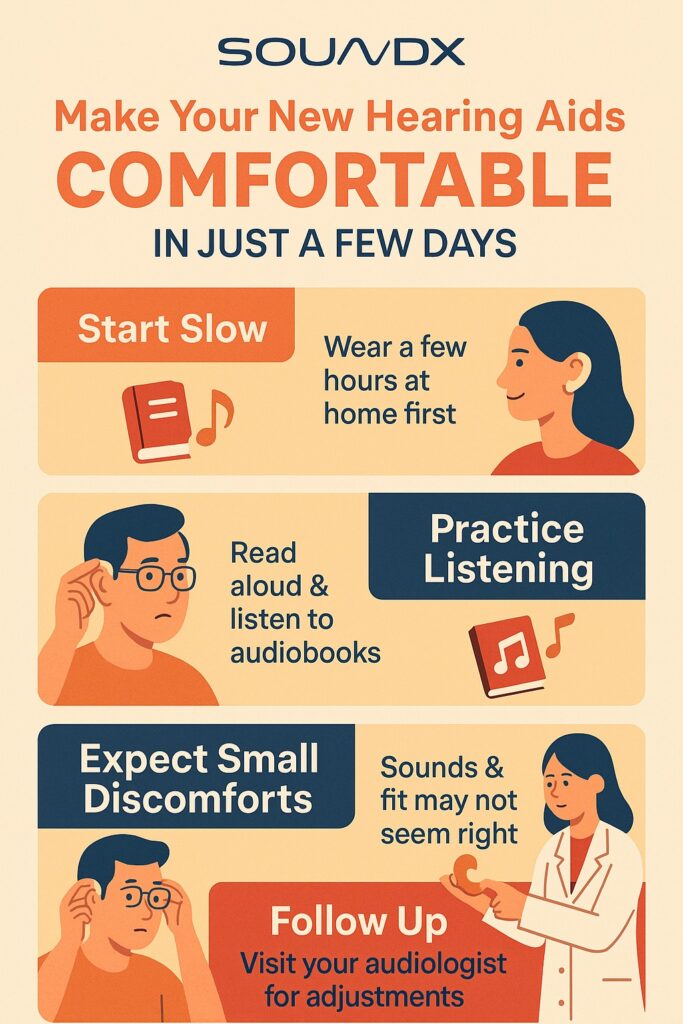
Make Your New Hearing Aids Comfortable in Just a Few Days

Written by- Dr. S.M. Tarique Najeeb

The fastest way to get used to new hearing aids is to wear them consistently every day, practice listening in different environments, and gradually increase usage while learning the device’s key functions like volume control, noise filtering, and Bluetooth connectivity. It’s also important to give your brain time to adjust to the new sounds and the physical sensation of wearing the device.

Over 430 million people worldwide live with hearing loss, and studies show that consistent hearing aid use can improve communication and quality of life by up to 30%. For those with long-term hearing loss, the brain may need extra time to relearn how to process sound, so starting with short, regular listening sessions and gradually increasing them helps. Following these steps allows users to enjoy clearer sounds, better speech understanding, and a more active lifestyle.

SoundX visited an old age home to bring the gift of hearing to seniors, helping them reconnect with their loved ones and the world around them.”

Practice these techniques to make your hearing aids feel natural quickly:

1. Wear Them a Little at First
If this is your first hearing aid, don’t wear it all day right away. Start with a few hours at a time—around 8 hours or less—and slowly increase the time each day. The more you wear it, the better your brain becomes at understanding different sounds. But go slow and give yourself time to adjust.

2. Start in a Quiet Place
For the first few weeks, use your hearing aid in calm, quiet places. This helps your brain recognize sounds better. Once your brain gets used to hearing in quiet places, it will be easier to handle noisy places like restaurants or shopping malls.

3. Practice Listening Exercises
Spend some time each day listening to small sounds around you. Sit in a quiet room and notice things like a bird chirping, a clock ticking, or your own voice. Try reading out loud so your brain can connect words with the sounds you hear. You can also practice figuring out where sounds are coming from.

4. Check In with Your Audiologist
Visit your hearing doctor one or two weeks after getting your hearing aid. They can adjust the device to make sounds clearer, improve the fit, or answer any questions you have. Regular check-ins help you get the best results.

5. Join Hearing Aid Classes
If you can, join online or in-person classes for new hearing aid users. These classes teach useful tips, answer questions, and let you learn from other people who wear hearing aids.

6. Watch TV with Subtitles
If you’ve had hearing loss for a long time, your brain may need practice connecting sounds with words. Turn on subtitles when watching TV or movies. Reading the words while listening helps your brain understand speech more easily.

Achieving Success with Your Hearing Aid

Using a hearing aid successfully takes time, patience, and practice. Here are some important tips to help you get the most out of your device.

1. Be Patient and Stay Positive
It’s normal if your new hearing aid feels strange at first. Don’t get frustrated if you can’t adjust in the first few days. Be patient and keep a positive attitude. The more you focus on improving your hearing, the easier it will become to adapt. If you stick with it through the first few weeks, you’ll see much better long-term results.

2. Have Realistic Expectations
Hearing aids improve your hearing, but they don’t make it perfect. Don’t expect to hear everything clearly right away. Instead, focus on small improvements every day. Celebrate the progress you make, even if it’s just noticing sounds you hadn’t heard before.

3. Learn About Your Hearing
Understanding your hearing loss helps you use your hearing aid better. Read about your condition, learn how hearing aids work, and know what features might help you most. Being informed will make it easier to manage your hearing loss successfully.

4. Practice Every Day
Wear your hearing aid regularly and practice listening exercises daily. Start in quiet places, then move to slightly noisier environments. Over time, your brain will get used to different sounds, and listening will feel automatic. Try to wear your hearing aid during most of your waking hours as you get more comfortable.

Complete Guide to Adjusting to New Hearing Aids

Adjustment MethodTime FrameStarting PointDaily DurationKey ActionsBenefitsSuccess TipsExpected ResultsDifficulty LevelProfessional Support
Gradual Wearing ScheduleFirst 2-4 weeksAny comfortable settingStart 8 hours or less, increase dailyWear device consistently but not all day initially, slowly extend wearing time each dayBrain adapts without overwhelm, builds tolerance naturallyDon’t rush – increase by 1-2 hours every few days, listen to your bodyBetter long-term comfort and sound recognitionEasyMinimal – audiologist guidance helpful
Quiet Environment PracticeFirst 2-3 weeksCalm quiet places like home or libraryMultiple hours daily in peaceful settingsUse device only in quiet spaces before introducing noiseBrain learns to recognize individual sounds clearly firstStay in quiet rooms, avoid restaurants and malls initiallyEasier transition to complex noisy environments laterEasyNone required
Daily Listening ExercisesThroughout adjustment (ongoing)Quiet room at home15-30 minutes per dayFocus on small sounds – birds chirping, clock ticking, your own voiceImproves sound identification and spatial awarenessPractice locating where sounds come from, notice quiet detailsEnhanced ability to identify and locate sound sourcesModerateOptional – classes can help
Read Aloud PracticeFirst 4 weeks dailyAny quiet space10-20 minutes per sessionRead books, articles, or news out loud while wearing deviceConnects words with sounds heard through hearing aidChoose interesting material, speak at normal volumeBetter word-sound association and speech clarityEasyNone required
TV Subtitle TrainingFirst 4-6 weeks (critical for long-term hearing loss)Home entertainment areaDuring all TV and movie viewingAlways turn on subtitles while watching any contentBrain reconnects sounds with visual words, faster comprehensionWatch familiar shows first, read and listen simultaneouslyDramatically improved speech understandingEasyNone required
Audiologist Follow-upsWeek 1-2, then regularly as neededAudiology clinic or office30-60 minutes per appointmentProfessional device adjustments, fit optimization, ask questionsCustomized settings for optimal clarity and comfortBring written list of concerns, be specific about issuesPerfect device tuning and troubleshootingEasyEssential – required
Support Groups and ClassesOngoing throughout processOnline platforms or in-person venues1-2 hours weekly or monthlyJoin hearing aid user communities, attend workshopsLearn from experienced users, get practical tips and emotional supportAsk questions freely, share your experiences with othersFaster problem-solving and reduced frustrationEasyOptional but recommended
Patient Positive MindsetEntire adjustment period (3+ months)Daily mental practiceOngoing every dayStay positive, don’t get frustrated, focus on small improvementsReduces stress, prevents device abandonmentRemind yourself adjustment is normal and takes timeHigher success rate and continued device useModerateOptional counseling if struggling
Realistic Expectations SettingBefore and during adjustmentInitial consultationDaily mindset checkUnderstand hearing aids improve but don’t perfect hearingPrevents disappointment, maintains motivationCelebrate small wins like hearing new soundsSustained long-term satisfaction with deviceEasyAudiologist sets expectations
Educational LearningFirst 2-4 weeks intensivelySelf-study at home2-3 hours initially, ongoingRead about hearing loss, learn device features and functionsEmpowered self-management, better troubleshootingFocus on key features first – volume, programs, cleaningConfident independent device useModerateOptional resources provided
Progressive Environment ExposureWeeks 1-8 gradual progressionQuiet home → moderate → noisy publicIncrease complexity weeklyWeek 1-2 quiet, Week 3-4 moderate noise, Week 5+ restaurants/mallsBuilds real-world confidence in all situationsRetreat to quiet if overwhelmed, use noise filtersComfortable hearing in challenging environmentsModerate to DifficultAudiologist adjustments help
Consistent Daily PracticeMinimum 8-12 weeks for full adjustmentMorning routine integrationGradually increase from 8 to 14-16 hours dailyWear device during all waking hours as comfort increasesCreates automatic listening habits, maximum benefitSet phone reminders, make it part of morning routineDevice becomes second nature, worn without thinkingModerateMinimal after initial setup

Critical Success Factors: Wear consistently every day | Start in quiet environments | Increase time gradually | Practice listening exercises | Schedule audiologist follow-ups within 1-2 weeks | Use subtitles for speech training | Join support communities | Stay patient and positive | Set realistic expectations | Learn device features thoroughly

Timeline Summary: Days 1-7 (device feels strange, 4-8 hours daily) → Weeks 2-3 (getting comfortable, 8-10 hours daily) → Week 4 (feels natural, 10-12 hours daily) → Weeks 5-8 (well-adjusted, 12-16 hours daily) → Month 3+ (fully adapted, automatic use all day)

Remember: Adjusting to a hearing aid takes time, patience, and practice. Don’t hesitate to ask your  hearing care professional for help if you face any issues. Once you get used to your device, it can make a big difference in your daily life, helping you communicate better and enjoy sounds around you.

Final Note:
Getting used to your new hearing aid takes time, but it’s worth it. Be patient, practice every day, and follow your audiologist’s advice. Soon, hearing will feel natural again, and you’ll enjoy every sound around you.

If you need help choosing or adjusting your hearing aid, visit SoundX. They make hearing easy and comfortable with modern hearing aids and caring support.

FAQ

1. How long does it take to get used to hearing aids?
Most people start feeling comfortable with their hearing aids in about 3 to 8 weeks. The more you wear them, the faster your brain adjusts to new sounds.

2. Should I wear my hearing aids all day right away?
No. Start by wearing them for a few hours each day, then slowly increase the time. This helps your ears and brain get used to hearing again.

3. Why should I begin in quiet places?
Quiet places help your brain learn to recognize sounds clearly without too much noise. Once you’re comfortable, you can start using them in louder places.

4. What are listening exercises?
Listening exercises mean practicing small things like hearing birds chirp, a clock tick, or reading out loud. These help your brain understand and locate sounds better.

5. Why should I visit my audiologist after getting hearing aids?
Your audiologist can check if your hearing aids fit well and adjust the settings so you hear more clearly. They can also answer any questions you have.

6. How do subtitles help with hearing?
Watching TV or movies with subtitles helps your brain connect words with sounds again. It makes it easier to understand people when they talk.

7. What if my hearing aids feel uncomfortable?
It’s normal for new hearing aids to feel strange at first. If they hurt or feel too tight, tell your audiologist so they can fix the fit.

8. What’s the most important thing to remember when using hearing aids?
Be patient and positive! Getting used to hearing aids takes time, but if you wear them every day and practice listening, they’ll soon feel natural.

Dr S.M. Tarique Audiologist says:

Hearing loss is easier to fix when you catch it early. Most people wait too long and make it harder to recover clarity.

Visit Profile- Dr. S.M. Tarique Najeeb

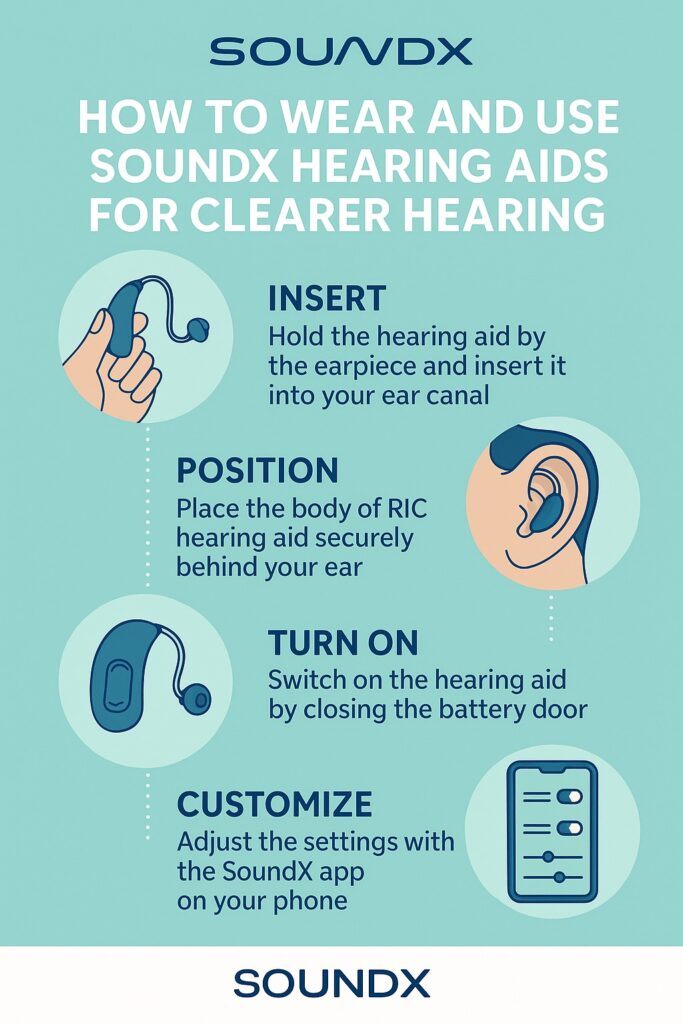
How to Wear and Use SoundX Hearing Aids for Clearer Hearing

Written by- Mr Shivam Singh

This guide will help you learn how to set up, use, and take care of your SoundX hearing aids. It will show you easy steps so you can hear better and keep your hearing aids working well every day.

“SoundX proudly participates in ISHACON 2025, Patna, Bihar — one of India’s largest and most respected audiology conferences!”

What Are the Main Parts of SoundX Hearing Aids and How They Work?

  1. Microphone: The microphone on your hearing aids captures sound from your environment, allowing you to hear conversations, music, and other sounds with clarity.
  2. Multi-function Button 1: This button serves multiple purposes. You can adjust the volume of your hearing aids using Button 1. Additionally, pressing and holding Button 1 for a few seconds turns the hearing aids on or off.
  3. Multi-function Button 2: Button 2 also offers versatility. It allows you to decrease the volume of your hearing aids and switch between different hearing programs. Press and hold Button 2 to activate these functions.
  4. Ear Tube: The ear tube is a crucial component that connects the eartip to the main body of the hearing aid. It ensures a secure and comfortable fit within your ear canal.
  5. Stabilization Bar: To prevent the eartip from moving out of place, the stabilization bar provides stability and comfort throughout the day.
  6. Eartip: Made of soft silicone, the eartip holds the hearing aid securely in your ear canal. It’s essential for comfort and proper functionality. It is available in multiple sizes and can be replaced depending on the size of your ear canal. It is also available in perforated and closed styles, which can be used as per the recommendation of your SoundX audiologist.
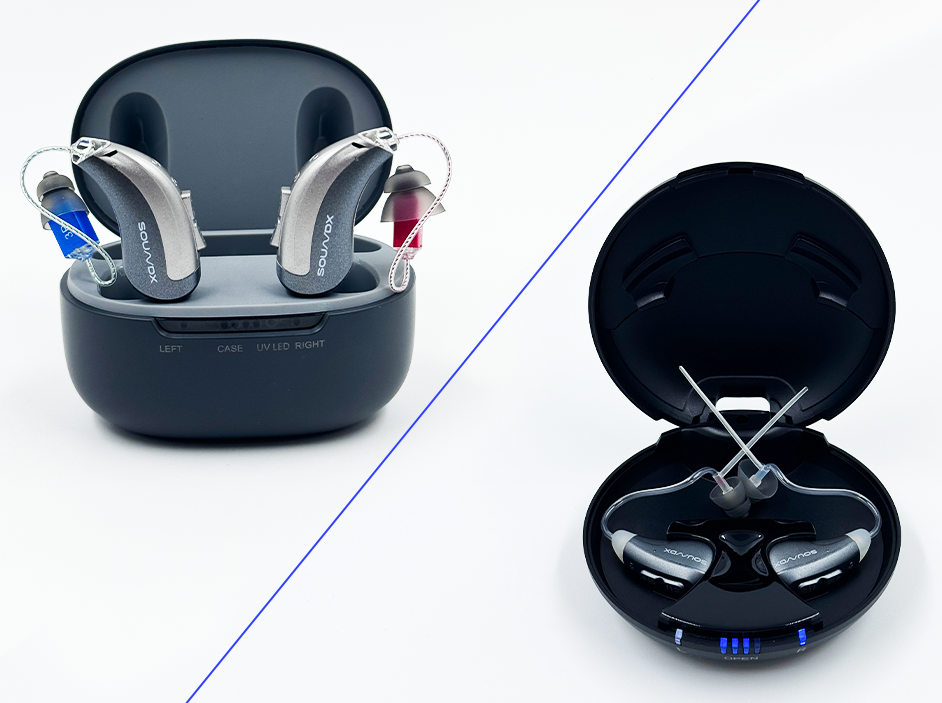
  7. Charging Contact: These contacts allow for easy charging of your hearing aids. Simply place them in the charging case, and they’ll begin charging automatically.
  8. Charging Case: A portable charging case included for convenient recharge-ability of your hearing aids on the go. One full charge will provide up to 18 hours of enhanced hearing.

Charging Case

Your charging case is an essential accessory for storing and charging your hearing aids:

  1. Charging Slots: The charging case features dedicated slots for each hearing aid, ensuring they receive the power they need to function optimally.
  2. Indicator Lights: LED lights on the charging case provide visual feedback on the charging status of your hearing aids and the case itself. This allows you to monitor the charging progress conveniently.
  3. Charging Port: Connect the charging case to a power source using the included USB cable. This ensures that your hearing aids are always ready for use whenever you need them.

Accessories

The product comes with the below listed accessories.

ItemsDescription
Eartip × 10To hold the hearing aid comfortably and securely in the ear canal
USB Cable x 1Used to charge the charging case
Cleaning Tool × 1Used to clean hearing aids and charging case
Manual x 1Used for users to read and understand how to use hearing aids and other objects

Using Your SoundX Hearing Aids: Simple Steps to Get Started

Fitting Eartips

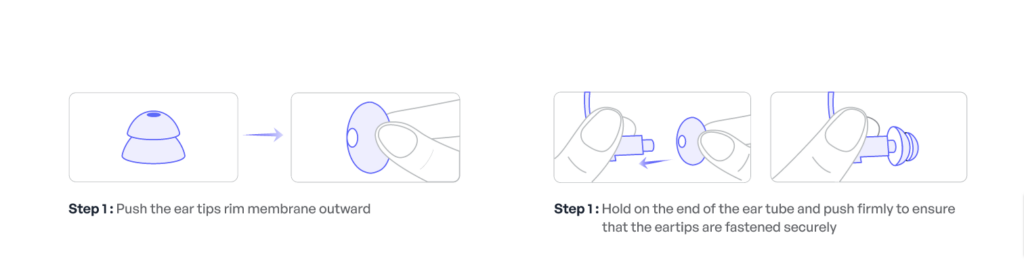
  1. Selecting Eartips: Choose the eartip size that provides the most comfortable and secure fit for your ears. It’s essential to experiment with different sizes to find the perfect fit.
  2. Attaching Eartips: Once you’ve selected the appropriate eartip size, attach it securely to the ear tube. Ensure that the eartip is pushed firmly onto the ear tube to prevent it from coming loose.

Ear Tube Replacement

  1. Removing Ear Tubes: To replace the ear tubes, gently rotate them and pull them out of the hearing aids. Take care not to apply too much force to avoid damaging the devices.
  2. Inserting New Ear Tubes: When inserting new ear tubes, align them with the corresponding slots on the hearing aids and gently push them into place until they’re securely seated.

Power On/Off

  • Turning On: To power on your hearing aids, press and hold Button 1 for approximately three seconds. You’ll hear a notification sound indicating that the devices are now powered on and ready to use.
  • Turning Off: Similarly, to power off your hearing aids, press and hold Button 2 for about three seconds. You’ll hear a notification sound confirming that the devices have been powered off.

Wearing/Removing Hearing Aids

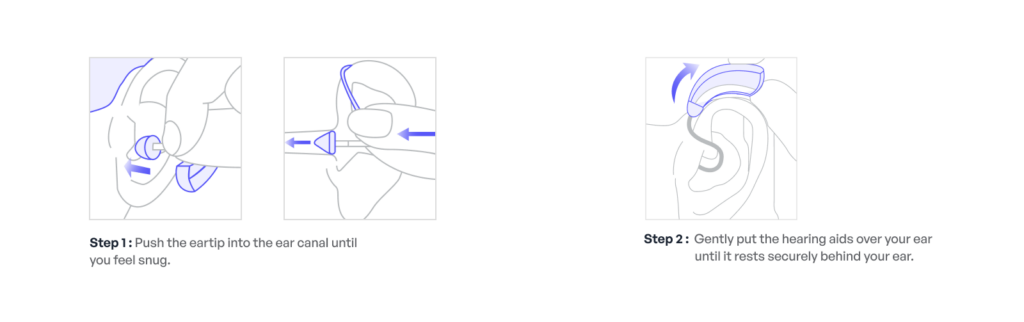
  • Wearing Hearing Aids: Insert the hearing aids gently into your ear canal, ensuring that the eartips are securely seated. Once in place, the devices should feel comfortable and snug.
  • Removing Hearing Aids: To remove the hearing aids, gently pull them out of your ear canal while holding onto the stabilization bar. Take care not to apply excessive force to avoid discomfort.

Volume Control

  • Adjust the volume of your hearing aids using the multi-function buttons. Each press of Button 1 or Button 2 will increase or decrease the volume, respectively.
  • You’ll hear a “Beep” sound each time you adjust the volume, allowing you to gauge the changes in volume levels.

Programs Switching

  • Your hearing aids come with multiple preset programs designed to enhance your listening experience in different environments.
  • If you want to understand your hearing profile better before programming your hearing aids, you can take a hearing test and learn how to read an audiogram.

Specific programs are associated with different prompt tones as mentioned in the table below:

Hearing ProgramPrompt Tone
1Program 1beep
2Program 2beep beep
3Program 3beep beep beep
4Program 4beep beep beep beep

Bluetooth Connectivity

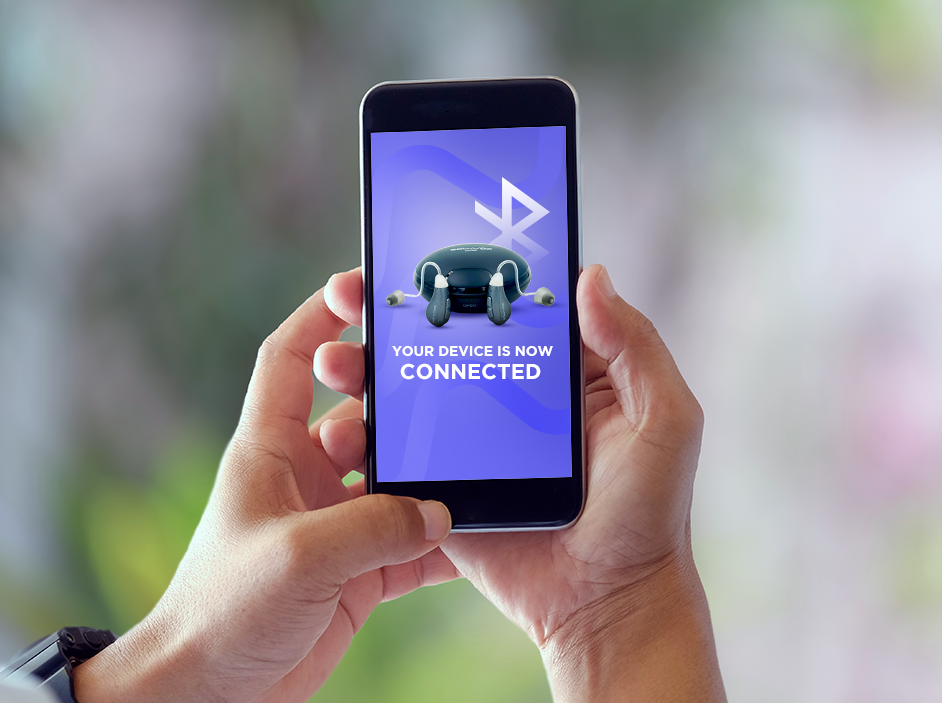
  • Bluetooth technology allows you to connect your hearing aids to compatible devices such as smartphones, tablets, and computers.
  • To initiate a Bluetooth connection, ensure that Bluetooth is enabled on your device and follow the pairing instructions provided in your device’s user manual.

SoundX App

  • The SoundX app provides additional functionality and customization options for your hearing aids. Download the app to your smartphone and follow the on-screen instructions to set up your devices.
  • With the SoundX app, you can:
    • Adjust volume levels
    • Switch between hearing programs to suit your environment
    • Explore our best hearing aids to choose one that fits your lifestyle
    • Learn about hearing loss via blogs and educational videos
    • Contact SoundX expert audiologists
    • Take a hearing test and program your hearing aids according to your hearing loss profile

Charging Your Devices

Charging Hearing Aids

  1. Placing in Charging Case: When it’s time to charge your hearing aids, simply place them in the designated slots within the charging case. Ensure that they’re properly aligned to facilitate charging.
  2. Monitoring Charging Status: LED indicator lights on the charging case will illuminate to indicate that the devices are charging. A blue light indicates that charging is in progress, while a white light indicates that the devices are fully charged.

Charging the Charging Case

  1. Connecting USB Cable: Use the included USB cable to connect the charging port of the case to a power source, such as a computer or wall adapter.
  2. Monitoring Battery Capacity: LED lights on the charging case will provide real-time feedback on the remaining battery capacity, allowing you to plan your charging schedule accordingly.

Device Care Tips

  • Handle your hearing aids with care to avoid drops or impacts that could damage the devices.
  • Refrain from using sharp objects to clean earwax, as this could cause damage to the eartips and ear tubes.
  • Store your hearing aids in a cool, dry place away from moisture and extreme temperatures to prevent damage.
  • Remove your hearing aids before swimming, showering, or engaging in activities that expose them to water.
  • Regularly inspect and clean your devices to remove debris and maintain optimal performance.
  • Replace eartips every few months to ensure a secure and comfortable fit, and consider replacing ear tubes if they show signs of wear or damage.

This comprehensive user manual provides detailed instructions on using and caring for your SoundX hearing aids. If you have any questions or encounter any issues, don’t hesitate to consult this guide for assistance.

FAQ

1. How do I turn my SoundX hearing aids on and off?
To turn them on, press and hold Button 1 for about 3 seconds until you hear a sound. To turn them off, press and hold Button 2 for 3 seconds.

2. How long do my SoundX hearing aids last after a full charge?
When fully charged, your hearing aids can work for up to 18 hours. Always charge them overnight or when the battery gets low.

3. How do I charge my SoundX hearing aids?
Place them in the charging case. The blue light means they’re charging, and the white light means they’re fully charged.

4. Can I connect my SoundX hearing aids to my phone?
Yes! Your hearing aids have Bluetooth. Just turn on Bluetooth on your phone and follow the pairing steps shown on your phone’s screen.

5. What is the SoundX app for?
The SoundX app helps you control your hearing aids easily. You can adjust the volume, switch programs, take hearing tests, and even talk to an audiologist through the app.

6. How do I clean my hearing aids?
Use the cleaning tool that comes in the box. Gently remove dirt or earwax. Don’t use sharp objects or water to clean them.

7. How do I know which eartip size is right for me?
Try a few sizes to see which one feels most comfortable and fits securely. Your SoundX audiologist can also help you choose the right size.

8. What should I do if my hearing aids stop working?
First, check if they are charged and turned on. If they still don’t work, make sure there’s no dirt blocking the eartip. If the problem continues, contact SoundX support for help.

Mr Shivam Singh Audiologist says:

Not all hearing loss needs surgery . In fact most cases can be managed with modern hearing aids. But in some structural or medical cases, surgery can help.