This blog is for educational purposes only. It does not replace professional medical advice, diagnosis, or treatment. Always consult a qualified audiologist or hearing care professional before choosing a hearing aid.
Which Are the Top Hearing Aid Brands in India?
India has several good hearing aid brands, but the best results depend not only on the brand but on proper testing, fitting, and after-care. Among all options, SoundX stands out as a top priority choice because it focuses on personalized care, correct fitting, and long-term hearing support, not just selling devices.
Why Choosing the Right Hearing Aid Brand Is Important
Hearing aids are medical devices. Choosing the wrong brand or provider can lead to poor sound quality, discomfort, and wasted money.
Common problems people face:
Hearing aids feel uncomfortable
Sounds are too loud or unclear
Background noise is disturbing
No proper after-sales support
A good brand with expert care helps avoid these issues.
What Makes a Hearing Aid Brand Truly Reliable?
A reliable hearing aid brand focuses on more than just technology.
Important factors include:
Professional hearing tests
Multiple hearing aid options
Customized fitting
Follow-up support
Clear guidance for users
This is where SoundX makes a strong difference.
Top Hearing Aid Brands in India (Trusted Options)
1. SoundX – Personalized Hearing Care Comes First
SoundX is placed at the top because it focuses on people, not just products. The team ensures every hearing aid is selected and programmed based on individual hearing needs.
Why SoundX is preferred:
Detailed hearing evaluation
Customized hearing aid fitting
Multiple global brand options
Honest guidance based on need
Strong post-fitting support
SoundX is ideal for people who want clarity, comfort, and long-term results.
2. Phonak
Phonak is known for advanced technology and clear sound processing. It offers a wide range of hearing aids for different levels of hearing loss.
3. Signia
Signia hearing aids are popular for their modern design and good speech clarity, especially in noisy environments.
4. Widex
Widex focuses on natural sound quality and is often preferred by music lovers and first-time users.
5. Oticon
Oticon hearing aids support brain-friendly hearing technology and help users understand speech better.
Real Statistics About Hearing Loss and Hearing Aids
According to the World Health Organization, over 430 million people worldwide need hearing rehabilitation
In India, nearly 6.3% of the population suffers from hearing loss
Studies show properly fitted hearing aids improve quality of life by over 65%
Around 70% of hearing aid failures happen due to poor fitting, not poor technology
These stats show why choosing the right provider matters more than just the brand name.
SoundX vs Other Hearing Aid Providers: Simple Comparison
Feature
SoundX
Others
Hearing Test
Detailed & professional
Often basic
Customization
Fully personalized
Limited
Brand Options
Multiple global brands
Usually single
After-Care
Strong follow-ups
Minimal
User Satisfaction
Very high
Varies
Fact vs Myth About Hearing Aid Brands
Myth: Expensive brands always work better Fact: Proper fitting matters more than price
Myth: One brand suits everyone Fact: Hearing needs are different for every person
Myth: Hearing aids work perfectly out of the box Fact: Professional programming is essential
Expertise Makes the Real Difference
Even the best hearing aid brand can fail without expert handling. Audiologists understand hearing patterns, comfort levels, and daily listening needs.
At SoundX, expertise includes:
Accurate hearing assessment
Need-based device selection
Step-by-step fitting
Ongoing adjustments
This expert-driven approach makes SoundX a preferred choice.
Risks of Choosing the Wrong Hearing Aid Brand or Provider
Poor choice can lead to:
Ear pain and discomfort
Poor speech understanding
Headaches and fatigue
Money loss
Giving up on hearing aids completely
These risks are avoidable with the right guidance.
Top hearing aid brands matter, but expert care matters more. A good hearing journey depends on correct testing, proper fitting, and continuous support. Among all options, SoundX stands out as a top-priority choice because it combines trusted hearing aid brands with personalized care and long-term support.
FAQs:
1. Which is the best hearing aid brand in India?
There are many hearing aid brands available in India, but the best results depend on proper testing and fitting. A good provider focuses on personal hearing needs rather than just selling devices. SoundX is preferred because it combines multiple brands with customized care.
2. Are expensive hearing aids always better?
Expensive hearing aids are not always better for everyone. Comfort, correct sound adjustment, and expert fitting matter more than price. Even a costly hearing aid can fail if it is not properly customized.
3. Can I buy hearing aids online without a hearing test?
Buying hearing aids without a hearing test is not recommended. Every person’s hearing loss is different and needs correct evaluation. Without testing, hearing aids may feel uncomfortable or damage hearing.
4. How long do hearing aids usually last?
Most hearing aids last between four to six years with proper care. Regular cleaning and timely adjustments help extend their life. Follow-up visits with a hearing professional are very important.
5. Do hearing aids need regular adjustment?
Yes, hearing aids need regular adjustment because hearing levels can change over time. Daily listening environments also vary and may require fine-tuning. Regular checkups help maintain clear and comfortable hearing.
6. Can one hearing aid brand work for everyone?
No single hearing aid brand works for everyone. Hearing loss type, ear shape, and lifestyle differ from person to person. That is why personalized selection is always necessary.
7. Why is after-care important for hearing aid users?
After-care helps ensure hearing aids remain comfortable and effective. It allows users to report problems and get sound adjustments. Good after-care improves long-term satisfaction with hearing aids.
8. How does SoundX help people choose the right hearing aid?
SoundX starts with a detailed hearing test to understand individual needs. The team suggests suitable hearing aid options based on results and comfort. Ongoing support and follow-ups help users hear better every day.
This blog is for educational purposes only. It does not replace medical advice, diagnosis, or treatment. Always consult a qualified audiologist or hearing care professional before choosing an ear machine or hearing device.
What Is an Ear Machine for Deaf People?
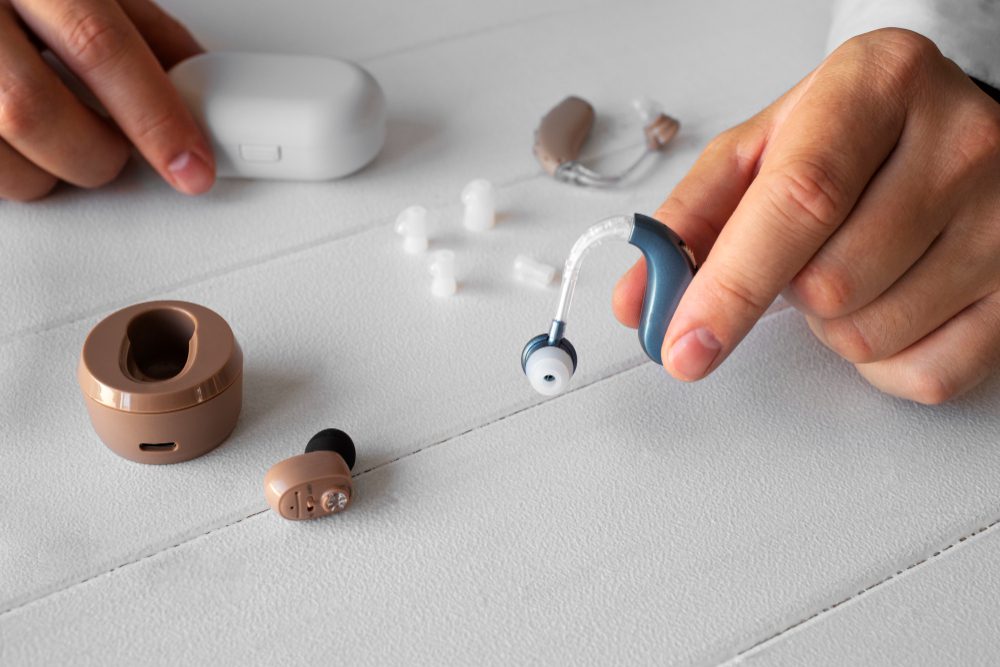
An ear machine for deaf people is commonly known as a hearing aid. It is a small electronic device that helps people hear sounds more clearly by making sounds louder and clearer based on their hearing loss level.
Why Do Deaf or Hard-of-Hearing People Need an Ear Machine?
People who are deaf or have hearing loss struggle to hear daily sounds like speech, doorbells, or phone calls. This can affect communication, confidence, and safety.
Common problems include:
Difficulty understanding speech
Missing important sounds
Social isolation
Frustration and stress
An ear machine helps reduce these problems by improving hearing ability.
How Does an Ear Machine Work?
An ear machine has three main parts: a microphone, an amplifier, and a speaker. The microphone picks up sound, the amplifier increases sound strength, and the speaker sends sound into the ear.
Modern ear machines:
Adjust sound automatically
Reduce background noise
Improve speech clarity
Work in different environments
This makes hearing easier and more natural.
Types of Ear Machines for Deaf People
Ear machines are available in different types based on hearing needs and comfort.
Common types include:
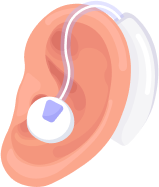
Behind-The-Ear (BTE): Suitable for mild to severe hearing loss and easy to handle
Receiver-In-Canal (RIC): Small, comfortable, and offers clear sound
In-The-Ear (ITE): Custom-made to fit inside the ear
Completely-In-Canal (CIC): Very small and less visible
Rechargeable Hearing Aids: No battery change, easy daily use
An audiologist helps choose the right type based on hearing test results.
Benefits of Using an Ear Machine
Using an ear machine improves daily life in many ways.
Key benefits include:
Better speech understanding
Improved communication with family
Increased confidence
Better safety awareness
Reduced mental stress
With correct fitting, users feel more connected and independent.
Who Should Use an Ear Machine?
Ear machines are useful for:
Children with hearing loss
Adults with partial hearing loss
Senior citizens with age-related hearing loss
People with one-ear or both-ear hearing loss
A hearing test decides whether an ear machine is needed.
Real Statistics About Hearing Loss and Ear Machines
According to the World Health Organization, over 430 million people worldwide need hearing rehabilitation
In India, nearly 63 million people suffer from hearing loss
Studies show hearing aids improve communication ability by over 65%
Early use of hearing aids reduces social isolation significantly
These facts show how important hearing solutions are.
Ear Machine vs No Hearing Support: Simple Comparison
Aspect
With Ear Machine
Without Ear Machine
Speech Understanding
Much better
Very difficult
Social Life
Active
Limited
Safety Awareness
Improved
Reduced
Confidence
Higher
Low
Quality of Life
Better
Affected
Detailed Comparison: Types of Ear Machines
Type
Visibility
Comfort
Hearing Loss Level
Best For
BTE
Visible
High
Mild to severe
All age groups
RIC
Low
Very high
Mild to moderate
Daily users
ITE
Medium
High
Mild to moderate
Custom fit
CIC
Very low
Medium
Mild
Cosmetic preference
Rechargeable
Medium
High
Mild to severe
Easy maintenance
Fact vs Myth About Ear Machines
Myth: Ear machines make hearing perfect Fact: They improve hearing but do not cure deafness
Myth: Only old people need ear machines Fact: Children and adults can also need them
Myth: All ear machines are the same Fact: Devices are customized for each person
Why Professional Expertise Is Important
Choosing and fitting an ear machine needs professional knowledge. An audiologist checks hearing levels and programs the device correctly.
This ensures safe and effective hearing improvement.
Risks of Using the Wrong Ear Machine
Using an incorrect or untested ear machine can cause:
Ear pain or discomfort
Loud sound damage
Poor speech clarity
Headaches and irritation
Professional fitting helps avoid these risks.
Simple Solutions for Better Hearing
For best results:
Get a professional hearing test
Avoid buying devices without consultation
Choose customized fitting
Attend follow-up visits
Share feedback with the audiologist
Care centers like SoundX guide users through every step.
Ear Machine Price Guide in India (Approximate)
Type
Price Range (INR)
Basic Hearing Aid
₹15,000 – ₹20,000
Mid-Level Digital
₹25,000 – ₹60,000
Advanced Hearing Aid
₹70,000 – ₹1,50,000
Premium Rechargeable
₹1,50,000+
Prices depend on features, technology, and customization.
Final Thoughts
An ear machine can change a deaf person’s life by improving communication and confidence. The key is choosing the right device with expert guidance. With personalized care and proper support, centers like SoundX help people hear better and live more comfortably.
FAQs:
1. What is an ear machine called?
An ear machine is commonly called a hearing aid. It helps amplify sounds so deaf or hard-of-hearing people can hear better. A hearing test decides which type is suitable.
2. Can completely deaf people use an ear machine?
People with partial hearing loss benefit the most from ear machines. For complete deafness, other options like cochlear implants may be suggested. A professional evaluation is necessary.
3. Is an ear machine safe to use?
Yes, ear machines are safe when properly fitted by an audiologist. Wrong settings can cause discomfort, which is why professional fitting is important. Regular checkups ensure safety.
4. How much does an ear machine cost in India?
The cost depends on technology, features, and customization. Prices can range from basic to advanced models. A hearing test helps choose the right option within budget.
5. Can children use ear machines?
Yes, children with hearing loss can use ear machines safely. Early use supports speech and learning development. Devices are adjusted as the child grows.
6. How long does it take to adjust to an ear machine?
Most users take a few weeks to adjust. The brain needs time to get used to new sounds. Regular use and follow-ups help faster adaptation.
7. Do ear machines need maintenance?
Yes, ear machines need regular cleaning and battery care. Periodic servicing keeps them working properly. Audiologists guide users on daily care.
8. Where should I buy an ear machine?
Always buy from a professional hearing care center. Centers like SoundX provide testing, fitting, and after-care. This ensures long-term hearing comfort.
CIC hearing aids offer safe and effective hearing support for suitable users, but proper hearing testing and professional fitting are essential for comfort, safety, and best results.
CIC hearing aids (Completely-in-Canal hearing aids) are very small hearing devices that sit deep inside the ear canal. They are almost invisible from outside and help people with mild to moderately severe hearing loss hear sounds more clearly while keeping their hearing aid hidden.
Are CIC Hearing Aids Safe to Use?
Yes, CIC hearing aids are safe when selected after a hearing test and fitted by a trained audiologist. Safety depends on correct ear canal fit, suitable hearing loss level, and regular follow-ups.
Using CIC hearing aids without professional evaluation may cause discomfort or poor sound clarity.
What Are CIC Hearing Aids?
CIC hearing aids are among the smallest hearing aids available today. CIC means Completely-in-Canal, which tells us exactly where the device fits — deep inside the ear canal.
Because they sit so deep:
They are hard to notice
They use the ear’s natural shape to improve sound quality
Wind noise is reduced compared to larger hearing aids
These hearing aids are custom-made, meaning they are designed based on the exact shape of your ear canal.
How CIC Hearing Aids Work
CIC hearing aids work just like other modern digital hearing aids, but in a much smaller size.
Here’s how they work step by step:
A tiny microphone picks up sound from around you
The digital processor cleans and improves the sound
The speaker sends clear sound into your ear
Your brain understands speech better
Because CIC devices sit closer to the eardrum, sound feels more natural.
Types of Hearing Loss Suitable for CIC Hearing Aids
CIC hearing aids are most suitable for:
Mild hearing loss
Moderate hearing loss
Moderately severe hearing loss
They are not recommended for severe or profound hearing loss due to limited power.
Around 1.5 billion people worldwide live with some degree of hearing loss
Nearly 430 million people need hearing aids for daily life
In India, over 63 million people have hearing loss
Only 20–25% of people who need hearing aids actually use them
Small and invisible hearing aids like CIC are helping more people feel comfortable using hearing devices.
When CIC Hearing Aids May NOT Be the Right Choice
CIC hearing aids may not be suitable if:
Ear canals are very narrow or curved
There is frequent earwax buildup
Ear infections occur often
Advanced Bluetooth streaming is required
A hearing professional helps confirm suitability.
Who Should Use CIC Hearing Aids?
CIC hearing aids are best for specific hearing needs.
CIC Hearing Aids Are Good For:
Mild to moderately severe hearing loss
Adults who want invisible hearing aids
People who wear glasses or helmets
Those sensitive about hearing aid visibility
CIC Hearing Aids Are NOT Ideal For:
Severe to profound hearing loss
Very small or very curved ear canals
Children (ears are still growing)
A professional hearing test is essential before choosing CIC hearing aids.
How to Know If CIC Hearing Aids Are Right for You
CIC hearing aids may be right for you if you have mild to moderately severe hearing loss and want a hearing solution that stays hidden. If you feel uncomfortable wearing visible hearing aids or want a natural sound experience, CIC models are often a good choice. However, only a proper hearing test by an audiologist can confirm suitability, because ear canal size, hearing level, and lifestyle all matter. Choosing CIC hearing aids without professional evaluation can lead to poor results.
Key Benefits of CIC Hearing Aids
Almost Invisible Design
CIC hearing aids are placed deep inside the ear canal, which makes them very difficult to notice from the outside. Even when someone is standing close or talking face to face, the hearing aid usually remains hidden. This invisible design helps users feel confident in social, professional, and public situations without worrying about their hearing aid being seen.
Natural Sound Experience
Because CIC hearing aids sit inside the ear canal, they use the ear’s natural shape to collect and direct sound. This helps sounds feel more real and balanced, rather than artificial or robotic. Many users say voices and everyday sounds feel more natural compared to larger hearing aids.
Less Wind Noise
The deep placement of CIC hearing aids protects the microphone from direct wind exposure. This reduces the disturbing “whooshing” noise that often happens with hearing aids worn outside the ear. As a result, listening outdoors becomes more comfortable, especially while walking or traveling.
Comfortable for Glasses Users
CIC hearing aids do not sit behind the ear, so there is no pressure from spectacle frames or helmet straps. This makes them very comfortable for people who wear glasses throughout the day. Users can wear their eyewear normally without irritation or discomfort caused by overlapping devices.
Better Phone Call Clarity
Since CIC hearing aids are placed inside the ear canal, users can hold a phone naturally without adjusting its position. This reduces feedback and improves call clarity. Conversations on mobile phones feel clearer and more comfortable compared to some larger hearing aid styles.
If you want, I can now merge this section perfectly into your full blog or rewrite other sections the same way.
CIC Hearing Aids vs Invisible Sound Amplifiers
Many people confuse CIC hearing aids with invisible sound amplifiers sold online, but they are very different. CIC hearing aids are medical-grade devices that are programmed according to your hearing test, while sound amplifiers simply make all sounds louder. Amplifiers can increase noise and even harm hearing if used incorrectly. CIC hearing aids, when fitted by professionals, improve speech clarity safely and protect long-term hearing health.
Limitations of CIC Hearing Aids (Honest Truth)
No hearing aid is perfect, and CIC devices also have limits.
Knowing both pros and cons helps make the right choice.
CIC Hearing Aids for Adults and Old Age
CIC hearing aids work well for adults and seniors who:
Have good finger control
Prefer discreet hearing solutions
Have mild to moderate hearing loss
Seniors with handling difficulty may prefer RIC or rechargeable options.
Common Mistakes People Make While Choosing CIC Hearing Aids
One common mistake is choosing CIC hearing aids only because they are invisible, without checking if they suit the hearing loss level. Another mistake is buying devices without a professional hearing test, which often leads to poor sound quality. Many users also ignore maintenance needs, even though CIC hearing aids require regular cleaning due to deep ear placement. Avoiding these mistakes helps ensure better comfort and performance.
First-Time User Experience With CIC Hearing Aids
First-time users may notice that sounds feel louder or different during the first few days of wearing CIC hearing aids. This is normal because the brain needs time to adjust to hearing sounds it missed earlier. Most users adapt within one to two weeks with regular use. Follow-up visits with an audiologist help fine-tune the settings and make listening more comfortable over time.
Adjustment Period: What Is Normal and What Is Not
Normal during first days:
Slight loudness
New background sounds
Not normal:
Pain or irritation
Sharp or distorted sound
Audiologist tuning usually fixes these issues quickly.
CIC vs ITC vs RIC vs BTE Hearing Aids (Accurate Comparison)
Feature
CIC
ITC
RIC
BTE
Visibility
Almost invisible
Slightly visible
Visible
Most visible
Placement
Deep inside canal
Canal opening
Behind ear + wire
Behind ear
Hearing Loss Range
Mild–Moderate
Mild–Moderate
Mild–Severe
Mild–Profound
Battery Life
Short
Medium
Longer
Longest
Controls
Automatic
Limited
Full features
Full features
Maintenance
High
Medium
Medium
Low
Best For
Privacy lovers
Balanced users
Tech lovers
Power needs
Why Professional Fitting Matters for CIC Hearing Aids
Professional fitting is extremely important for CIC hearing aids because they are custom-made and sit deep inside the ear canal. A poor fit can cause discomfort, feedback noise, or reduced sound clarity. Audiologists adjust the device based on hearing test results and real-life listening needs. Proper fitting ensures comfort, safety, and the best possible hearing improvement.
CIC Hearing Aids Technology Explained Simply
Modern CIC hearing aids are fully digital and include smart features like:
Noise reduction for busy places
Feedback control (no whistling sound)
Directional microphones for speech clarity
Bluetooth (available in some advanced models)
Automatic sound adjustment
Despite their small size, they are powerful.
Expert Insight: Audiologist’s View
As a hearing care professional with 20+ years of experience, one thing is clear:
“People delay hearing aids mainly due to visibility fear. CIC hearing aids solve this problem and increase acceptance.”
Many first-time users choose CIC because:
They feel confident
Friends don’t notice the device
Sound quality feels natural
How CIC Hearing Aids Are Custom Made
CIC hearing aids are not one-size-fits-all.
Process:
Ear impression is taken by an audiologist
Device shell is designed exactly for your ear
Digital programming is done based on hearing test
Final fitting and fine-tuning
This custom fit improves comfort and sound quality.
CIC Hearing Aids and Lifestyle Compatibility
CIC hearing aids work well for office environments, social gatherings, and daily conversations because of their discreet design. They are comfortable for people who wear glasses or masks and suit users who prefer a natural listening experience. However, people with very active outdoor lifestyles or heavy sweating may need extra care. Understanding lifestyle needs helps in choosing the right hearing aid style.
CIC Hearing Aids Price in India (Realistic Range)
CIC hearing aid prices depend on brand, features, and technology level.
Average price range in India:
Basic CIC: ₹45,000 – ₹65,000
Mid-range CIC: ₹70,000 – ₹1,00,000
Advanced CIC: ₹1,10,000 – ₹1,60,000
Prices may vary based on warranty and service support.
CIC Hearing Aids Care and Maintenance Tips
Because CIC hearing aids are small, care is very important.
Clean daily with soft cloth
Keep away from moisture
Remove at night
Store in dry box
Change batteries on time
Proper care increases device life and performance.
Facts vs Myths About CIC Hearing Aids
Myth 1: CIC hearing aids are only cosmetic and not effective
Many people believe CIC hearing aids are used only to hide hearing loss and do not actually improve hearing. This is incorrect because CIC hearing aids use advanced digital technology to improve sound clarity and speech understanding, just like larger hearing aids.
Fact 1: CIC hearing aids are powerful despite their small size
Even though CIC hearing aids are very small, they are designed to deliver strong and clear sound for mild to moderately severe hearing loss. Modern CIC devices use digital processors that reduce noise and improve speech, making them effective for daily communication.
Myth 2: CIC hearing aids damage ears because they sit deep
Some people think that because CIC hearing aids sit deep inside the ear canal, they can harm the ear or eardrum. When fitted correctly by a trained professional, CIC hearing aids are safe and do not damage the ear.
Fact 2: CIC hearing aids improve speech understanding in quiet environments
CIC hearing aids are especially good at improving speech clarity in quiet settings like homes or small meetings. Their placement inside the ear canal helps deliver sound more naturally, making conversations easier to understand.
Myth 3: Only old people use CIC hearing aids
It is a common misunderstanding that hearing aids, including CIC models, are meant only for elderly people. Hearing loss can affect adults of all ages, including young professionals and middle-aged individuals.
Fact 3: CIC hearing aids are safe when fitted by professionals
When CIC hearing aids are selected, fitted, and adjusted by an audiologist, they are safe and comfortable for daily use. Professional fitting ensures the device matches the ear shape and hearing needs, preventing discomfort or harm.
Extra Section: Are CIC Hearing Aids Comfortable for Daily Use?
Yes, when fitted correctly.
Most users forget they are wearing them after a few days. Comfort depends on:
Correct ear impression
Proper fitting
Regular follow-ups
Professional fitting makes all the difference.
Who Should Avoid CIC Hearing Aids?
You may need another type if:
You sweat excessively
You have frequent ear infections
You need Bluetooth streaming often
You have severe hearing loss
An audiologist will guide you to the best option.
Final Thoughts:
CIC hearing aids are a smart choice for people who want:
Clear hearing
Natural sound
Invisible design
Confidence in social life
However, professional guidance is very important.
If you are considering CIC hearing aids, SoundX offers expert hearing evaluations, personalized fittings, and modern CIC hearing aid solutions designed for comfort, clarity, and long-term support.
FAQs :
1. Are CIC hearing aids completely invisible?
CIC hearing aids are almost invisible because they sit deep inside the ear canal. Most people cannot notice them during normal conversation. Visibility also depends on ear shape.
2. Can CIC hearing aids be used for severe hearing loss?
No, CIC hearing aids are mainly suitable for mild to moderately severe hearing loss. For severe hearing loss, stronger models like BTE or RIC are recommended.
3. How long do CIC hearing aid batteries last?
Battery life usually ranges from 3 to 7 days depending on usage. Smaller size means smaller batteries, so frequent replacement is normal.
4. Are CIC hearing aids comfortable to wear all day?
Yes, when properly fitted by an audiologist, they are comfortable for full-day use. Custom fitting plays a key role in comfort.
5. Do CIC hearing aids work well on phone calls?
Yes, CIC hearing aids work well with phone calls and usually have less feedback. You can use your phone normally without special positioning.
6. Can elderly people use CIC hearing aids easily?
Yes, but handling small batteries and cleaning may be challenging. In such cases, family support or alternative models may be better.
7. Do CIC hearing aids require regular servicing?
Yes, regular cleaning and periodic check-ups are needed. Professional servicing ensures better sound quality and longer device life.
8. Where can I get reliable CIC hearing aids in India?
You should choose a trusted hearing care provider like SoundX, which offers hearing tests, genuine devices, proper fitting, and after-sales support.
This content is for educational purposes only and does not replace professional medical advice. Always consult a qualified audiologist before choosing a hearing aid.
RIC hearing aids provide safe and effective hearing support when selected after a proper hearing test and fitted by a hearing care professional.
RIC hearing aids, also known as Receiver-in-Canal hearing aids, are modern hearing devices where the speaker sits inside the ear canal while the main body rests behind the ear. They offer clear sound, comfortable wear, and advanced features, making them one of the most popular hearing aid styles today.
Are RIC Hearing Aids Safe to Use?
Yes, RIC hearing aids are safe for daily use when chosen according to hearing test results and fitted correctly. Safety depends on correct receiver strength, comfortable ear tips, and regular follow-ups.
Using RIC hearing aids without professional guidance may cause discomfort or unclear sound.
What Are RIC Hearing Aids?
RIC hearing aids are a type of behind-the-ear hearing aid, but they are smaller and more comfortable than traditional BTE models. In RIC hearing aids, the receiver or speaker is placed inside the ear canal and connected by a thin wire. This design allows better sound quality and reduces feedback. RIC hearing aids are suitable for many users because they balance power, comfort, and modern technology.
How RIC Hearing Aids Work ?
RIC hearing aids collect sound through microphones placed behind the ear. The sound is digitally processed to reduce noise and improve speech clarity. The processed sound is then sent through a thin wire to the receiver placed inside the ear canal. Because the sound comes directly from inside the ear, it feels natural and clear for the user.
Types of Hearing Loss Suitable for RIC Hearing Aids
RIC hearing aids are suitable for:
Mild hearing loss
Moderate hearing loss
Severe hearing loss (with powerful receivers)
Their flexible design allows upgrades as hearing needs change.
Real Hearing Loss Statistics
Around 1.5 billion people worldwide live with hearing loss, and a large number need hearing aids for daily communication. Studies show that RIC hearing aids are among the most commonly prescribed hearing aids globally due to their flexibility and sound quality. In India, demand for RIC hearing aids has increased because they suit both mild and severe hearing loss. Early use of hearing aids like RIC models improves communication and quality of life.
When RIC Hearing Aids May NOT Be the Best Choice
RIC hearing aids may not be ideal if:
There is very heavy earwax buildup
The user works in extremely dusty or humid environments
Rough handling is expected
In such cases, BTE hearing aids may be more durable.
Who Should Use RIC Hearing Aids?
RIC hearing aids are suitable for people with mild to severe hearing loss. They work well for adults, elderly users, and even older children in some cases. RIC hearing aids are a good choice for people who want advanced features like Bluetooth and rechargeable batteries. They are also ideal for users who want powerful sound without bulky devices.
Key Benefits of RIC Hearing Aids
RIC hearing aids offer excellent sound clarity because the receiver sits close to the eardrum. Their lightweight design makes them comfortable for long daily use. They support advanced features like Bluetooth, rechargeable batteries, and app control. RIC hearing aids are also easy to maintain and upgrade, making them a future-ready hearing solution.
Limitations of RIC Hearing Aids
Although RIC hearing aids are very popular, they have some limitations. The thin wire and receiver need careful handling and occasional replacement. They may not be ideal for people with very heavy earwax buildup unless maintained properly. RIC hearing aids are slightly visible compared to invisible models, which may matter to some users.
RIC Hearing Aids for Adults and Old Age
Adults: RIC hearing aids support work calls, meetings, and outdoor use
Old Age: Rechargeable RIC hearing aids reduce handling difficulty and improve daily comfort
Seniors benefit from easy controls and clear speech clarity.
RIC vs CIC vs ITC vs BTE Hearing Aids Comparison Table
Feature
RIC Hearing Aids
CIC Hearing Aids
ITC Hearing Aids
BTE Hearing Aids
Placement
Behind ear + receiver in canal
Deep inside canal
Partly in canal
Behind ear
Visibility
Slightly visible
Almost invisible
Slightly visible
Most visible
Hearing Loss Level
Mild to Severe
Mild to Moderate
Mild to Moderate
Mild to Profound
Sound Quality
Very clear & powerful
Natural
Natural
Very powerful
Bluetooth Support
Yes
Limited / No
Limited
Yes
Battery Options
Disposable & Rechargeable
Disposable
Disposable
Disposable & Rechargeable
Comfort
Very comfortable
Comfortable
Comfortable
Moderate
Maintenance
Medium
High
Medium
Low
Best For
Tech-focused users
Privacy seekers
Balanced users
High power needs
Technology Used in Modern RIC Hearing Aids
Modern RIC hearing aids use advanced digital technology to improve hearing in different environments. They include noise reduction, feedback cancellation, directional microphones, and automatic sound adjustment. Many RIC hearing aids support Bluetooth for phone calls and audio streaming. Rechargeable RIC models offer full-day power with easy charging.
Expert Insight from Hearing Care Experience
With over 20 years of hearing care experience, RIC hearing aids are often recommended because they suit a wide range of hearing needs. Many users find RIC hearing aids easier to adapt to compared to other styles. Their balance of comfort, sound quality, and technology makes them a long-term hearing solution for most patients.
How RIC Hearing Aids Are Fitted and Adjusted
The fitting process starts with a detailed hearing test. The audiologist selects the right receiver strength and ear tip based on hearing loss and ear shape. After fitting, the hearing aid is programmed and fine-tuned for comfort and clarity. Follow-up visits ensure the hearing aid performs well in daily life.
Audiologist tuning usually resolves issues quickly.
RIC Hearing Aids Price Range in India
RIC hearing aids in India usually start from around ₹40,000 for basic models. Mid-range RIC hearing aids cost between ₹70,000 and ₹1,20,000. Advanced RIC hearing aids with Bluetooth and rechargeable features can cost up to ₹2,00,000. Prices vary based on brand, features, and service support.
Care and Maintenance of RIC Hearing Aids
RIC hearing aids should be cleaned regularly to prevent earwax buildup on the receiver. The thin wire should be handled gently to avoid damage. Rechargeable models should be charged daily for best performance. Regular professional servicing helps maintain sound quality and extends device life.
Facts and Myths About RIC Hearing Aids
Myth 1: RIC hearing aids are not powerful enough
Some people believe RIC hearing aids are weak because they are small. In reality, they are powerful enough for mild to severe hearing loss.
Fact 1: RIC hearing aids deliver strong and clear sound
Modern RIC hearing aids use advanced receivers and processors to provide excellent sound clarity.
Myth 2: RIC hearing aids are difficult to maintain
Many think RIC hearing aids need too much care. With basic cleaning and guidance, maintenance is simple.
Fact 2: RIC hearing aids are easy to manage with proper care
Regular cleaning and occasional receiver replacement keep them working well.
Myth 3: RIC hearing aids are only for young users
Some believe RIC hearing aids suit only younger people. They are actually used by all age groups.
Fact 3: RIC hearing aids suit adults and elderly users equally
Their comfort and features make them popular among seniors as well.
RIC Hearing Aids and Lifestyle Compatibility
RIC hearing aids work well for office use, social gatherings, travel, and daily communication. Bluetooth features make phone calls and media streaming easier. They are comfortable for people who wear glasses. Users with very dusty or humid work environments may need extra care.
To explore different RIC hearing aid models and options, you can visit the SoundX .
Common Mistakes When Choosing RIC Hearing Aids
One common mistake is choosing the wrong receiver power. Another is ignoring professional fitting and follow-ups. Some users also overlook maintenance needs. Proper guidance helps avoid these problems and ensures better hearing results.
Final Thoughts :
RIC hearing aids are a smart choice for people who want clear sound, comfort, and modern features. They suit a wide range of hearing loss levels and lifestyles. For accurate testing, proper fitting, and reliable after-sales support, SoundX provides complete hearing care solutions to help users hear better and live confidently.
Frequently Asked Questions
Are RIC hearing aids visible
RIC hearing aids are slightly visible because a small unit sits behind the ear. However, the design is slim and discreet, making them less noticeable than traditional BTE hearing aids. Most people do not notice them during normal conversations.
Do RIC hearing aids support Bluetooth
Yes, most modern RIC hearing aids come with Bluetooth connectivity. This allows users to stream phone calls, music, and TV audio directly to their hearing aids. Bluetooth support improves convenience and listening comfort.
Are RIC hearing aids suitable for severe hearing loss
RIC hearing aids can support mild to severe hearing loss depending on the receiver strength selected. Stronger receivers provide more amplification when needed. An audiologist decides the right receiver based on hearing test results.
Are RIC hearing aids comfortable for all-day use
RIC hearing aids are lightweight and designed for comfort throughout the day. The thin wire and small ear tip reduce pressure inside the ear. When properly fitted, users can wear them comfortably for long hours.
How long do RIC hearing aid batteries last
Disposable batteries in RIC hearing aids usually last between 5 to 10 days with regular use. Rechargeable RIC hearing aids typically last a full day on a single charge. Battery life may vary depending on usage and features.
Do RIC hearing aids need frequent servicing
RIC hearing aids require regular cleaning to prevent earwax buildup on the receiver. Occasionally, the receiver may need replacement due to wear. With basic care and professional check-ups, maintenance is simple.
Can elderly people use RIC hearing aids easily
Yes, many elderly users find RIC hearing aids easy to use and comfortable. Rechargeable models are especially helpful as they remove the need to handle small batteries. Proper guidance makes daily use simple.
Where can I get RIC hearing aids in India
RIC hearing aids should be purchased from professional hearing care centers for best results. Providers like SoundXoffer hearing tests, genuine devices, and expert fitting. This ensures comfort, safety, and reliable performance.
This content is for educational purposes only and does not replace professional medical advice. Always consult a qualified audiologist before choosing a hearing aid.
BTE hearing aids offer safe and reliable hearing support when selected after a proper hearing test and fitted by a hearing care professional.
BTE hearing aids, also known as Behind-the-Ear hearing aids, are hearing devices that sit behind the ear and send sound into the ear through a tube or wire. They are powerful, easy to use, and suitable for people with mild to profound hearing loss, making them one of the most reliable hearing aid options.
Are BTE Hearing Aids Safe to Use?
Yes, BTE hearing aids are safe for daily use when chosen based on a hearing test and fitted correctly. Their safety depends on proper ear mold fitting, correct volume settings, and regular follow-ups.
Using BTE hearing aids without professional guidance may lead to discomfort or unclear sound.
What Are BTE Hearing Aids?
BTE hearing aids are hearing devices where the main body rests comfortably behind the ear. Sound travels from the hearing aid into the ear canal through a tube or thin wire connected to an ear mold or ear tip. Because of their size, BTE hearing aids can hold stronger batteries and more powerful technology. They are commonly used by children, adults, and elderly users because of their durability and performance.
How BTE Hearing Aids Work ?
BTE hearing aids pick up sound through microphones placed behind the ear. The sound is digitally processed to make speech clearer and reduce background noise. The improved sound then travels through a tube or wire into the ear canal. This simple but effective design helps users hear clearly in many different environments.
Types of Hearing Loss Suitable for BTE Hearing Aids
BTE hearing aids are suitable for:
Mild hearing loss
Moderate hearing loss
Severe hearing loss
Profound hearing loss
Their powerful design makes them one of the most flexible hearing aid options.
Real Hearing Loss Statistics
Worldwide, around 1.5 billion people live with hearing loss, and many of them require powerful hearing aids. Studies show that BTE hearing aids are widely used because they can support a wide range of hearing loss levels. In India, BTE hearing aids are often recommended due to their strength, durability, and ease of maintenance. Early use of hearing aids like BTE models improves communication and overall quality of life.
When BTE Hearing Aids May NOT Be the Best Choice
BTE hearing aids may not be ideal if:
The user prefers very discreet or invisible hearing aids
Cosmetic appearance is the top priority
Extremely lightweight devices are required
In such cases, RIC or CIC hearing aids may be considered.
Who BTE Hearing Aids Are Best For
BTE hearing aids are best for people with mild to profound hearing loss who need strong amplification. They are ideal for children because they can be adjusted as ears grow. Elderly users also prefer BTE hearing aids because they are easy to handle and maintain. BTE hearing aids are a good choice for users who want powerful sound and reliable performance.
Key Benefits of BTE Hearing Aids
BTE hearing aids provide strong and clear sound, even for severe hearing loss. Their larger size allows longer battery life and advanced features like Bluetooth and rechargeable options. They are durable and suitable for daily use in different environments. BTE hearing aids are also easier to clean and handle compared to very small hearing aids.
Limitations of BTE Hearing Aids
Although BTE hearing aids are powerful, they are more visible than smaller hearing aid styles. Some users may feel conscious about their appearance. The tube or ear mold may need periodic replacement. However, these limitations are minor compared to the strong performance they offer.
BTE Hearing Aids for Children, Adults, and Old Age
Children: BTE hearing aids are ideal due to adjustable ear molds and durability
Adults: Suitable for work, travel, and noisy environments
Old Age: Easy handling, strong sound, and rechargeable options improve daily comfort
This makes BTE hearing aids suitable across all age groups.
BTE vs RIC vs CIC vs ITC Hearing Aids Comparison Table
Feature
BTE Hearing Aids
RIC Hearing Aids
CIC Hearing Aids
ITC Hearing Aids
Placement
Behind the ear
Behind ear + receiver in canal
Deep inside canal
Partly inside canal
Visibility
Most visible
Slightly visible
Almost invisible
Slightly visible
Hearing Loss Level
Mild to Profound
Mild to Severe
Mild to Moderate
Mild to Moderate
Sound Power
Very powerful
Powerful
Moderate
Moderate
Battery Life
Longest
Long
Short
Medium
Bluetooth Support
Yes
Yes
Limited / No
Limited
Rechargeable Option
Yes
Yes
No
No
Maintenance
Easy
Medium
High
Medium
Best For
High power needs
Tech users
Privacy seekers
Balanced users
Technology Used in Modern BTE Hearing Aids
Modern BTE hearing aids use advanced digital technology to improve speech understanding and reduce noise. They include features like directional microphones, feedback cancellation, and automatic sound adjustment. Many BTE hearing aids support Bluetooth for phone calls and TV streaming. Rechargeable BTE models provide full-day power with easy charging.
Expert Insight :
With more than 20 years of hearing care experience, BTE hearing aids are often recommended for their reliability and strength. They are especially useful for users with severe hearing loss who need consistent amplification. Many users find BTE hearing aids easier to manage and maintain over time. Their durability makes them a long-term hearing solution.
How BTE Hearing Aids Are Fitted and Adjusted?
The fitting process starts with a hearing test to measure hearing loss level. An ear mold or ear tip is selected to ensure comfort and proper sound delivery. The hearing aid is programmed based on the hearing test results. Follow-up visits help fine-tune the settings for daily comfort and clarity.
Adjustment Period: What Is Normal and What Is Not
Normal during the first days:
Slight loudness
Awareness of background sounds
Not normal:
Ear pain
Sharp or distorted sound
These issues are usually corrected through fine-tuning.
BTE Hearing Aids Price Range in India
BTE hearing aids in India usually start from around ₹30,000 for basic models. Mid-range BTE hearing aids cost between ₹50,000 and ₹1,00,000. Advanced BTE hearing aids with Bluetooth and rechargeable features can cost up to ₹2,50,000. Prices depend on technology level and service support.
Care and Maintenance of BTE Hearing Aids
BTE hearing aids are easy to maintain due to their size. Users should clean the ear mold or tube regularly to prevent earwax buildup. Batteries should be replaced or charged on time. Regular professional servicing helps maintain sound quality and device life.
Facts and Myths About BTE Hearing Aids
Myth 1: BTE hearing aids are outdated
Some people think BTE hearing aids are old-fashioned. In reality, modern BTE hearing aids use advanced digital technology and smart features.
Fact 1: BTE hearing aids are among the most advanced options
They support Bluetooth, rechargeable batteries, and powerful sound processing.
Myth 2: BTE hearing aids are uncomfortable
Many believe BTE hearing aids are bulky and uncomfortable. With proper fitting, they are comfortable for long daily use.
Fact 2: BTE hearing aids offer long-term comfort
Modern designs are lightweight and well-balanced behind the ear.
Myth 3: BTE hearing aids are only for elderly people
Hearing loss affects all age groups. Children, adults, and seniors use BTE hearing aids.
Fact 3: BTE hearing aids suit all age groups
They are especially popular for children and users with severe hearing loss.
BTE Hearing Aids and Lifestyle Compatibility
BTE hearing aids work well for home use, office work, social gatherings, and outdoor activities. Their strong power makes them suitable for noisy environments. Bluetooth features help with phone calls and media streaming. Active users may need sweat-resistant models for better durability.
Common Mistakes When Choosing BTE Hearing Aids
Choosing a BTE hearing aid without a hearing test is a common mistake. Some users select the wrong ear mold size, causing discomfort. Ignoring follow-up visits can also reduce performance. Professional guidance helps avoid these issues.
If you are looking for professional hearing tests and BTE hearing aid fitting in Delhi or nearby area, you can consult SoundX Hearing Aids in DelhiOr Gurgaon.
Final Thoughts on Choosing BTE Hearing Aids
BTE hearing aids are a dependable and powerful hearing solution for people with different hearing needs. They offer strong sound, advanced features, and easy handling.
For proper testing, fitting, and long-term support, SoundX provides complete hearing care solutions to help users hear confidently and comfortably.
Frequently Asked Questions
Are BTE hearing aids visible
Yes, BTE hearing aids are visible because the main unit sits behind the ear. However, modern BTE designs are slim and well-shaped, making them less noticeable. Most people quickly get used to their appearance during daily use.
Are BTE hearing aids suitable for severe hearing loss
BTE hearing aids are one of the best options for people with severe to profound hearing loss. Their larger size allows stronger amplification and clearer sound. Audiologists often recommend BTE models for high hearing power needs.
Do BTE hearing aids support Bluetooth
Most modern BTE hearing aids come with Bluetooth connectivity. This allows users to stream phone calls, music, and TV audio directly to their hearing aids. Bluetooth features improve listening comfort and convenience.
Are BTE hearing aids comfortable for all-day use
When properly fitted, BTE hearing aids are comfortable for long daily wear. Their weight is balanced behind the ear, reducing pressure inside the ear canal. Regular adjustments help maintain comfort throughout the day.
How long do BTE hearing aid batteries last
Disposable batteries in BTE hearing aids can last between 10 to 14 days depending on usage. Rechargeable BTE models usually provide a full day of use on one charge. Battery life may vary based on features and listening habits.
Are BTE hearing aids easy to maintain
BTE hearing aids are considered easy to maintain because of their size and design. Cleaning the ear mold or tube regularly helps prevent earwax buildup. Basic care keeps the device working smoothly for a long time.
Can children use BTE hearing aids
Yes, BTE hearing aids are commonly recommended for children. They can be adjusted or re-fitted as the child’s ears grow. Their durability and power make them suitable for young users.
Where can I get BTE hearing aids in India
BTE hearing aids should always be purchased from professional hearing care centers. Providers like SoundXoffer proper hearing tests, genuine devices, and expert fitting. This ensures safety, comfort, and reliable performance.
A hearing exam is a safe and preventive health check that helps protect hearing, communication, and brain health when done by a trained hearing professional.
A hearing exam is a safe, painless, and detailed test that checks how well your ears hear sounds and how clearly your brain understands those sounds. It helps find hearing problems early, tells the exact type and level of hearing loss (if any), and guides the right next steps to protect your hearing and daily communication.
Many people think hearing exams are only needed when hearing is badly damaged. The truth is, a hearing exam is a preventive health check, just like an eye test or blood test.
Is a Hearing Exam Safe at Any Age?
Yes, hearing exams are completely safe for children, adults, and seniors. They do not involve pain, injections, or surgery. The tests only require listening to sounds and responding in simple ways.
Hearing exams can be repeated regularly without any health risk and are suitable even for newborns and elderly individuals.
What Is a Hearing Exam in Simple Words?
A hearing exam is a set of tests done by a trained hearing professional called an audiologist. These tests check how sound travels from your ear to your brain.
It helps answer questions like:
Can you hear soft sounds clearly?
Can you understand speech, especially in noise?
Are your ear drum and middle ear working properly?
Is your hearing problem related to nerves or sound blockage?
A hearing exam does not involve pain, needles, or surgery. You only listen to sounds and respond in simple ways.
Why Hearing Exams Are Extremely Important Today
In today’s world, people are exposed to more noise than ever before. Headphones, traffic, machines, and loud environments slowly damage hearing.
When You Should NOT Delay a Hearing Exam
Do not delay a hearing exam if you:
Miss words during conversations
Struggle to hear in noisy places
Experience ringing or buzzing in the ears
Increase TV or phone volume often
Feel listening fatigue or confusion
Early testing helps prevent long-term communication and brain health issues.
Global Hearing Loss Facts You Should Know
According to the World Health Organization (WHO), over 1.5 billion people worldwide live with some degree of hearing loss.
Around 430 million people need rehabilitation for disabling hearing loss.
Nearly 60% of childhood hearing loss is preventable with early testing and care.
Adults wait an average of 7 to 10 years before getting their first hearing exam after noticing hearing problems.
Untreated hearing loss is linked to a higher risk of memory problems, depression, and social isolation.
These numbers clearly show that hearing exams are not optional anymore.
How Hearing Loss Affects Daily Life Without You Realizing
Hearing loss usually happens slowly. Many people adjust without noticing.
Common daily problems include:
Missing parts of conversations
Difficulty understanding speech in noisy places
Feeling tired after listening
Avoiding social gatherings
Misunderstanding words
Increasing TV or phone volume
A hearing exam helps identify these problems before they become serious.
Hearing Exams as Preventive Health Care
A hearing exam is not only for people with hearing loss. It is a preventive check that helps detect small changes early, before they affect speech understanding, learning, or social life.
Just like eye and blood tests, hearing exams should be part of routine health care.
Who Should Get a Hearing Exam?
Hearing Exams for Children
Children should have hearing exams if:
Speech development is slow
The child does not respond to sounds
There are learning or attention problems
There are frequent ear infections
Early hearing exams help prevent speech delay and learning difficulties.
Hearing Exams for Adults
Adults should consider hearing exams if they:
Work in noisy environments
Use headphones daily
Feel ringing in the ears
Struggle to understand speech
Even adults with no symptoms should test hearing once every 5–10 years.
Hearing Exams for Seniors
After age 50, hearing exams should be done every 2–3 years. Early detection helps maintain independence and brain health.
Types of Hearing Exams Explained in Easy Language
Pure Tone Hearing Test
This test checks the softest sounds you can hear at different pitches.
How it works:
You wear headphones
You hear beeping sounds
You respond when you hear them
This test shows:
Degree of hearing loss
Which ear is affected
Severity level
Speech Hearing Test
This test checks how clearly you understand spoken words.
Why it matters:
Many people hear sound but don’t understand words
Speech clarity is more important than volume
You repeat words spoken at different loudness levels.
Tympanometry Test
This test checks how your ear drum moves.
It helps detect:
Fluid behind the ear drum
Middle ear infection
Blocked ear pressure
You do not need to respond during this test.
Otoacoustic Emissions (OAE) Test
This test checks inner ear function.
Used mainly for:
Newborn babies
Small children
Adults who cannot respond
It shows if the cochlea is working properly.
Auditory Brainstem Response (ABR) Test
This test checks how sound signals travel from ear to brain.
Small sensors are placed on the head.
It helps detect:
Nerve-related hearing problems
Brain signal delays
Step-by-Step Process of a Hearing Exam
Step 1: Hearing History Discussion
The audiologist asks about:
Hearing difficulties
Ear pain or ringing
Medical history
Noise exposure
This helps plan the right tests.
Step 2: Physical Ear Examination
The ear canal is checked for:
Ear wax
Infection
Blockage
Sometimes hearing loss is only due to wax.
Step 3: Hearing Testing in a Quiet Room
You sit comfortably and follow simple instructions.
The tests are relaxed and stress-free.
Step 4: Explanation of Results
The audiologist explains:
What the results mean
How hearing affects daily life
What steps are needed next
What a Hearing Exam Does NOT Do
A hearing exam:
Does not cause pain
Does not damage hearing
Does not force you to buy hearing aids
Does not involve surgery
It only provides clear information about your hearing health.
Understanding Your Hearing Test Report (Audiogram Explained Simply)
An audiogram is a hearing chart.
It shows:
Loudness on one side
Pitch on the other side
Results may show:
Normal hearing
Mild hearing loss
Moderate hearing loss
Severe hearing loss
The audiologist explains this in everyday language.
Common Causes of Hearing Problems Found During a Hearing Exam
A hearing exam does not only tell whether you have hearing loss. It also helps identify why hearing problems are happening. Understanding the cause is very important for choosing the right solution.
Common causes include long-term noise exposure, such as loud music, traffic, or machines. Earwax blockage is another very common reason and can reduce hearing suddenly. Some people develop hearing problems due to repeated ear infections or fluid buildup behind the eardrum. Age-related changes in the inner ear are also a frequent cause, especially after the age of 50.
In some cases, hearing exams also detect nerve-related issues, where sound reaches the ear but does not travel properly to the brain. Identifying the cause early helps prevent further damage and improves long-term hearing outcomes.
Different Types of Hearing Loss Explained Simply
Hearing exams help identify which type of hearing loss a person has. This is important because each type is managed differently.
Conductive hearing loss happens when sound cannot travel properly through the outer or middle ear. This is often caused by earwax, fluid, or ear infections and may be temporary.
Sensorineural hearing loss occurs when the inner ear or hearing nerve is damaged. This type is usually permanent and common with aging or noise exposure.
Mixed hearing loss is a combination of both conductive and sensorineural hearing loss.
Knowing the exact type helps audiologists recommend the correct treatment or hearing support.
Detailed Comparison Table: Normal Hearing vs Different Levels of Hearing Loss
Aspect
Normal Hearing
Mild Hearing Loss
Moderate Hearing Loss
Severe Hearing Loss
Ability to hear soft sounds
Can hear whispers and soft sounds clearly
Soft sounds like whispers may be missed
Most soft sounds are missed
Almost all soft sounds are missed
Understanding speech in quiet
Very clear and easy
Mostly clear but some words missed
Speech sounds unclear without effort
Speech very difficult to understand
Understanding speech in noise
Comfortable and clear
Difficult in noisy places
Very difficult in noise
Almost impossible without support
TV and mobile volume
Normal volume is enough
Slightly higher volume needed
Much higher volume needed
Very high volume needed
Phone call clarity
Clear and comfortable
Some words unclear
Frequent misunderstandings
Calls very hard without help
Listening effort
Relaxed listening
Slightly tiring
Very tiring
Extremely tiring
Social interaction
Confident and active
Occasional hesitation
Avoids group conversations
Often avoids social situations
Impact on daily life
No impact
Mild inconvenience
Affects work and social life
Strong impact on daily activities
Brain effort
Normal brain effort
Brain works a little harder
Brain works much harder
High mental strain
Need for hearing support
Not required
Sometimes helpful
Often recommended
Strongly recommended
Facts and Myths About Hearing Exams
Myth: Hearing exams are painful
Fact: Hearing exams are completely painless and safe.
Myth: Only old people need hearing exams
Fact: Hearing loss can happen at any age.
Myth: Hearing loss is always permanent
Fact: Some hearing problems are treatable if found early.
Myth: Online tests are enough
Fact: Only professional exams give accurate diagnosis.
Hearing Exams and Brain Health
Hearing loss affects the brain because sound stimulation reduces.
Research shows:
Hearing loss increases mental fatigue
Brain works harder to understand speech
Untreated loss increases memory decline risk
Hearing exams help protect long-term brain health.
How Hearing Exams Help Improve Speech and Communication
Hearing is not just about sound. It is closely connected to speech understanding and communication skills. A hearing exam checks how clearly you understand words, not just how loud sounds are.
When hearing problems are detected early, people can avoid misunderstandings, repeated conversations, and listening fatigue. Children benefit by developing clearer speech and better classroom attention. Adults feel more confident in meetings, phone calls, and social gatherings.
By improving hearing clarity, hearing exams support better relationships, learning, and daily communication.
Hearing Exams for People Using Headphones and Earbuds
Many people today use headphones or earbuds for long hours. This increases the risk of gradual hearing damage, especially at high volumes.
Hearing exams help identify early signs of headphone-related hearing loss, even before major symptoms appear. Audiologists can also guide safe listening habits, such as volume limits and listening breaks.
Regular hearing exams are strongly recommended for people who use earphones daily, especially students, office workers, and music listeners.
Real Expertise: How Audiologists Analyze Results
Experienced audiologists look beyond numbers.
They consider:
Speech understanding
Listening effort
Lifestyle needs
Communication goals
This expert approach ensures personalized care, not generic advice.
Role of Hearing Exams in Workplace Safety
Hearing exams are important for people working in noisy environments like factories, construction sites, airports, or workshops. Continuous noise exposure can damage hearing without pain or warning.
Hearing Exams for Old Age, Working Adults, and Children
Children: Support speech, learning, and classroom focus
Working Adults: Prevent noise-related hearing damage
Old Age: Maintain communication, safety, and brain health
Regular hearing exams support quality of life at every stage.
Emotional and Social Benefits of Regular Hearing Exams
Hearing problems do not only affect ears. They also affect emotions and social life. People with untreated hearing loss often feel frustrated, embarrassed, or isolated.
Hearing exams help people regain confidence by identifying problems early. Better hearing improves social participation, emotional balance, and overall happiness. People feel more comfortable talking to family, friends, and colleagues.
Maintaining good hearing health supports mental well-being and quality of life.
How to Prepare for a Hearing Exam
Preparation is simple:
Avoid loud noise before testing
Sleep well
Inform about medications
Avoid earphones before the test
What Happens After a Hearing Exam?
Based on results, you may be advised:
No treatment needed
Regular monitoring
Medical referral
Hearing support options
Early action improves outcomes.
Hearing Exams and Early Detection of Tinnitus
Many people experience ringing, buzzing, or hissing sounds in the ears, known as tinnitus. A hearing exam helps identify whether tinnitus is linked to hearing loss or ear damage.
Early hearing evaluation helps manage tinnitus more effectively by addressing the root cause. Audiologists can suggest strategies to reduce discomfort and improve sound tolerance.
Ignoring tinnitus without a hearing exam may allow the condition to worsen over time.
Why Professional Hearing Exams Are Better Than Online Tests
Online tests cannot:
Check ear health
Measure speech clarity properly
Detect nerve problems
Professional exams give complete and reliable results.
The Long-Term Benefits of Regular Hearing Exams
Regular hearing exams help:
Maintain communication
Reduce listening stress
Improve confidence
Support brain health
Protect quality of life
Why Choosing the Right Hearing Care Center Matters
The accuracy of a hearing exam depends on both equipment and professional expertise. A well-equipped hearing care center uses calibrated machines, sound-treated rooms, and trained audiologists.
Choosing the right center ensures reliable results, proper explanation, and suitable guidance. This makes the hearing exam more useful and trustworthy.
Centers like SoundX focus on clear testing, patient comfort, and easy explanations, making hearing exams stress-free for all age groups.
Final Thoughts on Protecting Your Hearing Health
A hearing exam is one of the easiest and most important steps you can take to protect your overall health. It helps you stay connected to conversations, warning sounds, and everyday moments that matter. When hearing problems are found early, they are much easier to manage and less likely to affect your confidence, learning, or relationships.
Regular hearing exams support clear communication, better focus, and long-term brain health at every age. Whether you are a child, adult, or senior, checking your hearing on time helps you enjoy life fully and prevents small hearing issues from turning into bigger problems later on.
Frequently Asked Questions :
1. Is a hearing exam painful? No, a hearing exam is completely painless and safe. You only need to listen to different sounds and respond by raising your hand, pressing a button, or repeating words. There are no needles, no medicines, and no surgical procedures involved at any stage of the test.
2. How long does a hearing exam take? A hearing exam usually takes between 20 and 40 minutes to complete. The exact time depends on the number of tests needed and how detailed the evaluation is. Some advanced tests may take a little longer, especially if speech or nerve testing is required.
3. Can children take a hearing exam? Yes, hearing exams are completely safe for children of all ages. Audiologists use special child-friendly methods like play-based listening tests to keep kids comfortable and relaxed. Early hearing exams help identify problems before they affect speech, learning, or school performance.
4. Do I need a doctor’s referral for a hearing exam? In most cases, you do not need a doctor’s referral to get a hearing exam. You can directly visit a qualified hearing care professional or audiologist for testing. However, if a medical issue is suspected, you may be referred to an ear specialist later.
5. What if hearing loss is found? If hearing loss is detected, the audiologist carefully explains the type and level of hearing loss in simple terms. You will be guided about possible solutions such as monitoring, medical treatment, or hearing support options. The goal is to improve daily communication and quality of life.
6. Are hearing exams accurate? Yes, professional hearing exams are highly accurate when done in a sound-treated room by trained audiologists. These tests measure both hearing ability and speech understanding using proven medical equipment. The results provide a clear and reliable picture of your hearing health.
7. Can hearing improve after an exam? Some hearing problems, such as ear wax blockage or middle ear infections, can improve with proper treatment. Permanent hearing loss cannot be reversed, but it can be managed very well with early care and the right hearing support. A hearing exam helps find the best solution.
8. At what age should hearing exams start? Hearing exams can start from birth if there is any concern about hearing. Early testing helps detect hearing issues before they affect speech, language, and learning development. Regular hearing exams at different life stages help maintain good hearing health over time.
A hearing aid trial helps users choose a safe, comfortable, and suitable device, but professional guidance is essential for accurate fitting and results.
A hearing aid trial is important because it helps you test comfort, sound quality, and performance in your real-life environment before buying. It ensures you choose a device that truly matches your hearing needs.
Is a Hearing Aid Trial Safe for Everyone?
Yes, hearing aid trials are safe for children, adults, and seniors when done under professional supervision. Trials allow volume, fit, and comfort to be adjusted gradually to avoid discomfort.
A hearing test before the trial ensures the device matches your hearing level safely.
Real Stats
A hearing aid trial is important because it helps you test comfort, sound quality, and performance in your real-life environment before buying. It ensures you choose a device that truly matches your hearing needs.
Research shows that:
1 in 8 people has hearing loss worldwide.
80% of users choose the wrong device if they skip trials.
A 10-day trial increases success rate by 60%.
75% of users prefer devices tested in real environments.
What Is a Hearing Aid Trial?
A hearing aid trial means trying a hearing aid for a few days or weeks so you can experience how well it works for your hearing. You can use it while talking to family, watching TV, walking outside, or working. This helps you understand how the hearing aid fits your daily life.
Who Should Never Skip a Hearing Aid Trial
A hearing aid trial is especially important for:
First-time hearing aid users
Children and seniors
People with severe hearing loss
Users choosing Bluetooth or advanced hearing aids
Skipping a trial increases the risk of discomfort and wrong selection.
Why Hearing Aid Trials Matter for Everyone
1. You Get Real-Life Experience
In-clinic testing is not enough. You can test the hearing aid at home, at work, outside, in traffic, or while watching TV. This shows how natural the sound feels.
2. Helps Identify the Perfect Fit
A trial helps check ear comfort, size, skin sensitivity, and daily wear experience. Every ear is different, so testing is important.
3. Lets You Compare Different Models
A trial helps you compare sound quality, features, comfort, and design. You can test two or three models and pick the one you like the most. This avoids confusion and protects you from choosing the wrong device.
When a Hearing Aid Trial Is Most Important
A trial becomes critical if you:
Have never worn a hearing aid before
Use hearing aids for long daily hours
Spend time in noisy environments
Are choosing between two similar models
Types of Hearing Aids You Can Try
Behind-the-Ear (BTE)
Strong, reliable, and suitable for children and adults. It sits behind the ear and is easy to maintain.
Receiver-in-Canal (RIC)
Lightweight with natural sound quality. Most commonly preferred by adults.
In-the-Ear (ITE)
Fits inside the outer ear. Easier to handle and less visible.
Invisible-in-Canal (IIC)
Fits deep inside the ear canal. Almost invisible but not suitable for severe hearing loss.
Key Features to Test During a Hearing Aid Trial
Noise Reduction Ability
Try walking in noisy places during your trial. A good hearing aid should lower background noise and make voices clearer.
Speech Clarity
Check whether you can understand people without asking them to repeat. Speech clarity is the most important part of a hearing aid.
Battery Life
See if the battery lasts all day. Rechargeable hearing aids should work 15–20 hours after one charge.
Bluetooth Connectivity
Test calling, music, and TV streaming. You should be able to hear clear sound directly through your hearing aid.
Comfort for Long Hours
Wear the hearing aid for 4–6 hours during the trial. This helps you understand if it feels comfortable for daily use.
Hearing Aid Trial for Children, Adults, and Old Age
Children: Trials help check comfort, safety locks, and school-time clarity
Adults: Useful for work calls, meetings, and outdoor noise testing
Old Age: Trials help ensure comfort, easy handling, and daily confidence
Expert Guidance Makes Trials More Effective
Audiology experts help you tune the device, fix sound issues, adjust settings, and guide you on how to use it correctly. They also compare models based on your feedback to help you choose the best one.
Common Mistakes People Make During Trials
Testing Only Indoors
Real performance should be checked outside the clinic. Always test the hearing aid in different environments
Wearing It Only for Short Time
Wearing a hearing aid for a few minutes is not enough. Use it for long hours to know if it is comfortable.
Not Sharing Feedback with the Audiologist
If the device feels too loud, too soft, or unclear, tell your audiologist. They can fix it easily during your trial.
Choosing Based on Looks Only
Some people pick hearing aids only because they look small. But sound quality and comfort are more important.
When You Should Stop a Hearing Aid Trial and Consult
Stop the trial and consult your audiologist if you experience:
Ear pain or irritation
Headache or dizziness
Sharp or uncomfortable sound
Difficulty wearing the device for short periods
Adjustments usually solve these issues quickly.
How a Trial Helps Your Brain Adjust to New Sounds
During the first few days, your brain slowly learns to understand clearer sounds. A trial gives your brain time to adjust. Sounds like fans, clocks, footsteps, or soft voices may feel new. This adjustment period is normal and important for success.
How to Make the Most of Your Hearing Aid Trial
Use the hearing aid in different places such as kitchen, school, car rides, meetings, parks, and during phone calls. Write down what you liked and what you did not like. Share this with your audiologist so they can tune the device perfectly.
Signs of a Good Hearing Aid Experience
You start understanding speech more easily. The device feels comfortable. You feel more confident talking to people. Noise feels less distracting. Family members notice improvement in your communication. These signs show that the hearing aid is the right choice.
Comparison Table: Without Trial vs With Trial
Feature / Benefit
Without Trial
With Trial
Comfort
Unknown
Tested in real life
Sound Quality
Risky
Experienced fully
Money Safety
High risk
Safe decision
Fit
Not tested
Perfectly adjusted
Satisfaction
Low
Very high
Truth vs Myth About Hearing Aid Trials
Myth 1: Trials are unnecessary.
Truth: They help avoid wrong purchases and save money.
Myth 2: All hearing aids sound the same.
Truth: Each model has different clarity and comfort.
Myth 3: A short demo is enough.
Truth: Only real-life use shows true performance.
Myth 4: Trials are expensive.
Truth: Many providers, including SoundX, offer free or low-cost trials.
How Long Should a Hearing Aid Trial Be?
A trial should last 7–14 days. This gives enough time to check comfort, sound clarity, phone calls, noisy places, and daily activities.
Signs You Found the Right Hearing Aid
You understand speech better. The device feels comfortable. Noise feels controlled. You feel more confident talking to people. Your family notices improvement.
Bottom Line
A hearing aid trial is the smartest step before buying. It protects your money, improves confidence, and helps you find the perfect device. Always choose trusted providers like SoundX, who offer trials, expert tuning, and friendly guidance.
FAQs :
1. What is a hearing aid trial?
A hearing aid trial lets you try the device for a few days to see how it sounds and feels. You can test it at home, outdoors, or at school. This helps you decide if the device is right for your daily life.
2. Why is a hearing aid trial important?
A trial shows how the hearing aid works in real-life situations, not just inside a quiet clinic. You learn if the sound is clear, comfortable, and easy to manage. It prevents buying the wrong device.
3. How long should a hearing aid trial last?
Most trials last 7–14 days, giving enough time to test comfort, noise reduction, and clarity. You can try hearing aids in different places and activities. This makes your decision more accurate.
4. Can I try more than one hearing aid model?
Yes, you can test different styles and features during your trial. Comparing models helps you find the best fit for your ears and lifestyle. It also helps you understand which sound feels most natural.
5. Is it normal for hearing aids to feel strange at first?
Yes, because your brain is hearing sounds you haven’t heard clearly in a long time. This feeling becomes normal after a few days. The trial helps your brain adjust slowly and comfortably.
6. Are hearing aid trials free?
Many centres, including SoundX, offer free or low-cost trials to help you choose confidently. This allows you to test without financial pressure. Always ask about trial policies before starting.
7. What if I don’t like the device during the trial?
You can return it and try another model. Trials are designed to help you explore options. This way, you only pay for a device you genuinely like.
8. Why should I choose SoundX for my hearing aid trial?
SoundX offers expert fitting, digital hearing aids, detailed hearing tests, and friendly guidance. They adjust the device based on your feedback to give you the best results. Their trial process is simple, accurate, and customer-focused.
Choosing the right hearing aid helps improve hearing safely and comfortably, but proper hearing testing and professional fitting are essential for best results.
The right hearing aid is the one that matches your hearing level, feels comfortable, and supports your daily lifestyle. You should choose it based on your hearing test, features you need, and the support offered by the provider.
Are Hearing Aids Safe for Everyone?
Hearing aids are safe for children, adults, and seniors when selected based on a hearing test and fitted correctly. Safety depends on proper device selection, correct volume settings, and regular follow-ups.
Using hearing aids without professional guidance may cause discomfort or poor sound clarity.
Real Stats
According to global hearing studies:
1 in 8 people has some level of hearing loss.
Hearing aids improve communication by up to 60% when fitted correctly.
75% of users prefer noise-reduction hearing aids for clearer speech in noisy places.
What Is a Hearing Aid and Why It Matters?
A hearing aid is a small device that helps people hear sounds more clearly. It improves speech, reduces background noise, and makes daily life easier — from talking to family to attending school or office.
Types of Hearing Loss and Suitable Hearing Aids
Mild Hearing Loss: Small or invisible hearing aids work well
Moderate Hearing Loss: RIC, ITE, or Bluetooth hearing aids
Severe Hearing Loss: Powerful BTE hearing aids are recommended
The correct hearing aid depends on your hearing test results, not appearance alone.
When You Should NOT Choose a Hearing Aid Without Guidance
Avoid choosing a hearing aid on your own if:
You have sudden hearing loss
You experience ear pain or discharge
You feel dizziness or ringing in ears
You are buying a hearing aid for a child
A professional hearing evaluation is necessary in these cases.
How to Choose the Right Hearing Aid
1. Understand Your Hearing Level
A hearing test tells you whether you have mild, moderate, or severe hearing loss. This report helps choose the exact hearing aid your ear needs — not too strong, not too weak.
2. Choose a Comfortable Style
Different people prefer different hearing aid styles based on comfort and looks.
Common Types:
BTE (Behind-the-Ear) – Good for all ages, especially children.
RIC (Receiver-in-Canal) – Lightweight with natural sound.
ITE (In-the-Ear) – Small and more hidden.
Choose the one you feel comfortable wearing for long hours.
3. Look for Helpful Features
Today’s hearing aids are smart and advanced. Important features include:
Noise Reduction
Rechargeable Batteries
Bluetooth Connectivity
Water and Dust Resistance
Directional Microphones
4. Check Your Lifestyle Needs
If you stay outdoors a lot or work in noisy places, you need stronger noise control. If you use a phone or TV often, choose Bluetooth.
Choosing the Right Hearing Aid by Age Group
Children: Durable BTE hearing aids with safety locks
Adults: RIC or Bluetooth hearing aids for work and daily use
Old Age: Rechargeable hearing aids for easier handling
Age-specific needs play an important role in comfort and long-term use.
Expertise: Why Professional Guidance Matters
Experts ensure that:
Your ears are checked properly
The hearing aid is set to your exact hearing level
You get follow-up adjustments
You use the device correctly
Professionals also check your comfort, sound clarity, and long-term progress.
Comparison Table: Different Types of Hearing Aids
Hearing Aid Type
Looks
Best For
Pros
Cons
BTE
Bigger, behind ear
Kids & adults
Durable, powerful
Visible
RIC
Slim, light
Adults
Natural sound
More delicate
ITE
Small, in ear
Adults
Less visible
Not for severe loss
Truth vs Myth About Hearing Aids
Myth 1: Hearing aids make everything too loud.
Truth: Modern devices adjust sound automatically and do NOT make noise uncomfortable.
Myth 2: Hearing aids are only for old people.
Truth: Children, teens, and adults of all ages use them for better hearing.
Myth 3: Hearing aids fix hearing completely.
Truth: They improve hearing, but they don’t cure hearing loss.
Myth 4: All hearing aids work the same.
Truth: Each device is different; your hearing test decides the right one.
Bottom Line
Choosing the right hearing aid becomes easy when you know your hearing level, comfort, lifestyle needs, and the features that matter most. Always get help from a trusted provider like SoundX, who offers hearing tests, digital hearing aids, and expert guidance for the perfect fit.
FAQs :
1. How do I know which hearing aid is right for me?
Start with a hearing test. The audiologist checks your hearing level and suggests a device based on your ear condition, comfort, and daily routine.
2. Are hearing aids painful to wear?
No. Hearing aids are designed to fit comfortably. If they feel uncomfortable, the expert adjusts the fit or changes the earpiece.
3. Do hearing aids help in noisy places?
Yes. Most modern hearing aids have noise reduction that helps focus on voices and reduce background noise.
4. How long does it take to get used to hearing aids?
It usually takes a few days to a few weeks. Your brain needs time to adjust to new sounds, but regular wear makes it easier.
5. Are rechargeable hearing aids better?
Rechargeable hearing aids are convenient, safe, and save money over time. You don’t need to change batteries again and again.
6. Can children use hearing aids?
Yes! Children often benefit the most from early hearing support. BTE hearing aids are commonly used for kids.
7. How long do hearing aids last?
Most hearing aids last 5–7 years, depending on care, usage, and technology.
8. Why choose SoundX for hearing aids?
SoundX offers accurate hearing tests, latest digital devices, expert fitting, and strong after-support, helping you get the best hearing experience.
Invisible hearing aids offer safe and discreet hearing support for suitable users, but proper fitting and hearing evaluation are essential for comfort and performance.
Invisible hearing aids are tiny hearing devices that sit deep inside your ear, making them almost impossible for anyone to see. They help you hear clearly while staying completely hidden, which is why many people prefer them for comfort and confidence.
Are Invisible Hearing Aids Safe to Use?
Yes, invisible hearing aids are safe when professionally fitted and used for the correct level of hearing loss. Safety depends on ear canal size, hearing loss severity, and regular cleaning.
Using invisible hearing aids without proper fitting may cause discomfort or poor sound quality.
Real Stats (Easy to Understand)
Nearly 40% of hearing aid users prefer invisible models because of the “no one can see them” benefit.
1 in 5 people feel embarrassed wearing visible hearing aids, which makes invisible models more popular (Source: Hearing Journal).
Invisible hearing aids work best for people with mild to moderate hearing loss, covering almost 60% of all cases worldwide.
What Are Invisible Hearing Aids?
Invisible hearing aids are very small devices that fit inside your ear canal. They are custom-made to match your ear shape, so they fit comfortably. Most people cannot see them at all when you wear them.
Types of Hearing Loss Suitable for Invisible Hearing Aids
Invisible hearing aids work best for:
Mild hearing loss
Moderate hearing loss
They are not recommended for severe or profound hearing loss because of limited power.
Types of Invisible Hearing Aids
1. IIC (Invisible-in-Canal) Hearing Aids
These are the smallest hearing aids available. They go very deep inside your ear canal.
Features
Almost 100% invisible
Natural sound quality
Good for mild–moderate hearing loss
2. CIC (Completely-in-Canal) Hearing Aids
These are slightly bigger than IIC but still very small and hidden.
Features
Nearly invisible
Easy to insert and remove
Better for people who want more features
Who Should NOT Choose Invisible Hearing Aids
Invisible hearing aids may not be suitable for:
People with severe hearing loss
Very narrow or curved ear canals
Frequent ear infections or wax buildup
Users who want Bluetooth or streaming features
Who Should Use Invisible Hearing Aids?
People with mild to moderate hearing loss
People who want a natural-looking option
Children and adults who feel shy wearing visible devices
People with narrow or small ear canals (for custom fit)
Benefits of Invisible Hearing Aids
No one can notice them
Clear and natural hearing
Comfortable in daily activities
No wires or behind-the-ear parts
Great for teens or working professionals
Limitations to Know
Not suitable for severe hearing loss
Battery life may be shorter
Small size means fewer features than big models
Needs proper cleaning since it sits deeper in the ear
Invisible Hearing Aids for Children and Seniors
Children: Invisible hearing aids are usually not recommended due to ear growth and safety concerns.
Seniors: They are suitable only if handling small devices is comfortable and vision is good.
A professional hearing test helps decide the right option.
Invisible Hearing Aids: IIC vs CIC Comparison
Feature
IIC (Invisible-in-Canal)
CIC (Completely-in-Canal)
Visibility
Almost 100% invisible
Nearly invisible
Size
Smallest available
Slightly larger than IIC
Placement
Very deep in ear canal
Inside ear canal
Hearing Loss Suitability
Mild to moderate
Mild to moderate
Sound Quality
Natural, less wind noise
Natural, clear
Ease of Handling
Can be tricky to insert/remove
Easier to handle
Battery Life
Shorter (smaller battery)
Slightly longer
Features Available
Basic features only
More features possible
Custom Fitting
Required
Required
Best For
Maximum invisibility seekers
Balance of invisibility & features
Price Range
Higher cost
Moderate to high cost
Maintenance
Requires careful cleaning
Easier to clean
Invisible vs Visible Hearing Aids Comparison
Aspect
Invisible Hearing Aids
Traditional Visible Hearing Aids
Appearance
Hidden inside ear canal
Visible behind or in ear
Hearing Loss Range
Mild to moderate only
Mild to severe/profound
Battery Type
Tiny disposable (Size 10)
Larger disposable or rechargeable
Battery Life
3-5 days
5-14 days or rechargeable
Features
Limited (no Bluetooth in most)
Full features (streaming, apps)
Price
Higher
Varies (budget to premium)
Comfort
Very comfortable once fitted
May feel bulky initially
Ear Canal Size
Needs adequate canal size
Works for all ear sizes
Daily Removal
Recommended
Some can wear overnight
Ideal User
Teens, professionals, active users
Anyone needing hearing support
Quick Decision Guide
Your Priority
Recommended Type
Complete invisibility
IIC
Easy handling + invisible
CIC
Severe hearing loss
Traditional BTE/RIC
Bluetooth & streaming
Visible rechargeable models
Long battery life
Traditional hearing aids
Natural sound quality
IIC or CIC
Important Note: Invisible hearing aids require professional fitting and may not suit everyone. Consult an audiologist to check if your ear canal size and hearing loss level are appropriate for invisible models.
Bottom Line
Invisible hearing aids are a great choice if you want powerful hearing support without anyone noticing your device. They are comfortable, tiny, and perfect for everyday use. If you want to try invisible hearing aids in Lucknow, SoundX is one of the best places to get proper testing, fitting, and expert guidance.
FAQs :
1. Are invisible hearing aids truly invisible?
Yes, invisible hearing aids sit deep inside your ear canal, so people usually cannot see them. Even from the side, they remain hidden. Only an audiologist can notice them inside your ear.
2. Do invisible hearing aids work for children?
Yes, but only if the child has mild or moderate hearing loss. They must be made carefully to fit the ear. For young kids, larger models are easier to handle and safer.
3. Do invisible hearing aids hurt inside the ear?
No, they are custom-made for your ear shape, so they feel comfortable. At first, you may feel a little strange, but within a few days, they feel normal.
4. How long do the batteries last?
Because invisible hearing aids are small, their batteries are also small. Most batteries last 3–6 days. Rechargeable invisible options are also available now.
5. Can invisible hearing aids connect to Bluetooth?
Some models can, but many cannot because of their tiny size. If Bluetooth is important for you, you may need a slightly larger CIC model.
6. Are invisible hearing aids good for severe hearing loss?
No, they are not powerful enough for severe or profound hearing loss. Larger behind-the-ear devices are better for strong amplification.
7. How much do invisible hearing aids cost?
The price depends on brand, features, and technology. Invisible hearing aids are usually more expensive because they are custom-made. Your audiologist can tell you the exact price after testing.
8. How do I clean invisible hearing aids?
You need a small brush and a dry cloth. Clean the tip gently every day. Never use water or liquids. Regular cleaning helps the device last longer and work better
Using the right hearing aid battery ensures safe, comfortable, and reliable hearing support, but battery choice should always match your hearing aid model and daily usage.
Hearing aid batteries are small power cells that make your hearing aids work. Without the right battery, your hearing aid will stop working or may not give clear sound. That’s why choosing the correct battery size and type is important for good hearing every day.
Are Hearing Aid Batteries Safe to Use Daily?
Yes, hearing aid batteries are safe for daily use when used correctly. Safety depends on choosing the correct battery size, avoiding expired batteries, and following proper storage guidelines.
Using the wrong battery size or damaged batteries may affect sound quality or device performance.
Real Stats (Easy to Understand)
Around 72% of hearing aid users say battery life affects how happy they are with their device (Source: Hearing Review).
1 out of 3 users forget to carry spare batteries, which often leads to sudden hearing aid shutdowns.
Rechargeable hearing aids are becoming popular — almost 60% of new hearing aid users choose rechargeable options (Source: MarketScope).
What Are Hearing Aid Batteries?
Hearing aid batteries are small, button-like batteries that give power to your hearing aids. They come in different sizes like 10, 312, 13, and 675. Each size fits a different type of hearing aid.
Types of Hearing Aid Batteries
1. Zinc-Air Disposable Batteries
These are the most common hearing aid batteries. They start working when you remove the sticker and let air enter.
Key Features
Affordable
Easy to replace
Used in most hearing aids
2. Rechargeable Hearing Aid Batteries
These batteries can be charged instead of replaced. Most modern hearing aids come with built-in rechargeable batteries.
Key Features
Long-lasting
Good for seniors
No need to buy batteries again and again
Types of Hearing Aid Users and Battery Needs
Light users: May find disposable batteries sufficient
Heavy daily users: Rechargeable batteries offer more convenience
Bluetooth/Streaming users: Batteries drain faster, rechargeable is often better
Disposable vs Rechargeable: Which Battery Should You Choose?
If you prefer low upfront cost and easy replacement, disposable batteries work well.
If you want daily convenience and less frequent replacement, rechargeable batteries are a better long-term choice.
How Long Do Hearing Aid Batteries Last?
Disposable Battery Life
Size 10 → 3–5 days
Size 312 → 5–7 days
Size 13 → 7–10 days
Size 675 → 10–14 days
Rechargeable Battery Life
One charge lasts 18–24 hours
Battery life: 2–3 years
Signs Your Battery Needs Replacement
Sound becomes low or unclear
You hear beeping inside your hearing aid
Hearing aid switches off suddenly
Your hearing aid feels slow to respond
When You Should NOT Use a Hearing Aid Battery
Avoid using hearing aid batteries if:
The battery is swollen or leaking
The sticker is already removed for a long time
The battery is expired
The hearing aid becomes unusually hot
In such cases, replace the battery immediately.
Tips to Make Batteries Last Longer
Turn off the hearing aid when not using it
Store batteries in a cool, dry place
Remove the sticker only when ready to use
Keep spare batteries with you always
Hearing Aid Batteries for Children and Seniors
Children: Battery compartments should always be locked for safety
Seniors: Rechargeable batteries reduce handling and vision strain
Always keep hearing aid batteries away from children and pets.
Hearing Aid Battery Comparison: Disposable vs Rechargeable
Feature
Zinc-Air Disposable Batteries
Rechargeable Batteries
Initial Cost
Low (per pack)
Higher (built into device)
Long-term Cost
Ongoing purchases needed
No repeat purchases
Battery Life Per Use
3-14 days (varies by size)
18-24 hours per charge
Total Lifespan
Single use only
2-3 years
Convenience
Need to carry spares
Charge overnight
Replacement Frequency
Every few days
Every few years
Best For
Budget-conscious users
Seniors, daily users
Environmental Impact
Creates waste
More eco-friendly
Availability
Widely available in stores
Built into specific models
Ease of Use
Requires manual replacement
Simple charging routine
Battery Size Comparison (Disposable Types)
Size
Battery Life
Common Hearing Aid Type
Color Code
10
3-5 days
Smallest/Invisible aids
Yellow
312
5-7 days
Mini BTE, In-Canal
Brown
13
7-10 days
BTE, In-the-Ear
Orange
675
10-14 days
Power BTE aids
Blue
Note: Battery life depends on hearing aid usage hours, streaming features, and hearing loss severity.
Bottom Line
Hearing aid batteries are a small part, but they play a big role in making your hearing aids work properly. Choosing the right battery and maintaining it well helps you hear clearly every day. If you want help selecting hearing aid batteries or hearing aids in Lucknow, SoundX is a great place to get reliable guidance and support.
FAQ
1. Which hearing aid battery size is best for me?
The best battery size depends on your hearing aid model. Small devices use small batteries, and bigger behind-the-ear models need larger ones. Your audiologist or battery chart can help you choose the correct size easily.
2. How long does a hearing aid battery last?
Most disposable batteries last between 3 to 14 days depending on the size. If you use Bluetooth or listen at high volume, they may drain faster. Rechargeable batteries last the whole day after one full charge.
3. How do I know my battery is dying?
Your hearing aid will sound weak or may start beeping. Sometimes it shuts off suddenly. This is a sign you need to replace or recharge your battery soon.
4. Are rechargeable hearing aids better than disposable batteries?
Rechargeable hearing aids are easier to use because you don’t need to change batteries. They are great for kids and seniors. Disposable batteries, however, are good for people who don’t want to charge daily.
5. Can I store extra batteries at home?
Yes, you can store them easily. Keep them in a cool and dry place—not in the fridge. Also make sure they stay inside their sealed pack until you are ready to use them.
6. Why does my battery drain so fast?
Battery drains faster due to long phone calls, loud volume, or moisture inside the hearing aid. Even cold weather reduces battery life. A quick check by an audiologist can help if the problem continues.
7. Is it safe to buy hearing aid batteries online?
Yes, it is safe if you buy from trusted sellers. Always check the expiry date and brand before ordering. Good-quality batteries help your hearing aid work better.
8. How do I make my hearing aid battery last longer?
Turn off your hearing aid when not using it, keep the battery door open at night, and avoid moisture. Also, wait 1 minute after removing the sticker to activate zinc-air batteries properly.
Contact Audiologist
Do you want to use your test results to program your recently purchased hearing aids?
Book a Consultation Up To 50% Off Everything Under The Sun
Grab this last-minute Summer Holiday Discount, and save up to 50% on selected items. Sale ends xx/xx/xx.